Air Source Heat Pump Installation: What Actually Happens, and Why the First Year Matters More Than People Think
Air Source Heat Pump Installation: What Actually Happens, and Why the First Year Matters More Than People Think
Air Source Heat Pump Installation: What Actually Happens, and Why the First Year Matters More Than People Think
Air Source Heat Pump Installation: What Actually Happens, and Why the First Year Matters More Than People Think
Air Source Heat Pump Installation: What Actually Happens, and Why the First Year Matters More Than People Think

UK Heat pump Help Technical Team
Independent Heat Pump Engineer
Somewhere along the way, air source heat pump installation started sounding like a swap. Old boiler out, new box on the wall outside, job done. It isn't. A heat pump doesn't just replace your boiler, it changes how your entire heating system behaves, and that difference is exactly where most of the problems homeowners contact us about actually begin.
If you're researching an installation, or you've already had one and something feels slightly off, it helps to understand what a proper installation actually involves, where things commonly go wrong, and, this is the part most people don't realise until later, why the months immediately after installation matter just as much as the install itself.
What a proper installation actually involves
A boiler swap is mechanical. A heat pump installation is a design exercise with mechanical work at the end of it.
Before anything gets fitted, a competent installer should be working through your property's heat loss: how much heat each room actually loses on a cold day, based on wall construction, insulation, windows, and orientation, not a rough guess based on square footage. That number determines everything downstream: the size of heat pump you need, the flow temperature your system should run at, and whether your existing radiators can actually deliver enough heat at that lower temperature, or whether some need upgrading.
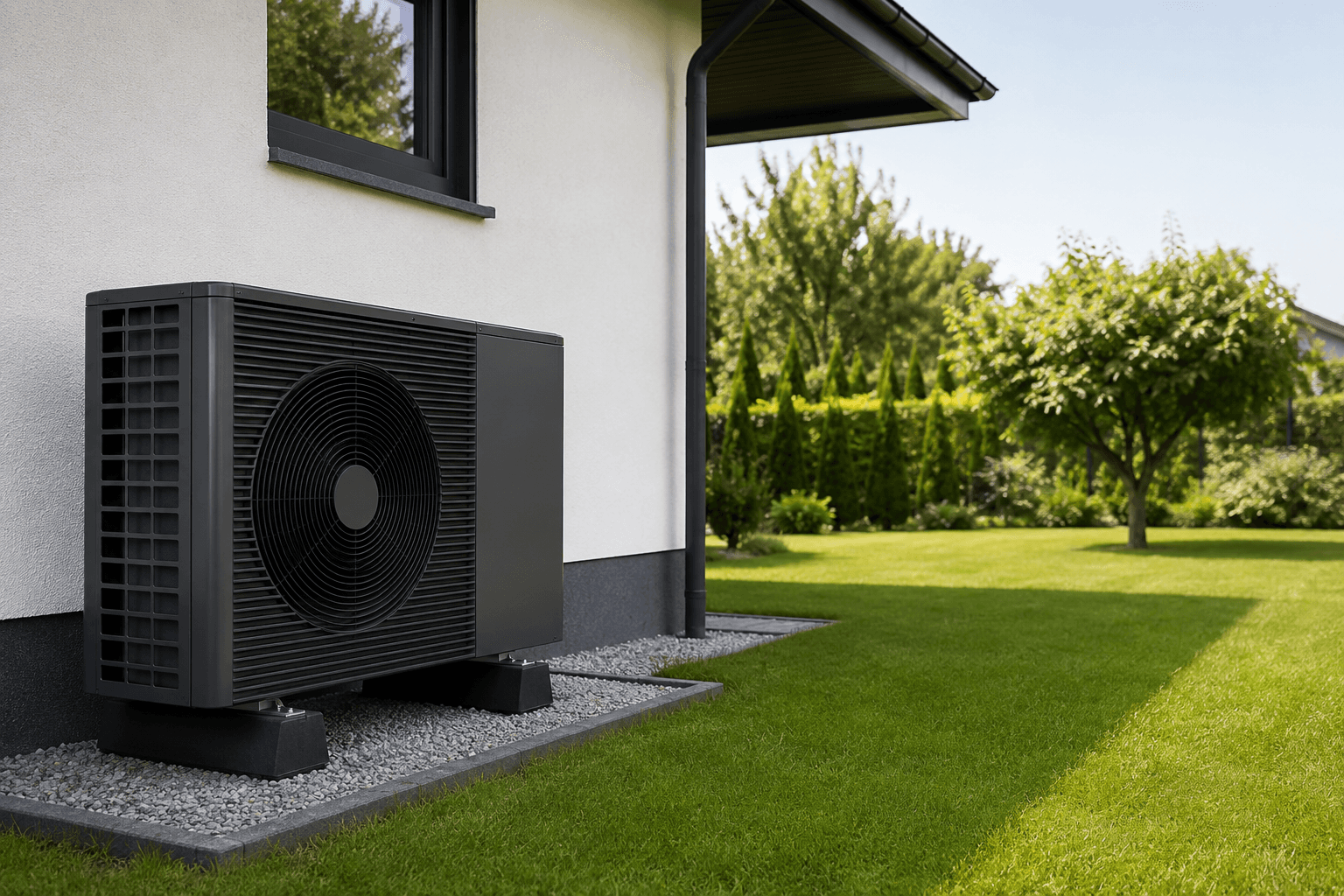
Then comes the physical work: outdoor unit siting, pipework, electrical supply, cylinder installation if you need one, and the controls that tie it all together. And finally, commissioning: setting the weather compensation curve, balancing the system, and making sure the heat pump is actually configured for your specific property rather than left on generic factory defaults.
Every one of those stages can be done well or done quickly. And because a heat pump can still technically "work" even when several of those stages were rushed, homeowners often don't find out until months later.
Where installations quietly go wrong
Here's the uncomfortable truth: a badly designed heat pump installation rarely announces itself with a dramatic fault. It just underperforms, quietly, for years, in ways that are easy to blame on the weather, the electricity price, or "heat pumps just being like that."
The most common culprit is an inflated flow temperature. If the heat loss calculation was skipped or rushed, or if a radiator or two turned out to be undersized, the easiest fix on installation day is to just turn the system up. Problem solved, on paper. Except every degree you add to the flow temperature costs you efficiency, and once it's set that way, most homeowners never touch it again because nobody told them it could be changed.
Poor commissioning is the other big one. Weather compensation left unconfigured. Zones that were never balanced against each other. Controls set up the way the installer's last job needed them, not the way your house needs them. None of this shows up as a fault code. It just shows up as a bill that doesn't match what you were promised.
We've seen this play out in real systems: one homeowner's electricity bill doubled because the system was quietly running at 55°C flow temperature through mild autumn weather, and nobody had ever gone back to check whether that setting still made sense.
Why the first year is the part nobody warns you about
Here's what most people aren't told before they install: a heat pump isn't a "set it and forget it" appliance the way a boiler kind of was. It responds to weather, to how you actually live in the house, to whether last winter's settings were even right in the first place. The commissioning that happens on installation day is really a first draft, informed guesswork based on calculations and manufacturer defaults, not a full year of watching how your specific house and heat pump behave together through every season.
That's exactly why the first year matters so much, and it's the gap that a standard one-off service simply isn't designed to close. A basic annual service checks that the machine itself is healthy: pressure, filters, coils, fault history. It doesn't ask whether the flow temperature is still right for how your winter actually went, or whether that one cold bedroom ever got properly resolved, or whether last year's "temporary" control setting quietly became permanent.
This is exactly the gap Heat Pump Service Plus was built to close. It's not a repeat of the appliance check you'd get anywhere. It goes back through the whole system: heat loss where it wasn't properly done originally, flow temperature optimisation based on how your house has actually performed, heating control and weather compensation review, system balancing, and a genuine pre-winter test rather than just a summer once-over. You get an engineer who treats your first year as an ongoing tuning process, not a box that got ticked on day one and never revisited.
And because it includes direct technical support throughout the year rather than a single annual visit, it solves the other problem homeowners run into constantly: something feels slightly wrong in February, but the installer who commissioned it in September is nowhere to be found, and you're left wondering whether it's even worth calling anyone about. With Service Plus, there's someone to actually ask.
If you're planning an installation, not reviewing one
If you're at the stage of collecting quotes rather than fixing a system that's already in, the highest-leverage thing you can do is get the heat loss and sizing checked independently before you commit. Installers are, understandably, motivated to close the sale in front of them, which isn't the same as being wrong, but it's not the same as independent either. Our Pre-Installation Design Review exists specifically for this stage: an outside set of eyes on the proposed system design, flow temperature, and radiator sizing before any pipework gets cut.
If there's genuine uncertainty about how much heat individual rooms are actually losing, which is often where undersized radiators trace back to, a proper room-by-room heat loss survey carried out at the property gives your installer numbers to design around, rather than estimates.
If the installation's already done and something's off
If you're past installation and already suspicious that something isn't right, high bills, a cold room, a system that never quite settles, that's a different starting point, and Fix My Heat Pump is built for exactly that: diagnosing what's actually wrong, remotely, without assuming you need a new heat pump or a new installer.
But if the system's basically working and you simply want someone to go through it properly, optimise what's there, and stay available as the seasons change, that's the situation Heat Pump Service Plus is designed around, and honestly, it's the stage most homeowners don't realise they need until a full winter has already gone by more expensively than it should have.
What to ask before you sign anything
If you're still at the quoting stage, these are the questions worth putting to any installer directly. Their answers tell you more than the brochure will.
Has a full room-by-room heat loss calculation actually been done for this property, or is the sizing based on a rule of thumb?
What design flow temperature is the system being sized around?
Which radiators, if any, need upgrading to work properly at that flow temperature?
How will weather compensation be configured for this specific house, not just left on a default curve?
What happens if the system isn't performing as expected six months after installation? Is there someone to call?
That last question matters more than people expect. Most installers are excellent at the physical install and largely absent afterwards. Knowing who's actually there once the van's gone is worth establishing before you commit, not after.
Common questions about air source heat pump installation
How long does an air source heat pump installation take?
Most straightforward domestic installations take two to four days on site, though this varies depending on whether pipework, electrics, or a new cylinder need significant work. The design and commissioning quality matters far more to your long-term running costs than how quickly the physical fitting was completed.
Will my existing radiators work with a heat pump?
Sometimes, sometimes not. It depends on the flow temperature the system is designed around and whether your current radiators can output enough heat at that lower temperature. This is exactly what a proper heat loss calculation is meant to establish before installation, rather than guessing and adjusting afterwards.
Why is my electricity bill higher than I expected after installation?
This is one of the most common reasons homeowners contact us, and it's rarely because the heat pump itself is broken. It's usually a flow temperature set higher than necessary, weather compensation that was never properly configured, or a system that isn't balanced correctly. These are all things a proper review can identify and correct.
Do I need an annual service, or something more thorough?
A basic annual service checks that the heat pump itself is mechanically healthy. It doesn't typically revisit your flow temperature, controls, or how the system has actually performed through a full winter. If you want the whole system optimised, not just the appliance checked, that's the difference Heat Pump Service Plus is built around.
Can problems from a poor installation be fixed without replacing the heat pump?
Very often, yes. Most of the issues we see trace back to settings, configuration, or a single undersized radiator rather than the heat pump itself being faulty. Identifying the actual cause usually costs far less than assuming the unit needs replacing.
With more than 100 years of combined heating experience across the team and reviews carried out on hundreds of UK heat pump systems, these are patterns we see repeatedly, not one-off surprises.
The bottom line
Installation day isn't the finish line, it's the start of a system that needs to be watched, tuned, and understood over its first real year of use. Getting the design right before you install saves you money later. Getting proper, ongoing attention after you install saves you from quietly overpaying for years without ever knowing why. If your heat pump's already in and you want it actually optimised rather than just switched on, that's exactly what Heat Pump Service Plus is there for.
Somewhere along the way, air source heat pump installation started sounding like a swap. Old boiler out, new box on the wall outside, job done. It isn't. A heat pump doesn't just replace your boiler, it changes how your entire heating system behaves, and that difference is exactly where most of the problems homeowners contact us about actually begin.
If you're researching an installation, or you've already had one and something feels slightly off, it helps to understand what a proper installation actually involves, where things commonly go wrong, and, this is the part most people don't realise until later, why the months immediately after installation matter just as much as the install itself.
What a proper installation actually involves
A boiler swap is mechanical. A heat pump installation is a design exercise with mechanical work at the end of it.
Before anything gets fitted, a competent installer should be working through your property's heat loss: how much heat each room actually loses on a cold day, based on wall construction, insulation, windows, and orientation, not a rough guess based on square footage. That number determines everything downstream: the size of heat pump you need, the flow temperature your system should run at, and whether your existing radiators can actually deliver enough heat at that lower temperature, or whether some need upgrading.
Then comes the physical work: outdoor unit siting, pipework, electrical supply, cylinder installation if you need one, and the controls that tie it all together. And finally, commissioning: setting the weather compensation curve, balancing the system, and making sure the heat pump is actually configured for your specific property rather than left on generic factory defaults.
Every one of those stages can be done well or done quickly. And because a heat pump can still technically "work" even when several of those stages were rushed, homeowners often don't find out until months later.
Where installations quietly go wrong
Here's the uncomfortable truth: a badly designed heat pump installation rarely announces itself with a dramatic fault. It just underperforms, quietly, for years, in ways that are easy to blame on the weather, the electricity price, or "heat pumps just being like that."
The most common culprit is an inflated flow temperature. If the heat loss calculation was skipped or rushed, or if a radiator or two turned out to be undersized, the easiest fix on installation day is to just turn the system up. Problem solved, on paper. Except every degree you add to the flow temperature costs you efficiency, and once it's set that way, most homeowners never touch it again because nobody told them it could be changed.
Poor commissioning is the other big one. Weather compensation left unconfigured. Zones that were never balanced against each other. Controls set up the way the installer's last job needed them, not the way your house needs them. None of this shows up as a fault code. It just shows up as a bill that doesn't match what you were promised.
We've seen this play out in real systems: one homeowner's electricity bill doubled because the system was quietly running at 55°C flow temperature through mild autumn weather, and nobody had ever gone back to check whether that setting still made sense.
Why the first year is the part nobody warns you about
Here's what most people aren't told before they install: a heat pump isn't a "set it and forget it" appliance the way a boiler kind of was. It responds to weather, to how you actually live in the house, to whether last winter's settings were even right in the first place. The commissioning that happens on installation day is really a first draft, informed guesswork based on calculations and manufacturer defaults, not a full year of watching how your specific house and heat pump behave together through every season.
That's exactly why the first year matters so much, and it's the gap that a standard one-off service simply isn't designed to close. A basic annual service checks that the machine itself is healthy: pressure, filters, coils, fault history. It doesn't ask whether the flow temperature is still right for how your winter actually went, or whether that one cold bedroom ever got properly resolved, or whether last year's "temporary" control setting quietly became permanent.
This is exactly the gap Heat Pump Service Plus was built to close. It's not a repeat of the appliance check you'd get anywhere. It goes back through the whole system: heat loss where it wasn't properly done originally, flow temperature optimisation based on how your house has actually performed, heating control and weather compensation review, system balancing, and a genuine pre-winter test rather than just a summer once-over. You get an engineer who treats your first year as an ongoing tuning process, not a box that got ticked on day one and never revisited.
And because it includes direct technical support throughout the year rather than a single annual visit, it solves the other problem homeowners run into constantly: something feels slightly wrong in February, but the installer who commissioned it in September is nowhere to be found, and you're left wondering whether it's even worth calling anyone about. With Service Plus, there's someone to actually ask.
If you're planning an installation, not reviewing one
If you're at the stage of collecting quotes rather than fixing a system that's already in, the highest-leverage thing you can do is get the heat loss and sizing checked independently before you commit. Installers are, understandably, motivated to close the sale in front of them, which isn't the same as being wrong, but it's not the same as independent either. Our Pre-Installation Design Review exists specifically for this stage: an outside set of eyes on the proposed system design, flow temperature, and radiator sizing before any pipework gets cut.
If there's genuine uncertainty about how much heat individual rooms are actually losing, which is often where undersized radiators trace back to, a proper room-by-room heat loss survey carried out at the property gives your installer numbers to design around, rather than estimates.
If the installation's already done and something's off
If you're past installation and already suspicious that something isn't right, high bills, a cold room, a system that never quite settles, that's a different starting point, and Fix My Heat Pump is built for exactly that: diagnosing what's actually wrong, remotely, without assuming you need a new heat pump or a new installer.
But if the system's basically working and you simply want someone to go through it properly, optimise what's there, and stay available as the seasons change, that's the situation Heat Pump Service Plus is designed around, and honestly, it's the stage most homeowners don't realise they need until a full winter has already gone by more expensively than it should have.
What to ask before you sign anything
If you're still at the quoting stage, these are the questions worth putting to any installer directly. Their answers tell you more than the brochure will.
Has a full room-by-room heat loss calculation actually been done for this property, or is the sizing based on a rule of thumb?
What design flow temperature is the system being sized around?
Which radiators, if any, need upgrading to work properly at that flow temperature?
How will weather compensation be configured for this specific house, not just left on a default curve?
What happens if the system isn't performing as expected six months after installation? Is there someone to call?
That last question matters more than people expect. Most installers are excellent at the physical install and largely absent afterwards. Knowing who's actually there once the van's gone is worth establishing before you commit, not after.
Common questions about air source heat pump installation
How long does an air source heat pump installation take?
Most straightforward domestic installations take two to four days on site, though this varies depending on whether pipework, electrics, or a new cylinder need significant work. The design and commissioning quality matters far more to your long-term running costs than how quickly the physical fitting was completed.
Will my existing radiators work with a heat pump?
Sometimes, sometimes not. It depends on the flow temperature the system is designed around and whether your current radiators can output enough heat at that lower temperature. This is exactly what a proper heat loss calculation is meant to establish before installation, rather than guessing and adjusting afterwards.
Why is my electricity bill higher than I expected after installation?
This is one of the most common reasons homeowners contact us, and it's rarely because the heat pump itself is broken. It's usually a flow temperature set higher than necessary, weather compensation that was never properly configured, or a system that isn't balanced correctly. These are all things a proper review can identify and correct.
Do I need an annual service, or something more thorough?
A basic annual service checks that the heat pump itself is mechanically healthy. It doesn't typically revisit your flow temperature, controls, or how the system has actually performed through a full winter. If you want the whole system optimised, not just the appliance checked, that's the difference Heat Pump Service Plus is built around.
Can problems from a poor installation be fixed without replacing the heat pump?
Very often, yes. Most of the issues we see trace back to settings, configuration, or a single undersized radiator rather than the heat pump itself being faulty. Identifying the actual cause usually costs far less than assuming the unit needs replacing.
With more than 100 years of combined heating experience across the team and reviews carried out on hundreds of UK heat pump systems, these are patterns we see repeatedly, not one-off surprises.
The bottom line
Installation day isn't the finish line, it's the start of a system that needs to be watched, tuned, and understood over its first real year of use. Getting the design right before you install saves you money later. Getting proper, ongoing attention after you install saves you from quietly overpaying for years without ever knowing why. If your heat pump's already in and you want it actually optimised rather than just switched on, that's exactly what Heat Pump Service Plus is there for.

Oct 8, 2026
5 min read
Where Should an Air Source Heat Pump Outdoor Unit Go?
Read More
Oct 8, 2026
5 min read
Where Should an Air Source Heat Pump Outdoor Unit Go?
Read More

Oct 6, 2026
5 min read
Why Does My Heat Pump Run Out of Hot Water So Quickly?
Read More
Oct 6, 2026
5 min read
Why Does My Heat Pump Run Out of Hot Water So Quickly?
Read More

Contact Us
Not Sure Which Service You Need?
Not Sure Which Service You Need?
Not Sure Which Service You Need?
Not Sure Which Service You Need?
Not Sure Which Service You Need?
Whether you need help with an existing heat pump, a pre-installation review, cooling advice, servicing or a room-by-room heat loss survey, send us a few details and we'll point you in the right direction.
Whether you need help with an existing heat pump, a pre-installation review, cooling advice, servicing or a room-by-room heat loss survey, send us a few details and we'll point you in the right direction.
Whether you need help with an existing heat pump, a pre-installation review, cooling advice, servicing or a room-by-room heat loss survey, send us a few details and we'll point you in the right direction.

