Background
A recently renovated 4-bedroom detached property in Surrey was experiencing inconsistent indoor temperatures and higher-than-expected electricity bills. The homeowner reported that the house often felt overheated during mild weather and struggled to maintain comfort during colder evenings.
The heat pump had been professionally installed and commissioned, yet performance did not reflect the expected efficiency of a modern air source heat pump system.
Property & System Overview
Property: 4-bedroom detached home
Location: Surrey
Heat Pump: 11kW Air Source Heat Pump
Emitters: Radiators (mixed sizes)
Control Strategy: Weather compensation enabled
Observed Issue: Temperature instability and high energy use
Initial Observations
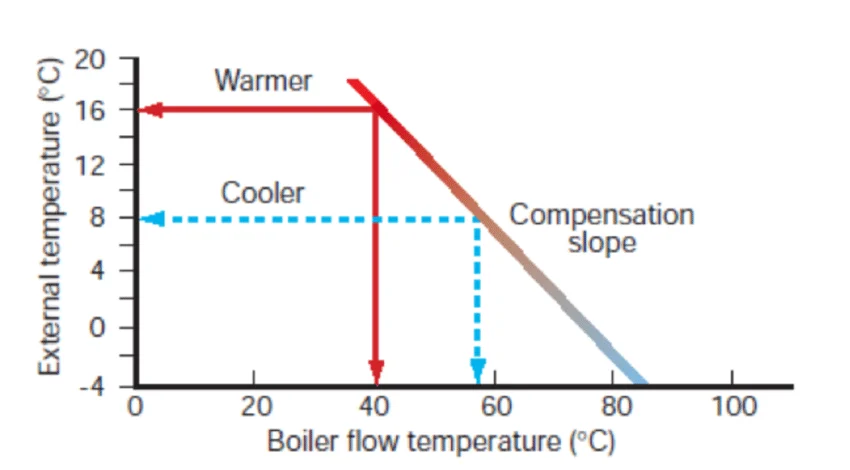
Weather compensation is designed to automatically adjust flow temperatures based on outdoor conditions. When correctly configured, it allows the system to run efficiently at lower flow temperatures during milder weather while gradually increasing output as temperatures drop.
However, incorrect curve settings can significantly reduce system efficiency and indoor comfort.
Technical Findings
Following a detailed system review, we identified several configuration issues:
Compensation Curve Too Aggressive
The heating curve slope was set too steep, causing unnecessarily high flow temperatures during moderate outdoor conditions.Incorrect Minimum Flow Temperature
The base flow temperature was higher than required for the property’s heat loss profile.Radiator Sizing Not Accounted For
The curve had not been calibrated to match the emitter performance, leading to temperature overshoot.Poor Curve Offset Adjustment
Minor adjustments that could have stabilised comfort had not been fine-tuned during commissioning.
Impact on Performance
These configuration issues resulted in:
Higher-than-necessary flow temperatures
Increased electricity consumption
Reduced seasonal efficiency
Indoor overheating during mild weather
Reduced comfort consistency
Although the system was technically operational, it was not running within its most efficient range.
Corrective Strategy
Our recommendations focused on optimisation rather than hardware modification:
Recalibrate the weather compensation slope
Reduce minimum flow temperature settings
Adjust curve offset to improve comfort stability
Align curve settings with emitter capacity
Monitor performance across varying outdoor conditions
Outcome
After reconfiguration:
Indoor temperatures became more stable
Flow temperatures reduced during mild weather
Energy consumption decreased
Seasonal efficiency improved
Overall system comfort increased
The system was capable of efficient performance once properly tuned to the property’s real-world heating demand.

Contact Us

