What Flow Temperature Should My Heat Pump Run At?
What Flow Temperature Should My Heat Pump Run At?
What Flow Temperature Should My Heat Pump Run At?
What Flow Temperature Should My Heat Pump Run At?
What Flow Temperature Should My Heat Pump Run At?

UK Heat pump Help Technical Team
Independent Heat Pump Engineer
What Temperature Should a Heat Pump Cylinder Run At?
if you have a heat pump, or one is being installed, you have probably wondered what temperature your hot water cylinder needs to reach. It is a reasonable question and one where heat pumps genuinely behave differently from the boilers most people are familiar with.
The short version: most heat pump cylinders run cooler than traditional systems. But understanding why matters more than the number itself, because the right setting depends on your setup, your household, and how the system has been designed.
The Typical Range for UK Heat Pump Systems
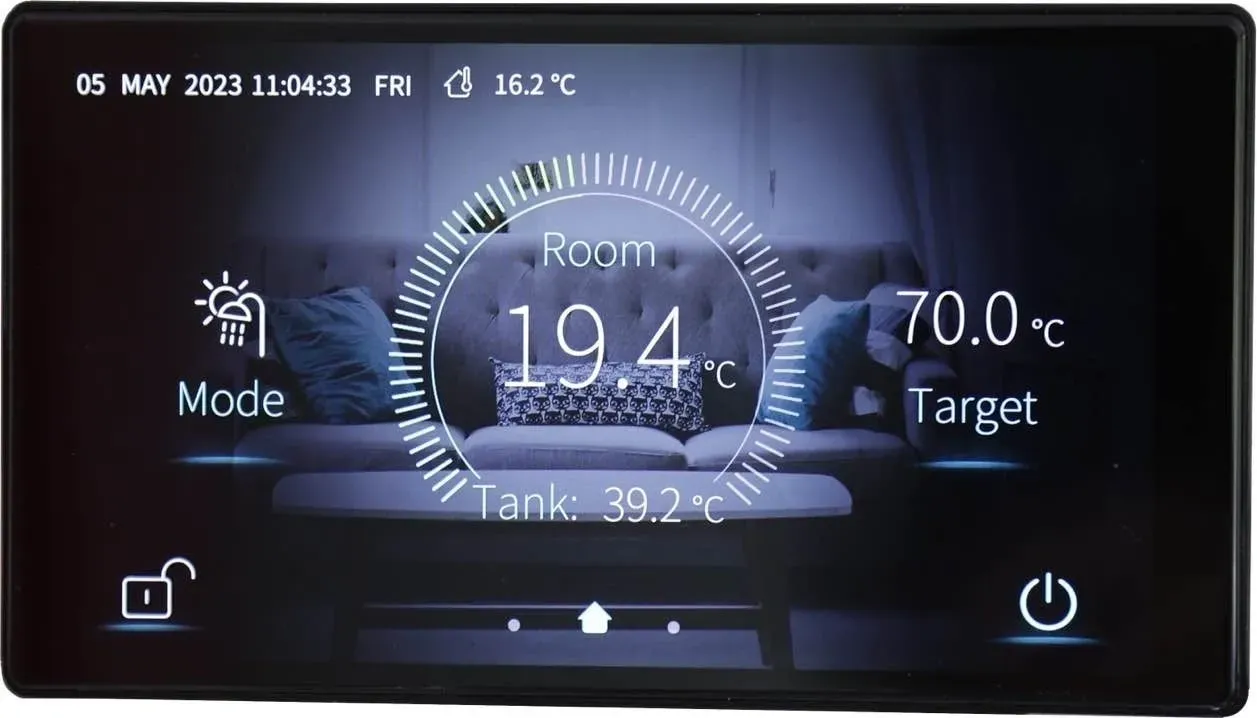
In the majority of UK installations, the cylinder is set somewhere between 45°C and 55°C during normal daily operation. Boilers, by comparison, often run at 60°C or above so the difference is noticeable.
That lower range is not a compromise. It is how heat pumps are designed to work. The closer the system runs to the outdoor temperature, the less electrical energy it needs to produce each unit of heat. Push the cylinder to 60°C every day and the heat pump has to work significantly harder to get there.
For most households, 50°C is a practical working point. It gives you enough hot water without putting unnecessary strain on the system.
Why Lower Temperatures Suit Heat Pumps
A gas boiler burns fuel and can reach high temperatures quickly. A heat pump moves heat from the air, which takes more effort the bigger the gap between the source temperature and the target. That is the fundamental reason heat pumps perform better at lower flow and cylinder temperatures.
Running your cylinder at 55°C rather than 65°C might not sound dramatic, but over months it makes a real difference to how much electricity the system uses.
Legionella Cycles Why the Cylinder Still Reaches 60°C
Even though day-to-day operation stays lower, your system will still heat the cylinder to around 60°C periodically. This is a legionella protection cycle a controlled temperature increase designed to prevent bacteria from establishing themselves in standing water.
Most systems run this once a week. It is usually handled automatically, either by the heat pump itself or by the immersion heater, depending on how the system is configured. You do not need to do anything but it is worth knowing it happens, so you are not confused when you see a higher temperature reading on that day.
Signs the Cylinder Temperature Is Set Too Low
If the temperature is set below the usable threshold, you will notice. Hot water runs cold faster than expected, showers do not feel properly hot, or you find yourself relying on the boost or immersion heater more often than you should.
In many cases this is a settings issue rather than a system fault but if adjusting the temperature does not resolve it, the underlying cause is usually either the cylinder size or the way the system was originally designed.
Signs the Cylinder Temperature Is Set Too High
At the other end, a cylinder running unnecessarily hot does give you plenty of water but at a cost. The heat pump works harder than needed, electricity usage rises, and efficiency drops. This often happens when someone increases the temperature to fix a hot water problem without identifying the real cause.
Cylinder Size Has Just as Much Impact as Temperature
A 45°C cylinder that holds 250 litres can supply more usable hot water than a 60°C cylinder that holds 120 litres. Temperature and volume work together. If the cylinder is undersized for the number of people in the household, no temperature adjustment will fully compensate for that.
If you are having repeated hot water problems, it is worth checking whether the cylinder was correctly sized when the system was designed.
What to Aim For in Day-to-Day Operation
A well-set-up heat pump hot water system should heat to around 45–55°C, maintain that temperature between uses, and recover properly after heavy demand periods. It should not need regular manual adjustment.
If you are frequently changing settings to get enough hot water, that is usually a signal that something in the system design or configuration needs attention not that the heat pump itself is faulty.
Related reading: What Temperature Should a Heat Pump Cylinder Run At? · What Temperature Should Radiators Run at With a Heat Pump?
What Temperature Should a Heat Pump Cylinder Run At?
if you have a heat pump, or one is being installed, you have probably wondered what temperature your hot water cylinder needs to reach. It is a reasonable question and one where heat pumps genuinely behave differently from the boilers most people are familiar with.
The short version: most heat pump cylinders run cooler than traditional systems. But understanding why matters more than the number itself, because the right setting depends on your setup, your household, and how the system has been designed.
The Typical Range for UK Heat Pump Systems
In the majority of UK installations, the cylinder is set somewhere between 45°C and 55°C during normal daily operation. Boilers, by comparison, often run at 60°C or above so the difference is noticeable.
That lower range is not a compromise. It is how heat pumps are designed to work. The closer the system runs to the outdoor temperature, the less electrical energy it needs to produce each unit of heat. Push the cylinder to 60°C every day and the heat pump has to work significantly harder to get there.
For most households, 50°C is a practical working point. It gives you enough hot water without putting unnecessary strain on the system.
Why Lower Temperatures Suit Heat Pumps
A gas boiler burns fuel and can reach high temperatures quickly. A heat pump moves heat from the air, which takes more effort the bigger the gap between the source temperature and the target. That is the fundamental reason heat pumps perform better at lower flow and cylinder temperatures.
Running your cylinder at 55°C rather than 65°C might not sound dramatic, but over months it makes a real difference to how much electricity the system uses.
Legionella Cycles Why the Cylinder Still Reaches 60°C
Even though day-to-day operation stays lower, your system will still heat the cylinder to around 60°C periodically. This is a legionella protection cycle a controlled temperature increase designed to prevent bacteria from establishing themselves in standing water.
Most systems run this once a week. It is usually handled automatically, either by the heat pump itself or by the immersion heater, depending on how the system is configured. You do not need to do anything but it is worth knowing it happens, so you are not confused when you see a higher temperature reading on that day.
Signs the Cylinder Temperature Is Set Too Low
If the temperature is set below the usable threshold, you will notice. Hot water runs cold faster than expected, showers do not feel properly hot, or you find yourself relying on the boost or immersion heater more often than you should.
In many cases this is a settings issue rather than a system fault but if adjusting the temperature does not resolve it, the underlying cause is usually either the cylinder size or the way the system was originally designed.
Signs the Cylinder Temperature Is Set Too High
At the other end, a cylinder running unnecessarily hot does give you plenty of water but at a cost. The heat pump works harder than needed, electricity usage rises, and efficiency drops. This often happens when someone increases the temperature to fix a hot water problem without identifying the real cause.
Cylinder Size Has Just as Much Impact as Temperature
A 45°C cylinder that holds 250 litres can supply more usable hot water than a 60°C cylinder that holds 120 litres. Temperature and volume work together. If the cylinder is undersized for the number of people in the household, no temperature adjustment will fully compensate for that.
If you are having repeated hot water problems, it is worth checking whether the cylinder was correctly sized when the system was designed.
What to Aim For in Day-to-Day Operation
A well-set-up heat pump hot water system should heat to around 45–55°C, maintain that temperature between uses, and recover properly after heavy demand periods. It should not need regular manual adjustment.
If you are frequently changing settings to get enough hot water, that is usually a signal that something in the system design or configuration needs attention not that the heat pump itself is faulty.
Related reading: What Temperature Should a Heat Pump Cylinder Run At? · What Temperature Should Radiators Run at With a Heat Pump?

Sep 30, 2026
5 min read
Heat Pump Diverter Valve Problems: Heating and Hot Water Symptoms
Read More
Sep 30, 2026
5 min read
Heat Pump Diverter Valve Problems: Heating and Hot Water Symptoms
Read More

Sep 30, 2026
5 min read
Best Electricity Tariffs for Heat Pump Owners in the UK
Read More
Sep 30, 2026
5 min read
Best Electricity Tariffs for Heat Pump Owners in the UK
Read More


Contact Us
Not Sure Which Service You Need?
Not Sure Which Service You Need?
Not Sure Which Service You Need?
Not Sure Which Service You Need?
Not Sure Which Service You Need?
Whether you need help with an existing heat pump, a pre-installation review, cooling advice, servicing or a room-by-room heat loss survey, send us a few details and we'll point you in the right direction.
Whether you need help with an existing heat pump, a pre-installation review, cooling advice, servicing or a room-by-room heat loss survey, send us a few details and we'll point you in the right direction.
Whether you need help with an existing heat pump, a pre-installation review, cooling advice, servicing or a room-by-room heat loss survey, send us a few details and we'll point you in the right direction.

