Semi in West Yorkshire — Pressure Kept Dropping on Large Underfloor Heating System
Semi in West Yorkshire — Pressure Kept Dropping on Large Underfloor Heating System
Semi in West Yorkshire — Pressure Kept Dropping on Large Underfloor Heating System
Semi in West Yorkshire — Pressure Kept Dropping on Large Underfloor Heating System
Semi in West Yorkshire — Pressure Kept Dropping on Large Underfloor Heating System

UK Heat pump Help Technical Team
Independent Heat Pump Engineer
Semi in West Yorkshire Pressure Kept Dropping on Large Underfloor Heating System
A homeowner contacted us after repeatedly losing pressure on a large bungalow that was heated entirely by underfloor heating. The system had been topped up with water multiple times, and the homeowner had started to become genuinely concerned that there might be a leak somewhere beneath the floors. Given that the property used underfloor heating throughout, the prospect of tracing and repairing a hidden leak was understandably stressful potentially involving lifted floors, significant disruption, and considerable cost.
From the homeowner's perspective the situation had become very worrying. But after discussing the property layout carefully and reviewing the system setup in detail, a leak actually seemed very unlikely from the outset. The bungalow was extremely large but most of the pipework throughout the plant room was fully visible, and there were no obvious signs of water loss anywhere that could be inspected. Underfloor heating systems, once properly installed, very rarely develop leaks after commissioning. The pressure was dropping, but the water had to be going somewhere and if it was not visibly escaping, the more likely explanation was that it was not escaping at all. Our article on why heat pumps keep losing pressure explains the full range of causes behind pressure loss and is worth reading if your system is showing similar symptoms, because a missing or undersized expansion vessel is far more common than most homeowners realise.
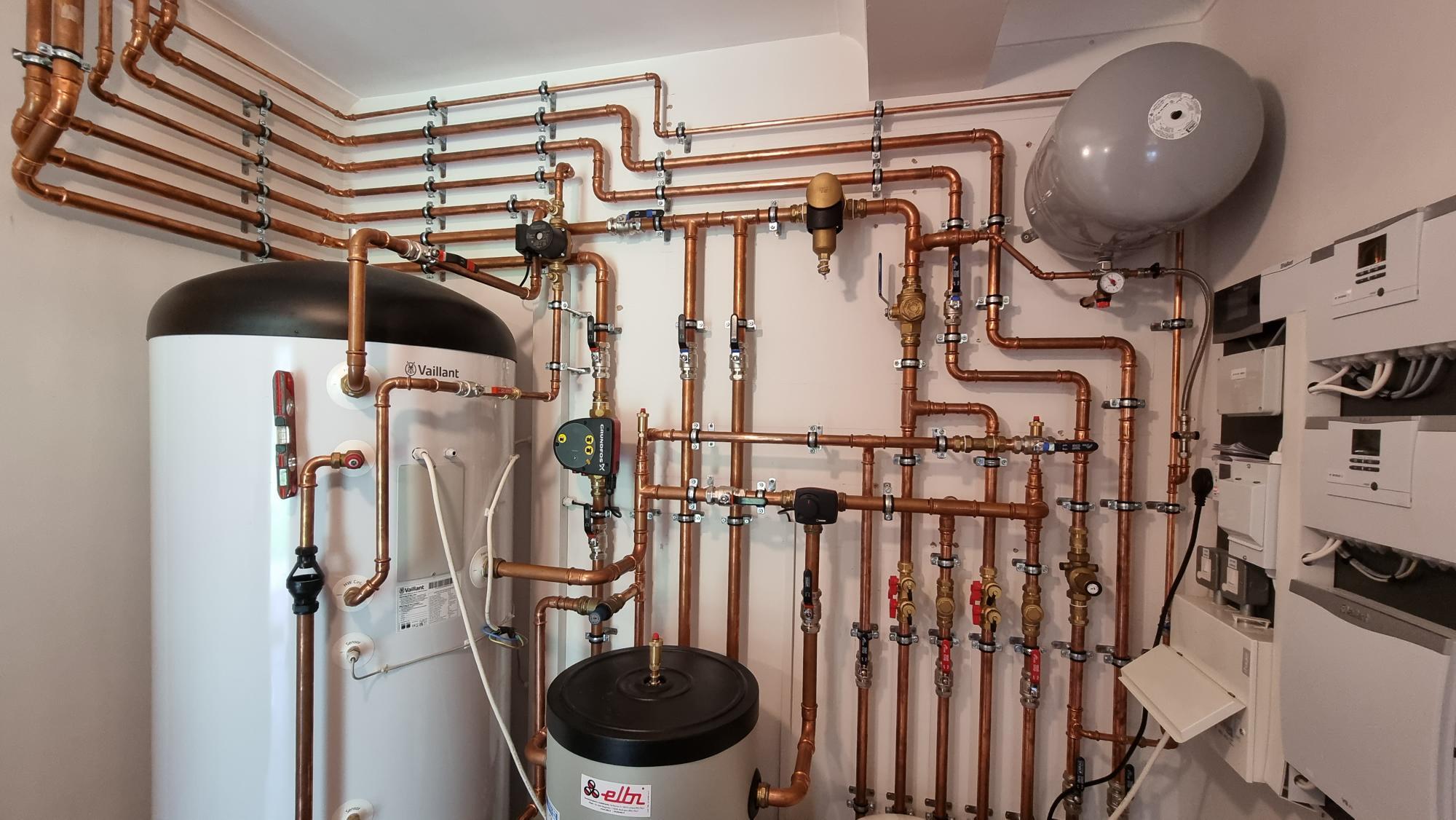
After reviewing the system further, we discovered there was no expansion vessel fitted anywhere on the heating system. Some heat pump manufacturers build expansion capacity into their monobloc outdoor units, but this particular setup had none and even where a vessel is built into the unit, it is typically sized for a standard installation, not for the unusually large water volume that a whole-bungalow underfloor heating system contains. As the water in the system heated up it expanded, pressure rose above the relief valve threshold, water was discharged, and when the system cooled down again the pressure dropped. The homeowner would top it back up, the cycle would repeat, and the impression was of a system slowly but steadily losing water which looked exactly like a leak even though it was nothing of the sort. Understanding what the ideal delta T is for a heat pump system and how water volume and flow rates interact is useful background for anyone with a large underfloor heating setup, because systems of this scale behave differently to a standard radiator installation in several important ways.
Fortunately, the property had a large and well-organised plant room with plenty of available space, so the solution was straightforward. We advised fitting an 18-litre expansion vessel onto the system to provide adequate capacity for the volume of water involved. The homeowner arranged for the vessel to be installed locally, and we followed up several months later to check how things had been performing in the time since. The pressure had remained completely stable from the day the vessel was fitted. The issue was fully resolved. Our article on heat pump system balancing covers some of the related commissioning and setup details that affect how large systems like this one need to be configured to operate properly, and is worth reading for anyone with a whole-house underfloor installation.
From a technical perspective this was a relatively straightforward diagnosis once the system layout had been reviewed properly. But for a homeowner who had been repeatedly topping up the system, receiving no clear explanation from anyone involved in the original installation, and starting to imagine the cost and disruption of digging up floors to find a leak that did not exist it had become a genuinely stressful situation. This is a pattern we see more often than it should happen. A missing expansion vessel is not a complex or expensive problem to fix. It is the kind of detail that should be caught and resolved at commissioning, and when it is not, the consequences for the homeowner can drag on for months. Our article on common commissioning mistakes with air source heat pumps covers this and other similar oversights that create unnecessary problems long after the installer has left the property.
Final Thoughts
Pressure loss on a heat pump system does not always mean there is a hidden leak somewhere in the building. In many cases a relatively simple setup or design oversight is the real cause — and once identified, the fix is far less disruptive and costly than the homeowner had feared. If your heat pump system keeps losing pressure, showing repeated faults, or simply does not feel right, our Fix My Heat Pump service provides independent troubleshooting and practical advice to help identify what is actually happening and what improvements are possible. And if you are still planning a heat pump installation, our Pre-Installation Design & Heat Loss Review helps homeowners identify potential design and setup issues before installation begins.
Semi in West Yorkshire Pressure Kept Dropping on Large Underfloor Heating System
A homeowner contacted us after repeatedly losing pressure on a large bungalow that was heated entirely by underfloor heating. The system had been topped up with water multiple times, and the homeowner had started to become genuinely concerned that there might be a leak somewhere beneath the floors. Given that the property used underfloor heating throughout, the prospect of tracing and repairing a hidden leak was understandably stressful potentially involving lifted floors, significant disruption, and considerable cost.
From the homeowner's perspective the situation had become very worrying. But after discussing the property layout carefully and reviewing the system setup in detail, a leak actually seemed very unlikely from the outset. The bungalow was extremely large but most of the pipework throughout the plant room was fully visible, and there were no obvious signs of water loss anywhere that could be inspected. Underfloor heating systems, once properly installed, very rarely develop leaks after commissioning. The pressure was dropping, but the water had to be going somewhere and if it was not visibly escaping, the more likely explanation was that it was not escaping at all. Our article on why heat pumps keep losing pressure explains the full range of causes behind pressure loss and is worth reading if your system is showing similar symptoms, because a missing or undersized expansion vessel is far more common than most homeowners realise.
After reviewing the system further, we discovered there was no expansion vessel fitted anywhere on the heating system. Some heat pump manufacturers build expansion capacity into their monobloc outdoor units, but this particular setup had none and even where a vessel is built into the unit, it is typically sized for a standard installation, not for the unusually large water volume that a whole-bungalow underfloor heating system contains. As the water in the system heated up it expanded, pressure rose above the relief valve threshold, water was discharged, and when the system cooled down again the pressure dropped. The homeowner would top it back up, the cycle would repeat, and the impression was of a system slowly but steadily losing water which looked exactly like a leak even though it was nothing of the sort. Understanding what the ideal delta T is for a heat pump system and how water volume and flow rates interact is useful background for anyone with a large underfloor heating setup, because systems of this scale behave differently to a standard radiator installation in several important ways.
Fortunately, the property had a large and well-organised plant room with plenty of available space, so the solution was straightforward. We advised fitting an 18-litre expansion vessel onto the system to provide adequate capacity for the volume of water involved. The homeowner arranged for the vessel to be installed locally, and we followed up several months later to check how things had been performing in the time since. The pressure had remained completely stable from the day the vessel was fitted. The issue was fully resolved. Our article on heat pump system balancing covers some of the related commissioning and setup details that affect how large systems like this one need to be configured to operate properly, and is worth reading for anyone with a whole-house underfloor installation.
From a technical perspective this was a relatively straightforward diagnosis once the system layout had been reviewed properly. But for a homeowner who had been repeatedly topping up the system, receiving no clear explanation from anyone involved in the original installation, and starting to imagine the cost and disruption of digging up floors to find a leak that did not exist it had become a genuinely stressful situation. This is a pattern we see more often than it should happen. A missing expansion vessel is not a complex or expensive problem to fix. It is the kind of detail that should be caught and resolved at commissioning, and when it is not, the consequences for the homeowner can drag on for months. Our article on common commissioning mistakes with air source heat pumps covers this and other similar oversights that create unnecessary problems long after the installer has left the property.
Final Thoughts
Pressure loss on a heat pump system does not always mean there is a hidden leak somewhere in the building. In many cases a relatively simple setup or design oversight is the real cause — and once identified, the fix is far less disruptive and costly than the homeowner had feared. If your heat pump system keeps losing pressure, showing repeated faults, or simply does not feel right, our Fix My Heat Pump service provides independent troubleshooting and practical advice to help identify what is actually happening and what improvements are possible. And if you are still planning a heat pump installation, our Pre-Installation Design & Heat Loss Review helps homeowners identify potential design and setup issues before installation begins.

Contact Us
Not Sure Which Service You Need?
Not Sure Which Service You Need?
Not Sure Which Service You Need?
Not Sure Which Service You Need?
Not Sure Which Service You Need?
Whether you need help with an existing heat pump, a pre-installation review, cooling advice, servicing or a room-by-room heat loss survey, send us a few details and we'll point you in the right direction.
Whether you need help with an existing heat pump, a pre-installation review, cooling advice, servicing or a room-by-room heat loss survey, send us a few details and we'll point you in the right direction.
Whether you need help with an existing heat pump, a pre-installation review, cooling advice, servicing or a room-by-room heat loss survey, send us a few details and we'll point you in the right direction.

