Do I Need to Inform the Electricity Grid Before Installing a Heat Pump?
Do I Need to Inform the Electricity Grid Before Installing a Heat Pump?
Do I Need to Inform the Electricity Grid Before Installing a Heat Pump?
Do I Need to Inform the Electricity Grid Before Installing a Heat Pump?
Do I Need to Inform the Electricity Grid Before Installing a Heat Pump?

UK Heat pump Help Technical Team
Independent Heat Pump Engineer
What Is the Electricity Grid?
Most of us don't give the electricity grid much thought. You flick a switch, and the lights come on. But behind the scenes there's a huge network designed to deliver electricity safely and reliably to millions of homes across the country.
Electricity is generated at power stations and renewable energy sites before travelling around the country on the National Grid at very high voltages. This allows large amounts of electricity to be transported efficiently over long distances without significant losses. As it gets closer to towns and villages, it passes through substations where the voltage is reduced in stages, eventually reaching your home at around 230 volts through the local distribution network.
Although the voltage arriving at your property is low, every transformer, cable, and local substation along that chain has a limit to how much electrical demand it can safely supply. That's why electricity companies need to know when significant new electrical equipment, such as a heat pump, an EV charger, or a home battery, is being connected to a property. It isn't bureaucracy for its own sake; it's how the network avoids being overloaded street by street as more homes electrify their heating.
Why Does a Heat Pump Matter to the Grid?
Compared to a gas boiler, a heat pump places a much greater demand on your home's electrical supply. A boiler burns gas and only needs a small amount of electricity to run its pump and controls, but a heat pump does all of its heating work using electricity, which means the load it draws is far higher, particularly during cold weather when heating demand is at its peak and the compressor is working hardest.
Although modern heat pumps are very efficient compared to older electric heating, they still require a dedicated electrical supply, typically their own circuit and sometimes their own fused connection, and can meaningfully increase a property's overall electrical demand. This is one of the reasons correct system sizing matters so much before installation. An oversized heat pump doesn't just cost more to buy and run less efficiently, as we cover in what happens if a heat pump is oversized, it also places an unnecessarily high electrical demand on the network for a property that never needed that much heating capacity in the first place. For this reason, installers can't simply connect every heat pump without first considering the capacity of the local electricity network it will be drawing from.
Who Is the DNO?
Your local electricity network is managed by a Distribution Network Operator, or DNO. This is a different organisation to your electricity supplier, the company you pay your bill to, and is often confused with it. The DNO owns and physically maintains the local cables, transformers, and substations that supply your home and your street, and one of their core responsibilities is making sure new electrical equipment can be connected without compromising the reliability of the network for you or your neighbours.
There are several DNOs covering different regions of the UK, and which one applies to you depends entirely on your location, not which energy supplier you're billed by. Your installer will already know which DNO covers your postcode and will handle the relevant process on your behalf as a standard part of a compliant installation.
Connect and Notify vs Apply to Connect
There are two main routes a heat pump connection can take, and which one applies depends on the size of the heat pump and the existing capacity of the local network at your specific address.
Connect and Notify covers the majority of standard domestic heat pump installations. The system can be connected immediately without waiting for prior approval, and once it's installed, your installer simply notifies the DNO afterwards that the connection has been made. This is the quicker and more common route, and for most single heat pump installations on an otherwise unremarkable domestic supply, this is what will happen.
Apply to Connect applies to installations that could place a larger demand on the local network, larger heat pump systems, properties already close to their supply limit, or areas where the local infrastructure is already under strain from multiple nearby installations. In these cases, your installer submits a formal application to the DNO before any work takes place. The DNO assesses whether the local network has sufficient spare capacity to support the new load. If it does, approval is granted and the installation can proceed as planned. If it doesn't, the DNO may request network reinforcement works, which can add time and occasionally cost to a project, or suggest an alternative approach such as a smaller system, load limiting, or a different connection arrangement.
Neither route is a reflection of whether your chosen heat pump is a good or bad fit for your home from a heating perspective; it's purely about electrical network capacity, which is a separate question entirely from whether the system has been correctly sized against your home's actual heat loss, something we cover in what size heat pump does my house need.
Do I Need to Do Anything Myself?
Usually, no. A competent MCS-certified installer will carry out the necessary electrical assessment as a standard part of the design process and deal directly with any DNO notifications or applications on your behalf, without you needing to contact the DNO or your supplier yourself. If approval is required before work can start, a properly organised installer will build that lead time into your installation schedule rather than leaving you to discover it partway through the process.
This is also one of the areas where installer quality genuinely shows. It's the kind of detail that gets missed or rushed by less experienced installers, alongside other early-stage planning steps like an accurate heat loss calculation and correct system sizing. We've covered the wider pattern of what tends to go wrong when this planning stage is rushed in common commissioning mistakes with air source heat pumps and in 7 signs your heat pump may not be installed correctly, both of which are worth reading if you're currently comparing quotes or installers.
How This Fits Into the Wider Installation Process
The DNO notification or application sits alongside a handful of other things that should be happening before your heat pump goes in: an accurate room-by-room heat loss calculation, correct system and cylinder sizing, a sensible flow temperature target, and a check on whether your existing radiators or underfloor heating are suitable at that flow temperature. If you're also applying for the Boiler Upgrade Scheme grant, which is worth checking given the funding changes covered in replacing an oil boiler: heat pump grants are increasing to £9,000, your installation will also need to meet MCS standards, and DNO compliance is one part of that wider standard. None of this needs to be something you manage yourself, but it's worth knowing it exists so you can ask your installer directly whether it's been considered, rather than assuming it has.
Getting an Independent View Before You Commit
If you're unsure whether your proposed installation is suitable, whether the system has been sized correctly, or you'd simply like a second, independent opinion before signing anything, our Pre-Installation Design Review service reviews your proposed heat pump system in detail, including heat loss calculations, sizing, flow temperature, and radiator suitability, and explains any technical or regulatory requirements, DNO notification included, before work begins. It's also worth reading a few of our case studies if you want to see the kind of design issues that get missed when this stage is rushed, since several of them trace back to exactly this kind of overlooked planning detail.
Already Have a Heat Pump Installed?
If your heat pump has already gone in but isn't performing as expected, high bills, rooms that won't reach temperature, or a system that just doesn't feel right, our Fix My Heat Pump service provides independent remote technical support. In many cases we can diagnose the fault over a video call and get you a clear next step without the wait for a site visit, and if the cause turns out to be an installation issue rather than a design one, we'll tell you exactly that.
What Is the Electricity Grid?
Most of us don't give the electricity grid much thought. You flick a switch, and the lights come on. But behind the scenes there's a huge network designed to deliver electricity safely and reliably to millions of homes across the country.
Electricity is generated at power stations and renewable energy sites before travelling around the country on the National Grid at very high voltages. This allows large amounts of electricity to be transported efficiently over long distances without significant losses. As it gets closer to towns and villages, it passes through substations where the voltage is reduced in stages, eventually reaching your home at around 230 volts through the local distribution network.
Although the voltage arriving at your property is low, every transformer, cable, and local substation along that chain has a limit to how much electrical demand it can safely supply. That's why electricity companies need to know when significant new electrical equipment, such as a heat pump, an EV charger, or a home battery, is being connected to a property. It isn't bureaucracy for its own sake; it's how the network avoids being overloaded street by street as more homes electrify their heating.
Why Does a Heat Pump Matter to the Grid?
Compared to a gas boiler, a heat pump places a much greater demand on your home's electrical supply. A boiler burns gas and only needs a small amount of electricity to run its pump and controls, but a heat pump does all of its heating work using electricity, which means the load it draws is far higher, particularly during cold weather when heating demand is at its peak and the compressor is working hardest.
Although modern heat pumps are very efficient compared to older electric heating, they still require a dedicated electrical supply, typically their own circuit and sometimes their own fused connection, and can meaningfully increase a property's overall electrical demand. This is one of the reasons correct system sizing matters so much before installation. An oversized heat pump doesn't just cost more to buy and run less efficiently, as we cover in what happens if a heat pump is oversized, it also places an unnecessarily high electrical demand on the network for a property that never needed that much heating capacity in the first place. For this reason, installers can't simply connect every heat pump without first considering the capacity of the local electricity network it will be drawing from.
Who Is the DNO?
Your local electricity network is managed by a Distribution Network Operator, or DNO. This is a different organisation to your electricity supplier, the company you pay your bill to, and is often confused with it. The DNO owns and physically maintains the local cables, transformers, and substations that supply your home and your street, and one of their core responsibilities is making sure new electrical equipment can be connected without compromising the reliability of the network for you or your neighbours.
There are several DNOs covering different regions of the UK, and which one applies to you depends entirely on your location, not which energy supplier you're billed by. Your installer will already know which DNO covers your postcode and will handle the relevant process on your behalf as a standard part of a compliant installation.
Connect and Notify vs Apply to Connect
There are two main routes a heat pump connection can take, and which one applies depends on the size of the heat pump and the existing capacity of the local network at your specific address.
Connect and Notify covers the majority of standard domestic heat pump installations. The system can be connected immediately without waiting for prior approval, and once it's installed, your installer simply notifies the DNO afterwards that the connection has been made. This is the quicker and more common route, and for most single heat pump installations on an otherwise unremarkable domestic supply, this is what will happen.
Apply to Connect applies to installations that could place a larger demand on the local network, larger heat pump systems, properties already close to their supply limit, or areas where the local infrastructure is already under strain from multiple nearby installations. In these cases, your installer submits a formal application to the DNO before any work takes place. The DNO assesses whether the local network has sufficient spare capacity to support the new load. If it does, approval is granted and the installation can proceed as planned. If it doesn't, the DNO may request network reinforcement works, which can add time and occasionally cost to a project, or suggest an alternative approach such as a smaller system, load limiting, or a different connection arrangement.
Neither route is a reflection of whether your chosen heat pump is a good or bad fit for your home from a heating perspective; it's purely about electrical network capacity, which is a separate question entirely from whether the system has been correctly sized against your home's actual heat loss, something we cover in what size heat pump does my house need.
Do I Need to Do Anything Myself?
Usually, no. A competent MCS-certified installer will carry out the necessary electrical assessment as a standard part of the design process and deal directly with any DNO notifications or applications on your behalf, without you needing to contact the DNO or your supplier yourself. If approval is required before work can start, a properly organised installer will build that lead time into your installation schedule rather than leaving you to discover it partway through the process.
This is also one of the areas where installer quality genuinely shows. It's the kind of detail that gets missed or rushed by less experienced installers, alongside other early-stage planning steps like an accurate heat loss calculation and correct system sizing. We've covered the wider pattern of what tends to go wrong when this planning stage is rushed in common commissioning mistakes with air source heat pumps and in 7 signs your heat pump may not be installed correctly, both of which are worth reading if you're currently comparing quotes or installers.
How This Fits Into the Wider Installation Process
The DNO notification or application sits alongside a handful of other things that should be happening before your heat pump goes in: an accurate room-by-room heat loss calculation, correct system and cylinder sizing, a sensible flow temperature target, and a check on whether your existing radiators or underfloor heating are suitable at that flow temperature. If you're also applying for the Boiler Upgrade Scheme grant, which is worth checking given the funding changes covered in replacing an oil boiler: heat pump grants are increasing to £9,000, your installation will also need to meet MCS standards, and DNO compliance is one part of that wider standard. None of this needs to be something you manage yourself, but it's worth knowing it exists so you can ask your installer directly whether it's been considered, rather than assuming it has.
Getting an Independent View Before You Commit
If you're unsure whether your proposed installation is suitable, whether the system has been sized correctly, or you'd simply like a second, independent opinion before signing anything, our Pre-Installation Design Review service reviews your proposed heat pump system in detail, including heat loss calculations, sizing, flow temperature, and radiator suitability, and explains any technical or regulatory requirements, DNO notification included, before work begins. It's also worth reading a few of our case studies if you want to see the kind of design issues that get missed when this stage is rushed, since several of them trace back to exactly this kind of overlooked planning detail.
Already Have a Heat Pump Installed?
If your heat pump has already gone in but isn't performing as expected, high bills, rooms that won't reach temperature, or a system that just doesn't feel right, our Fix My Heat Pump service provides independent remote technical support. In many cases we can diagnose the fault over a video call and get you a clear next step without the wait for a site visit, and if the cause turns out to be an installation issue rather than a design one, we'll tell you exactly that.


Jul 19, 2026
5 min read
Why Is My Thermostat Getting to Temperature but My House Still Feels Cold?
Read More
Jul 19, 2026
5 min read
Why Is My Thermostat Getting to Temperature but My House Still Feels Cold?
Read More
Jul 25, 2026
5 min read
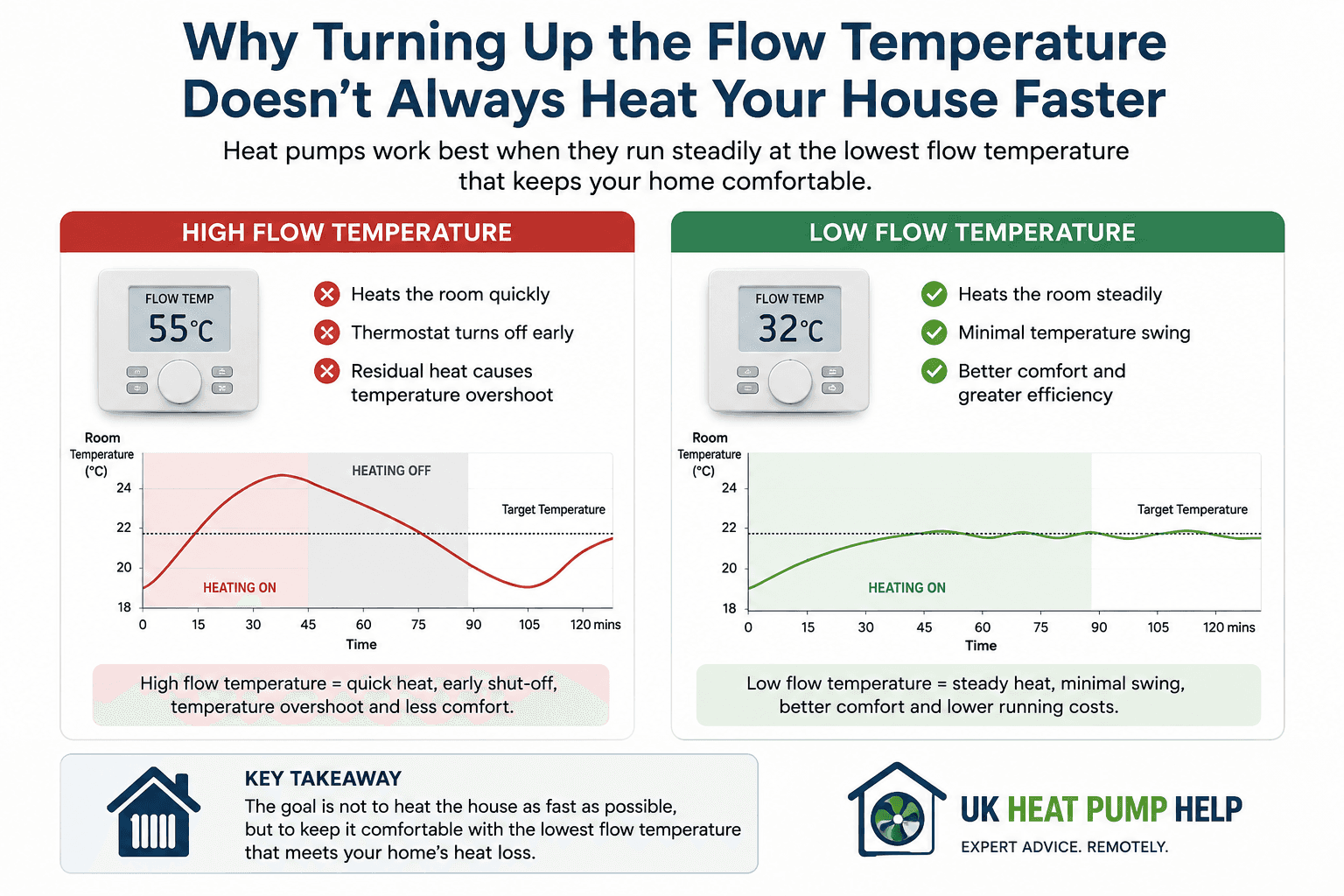
Why Turning Up the Flow Temperature Doesn't Always Heat Your House Faster
Read More
Jul 25, 2026
5 min read
Why Turning Up the Flow Temperature Doesn't Always Heat Your House Faster
Read More
Recent
Why Is My Thermostat Getting to Temperature but My House Still Feels Cold?
Jul 19, 2026
Why Turning Up the Flow Temperature Doesn't Always Heat Your House Faster
Jul 25, 2026
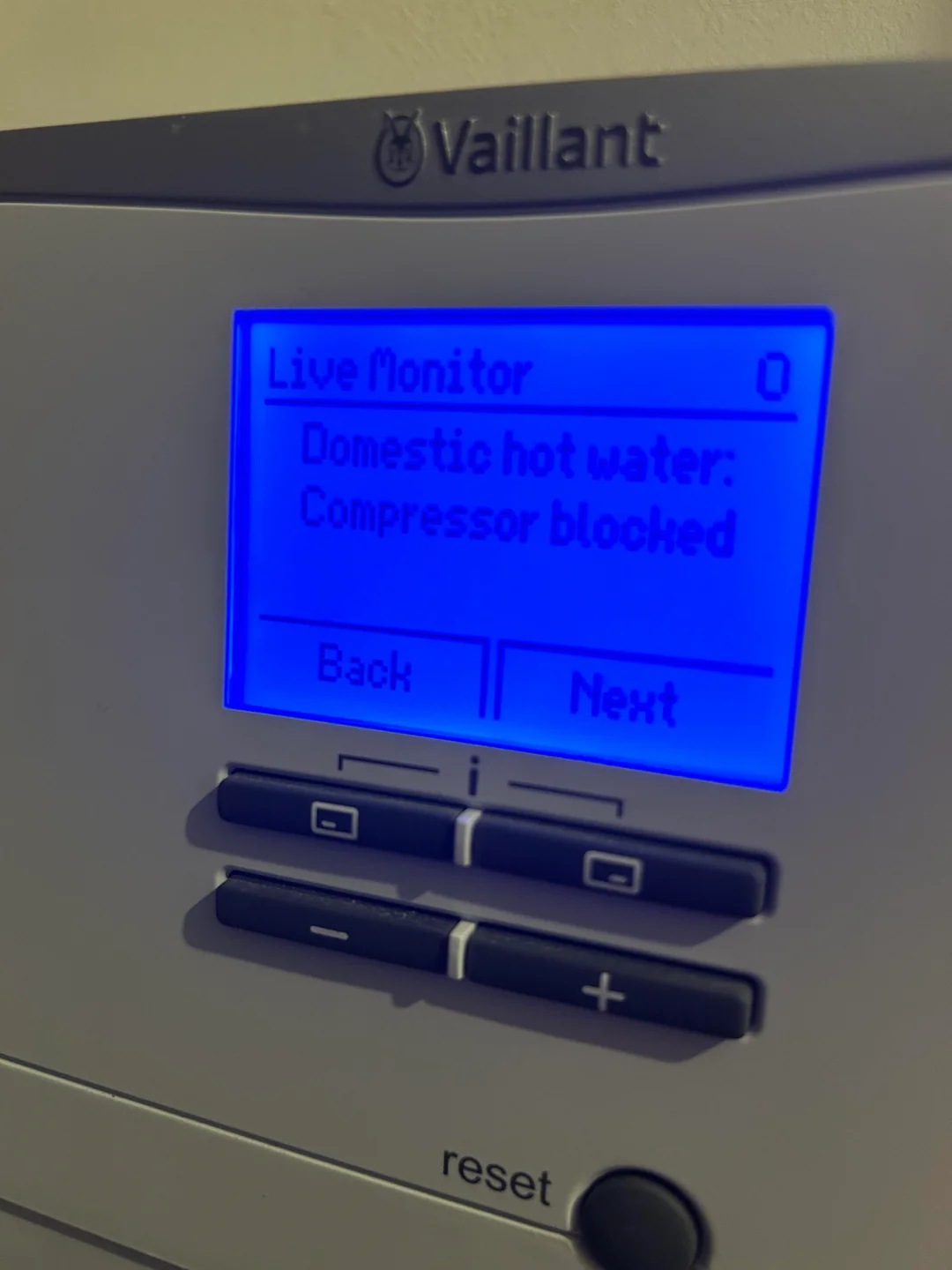
Why Is My Vaillant aroTHERM Showing 'Domestic Hot Water Compressor Blocked'?
Jul 22, 2026

What Happens If a Heat Pump Has Air in the System?
Jul 18, 2026

Why Does My Heat Pump Produce Steam?
Jul 17, 2026

Contact Us
Not Sure If We Can Help?
Not Sure If We Can Help?
Not Sure If We Can Help?
Not Sure If We Can Help?
Not Sure If We Can Help?
If you're unsure whether your heat pump problem can be diagnosed remotely, send us a short description of the issue and we’ll let you know if a technical review is worthwhile. No obligation.
If you're unsure whether your heat pump problem can be diagnosed remotely, send us a short description of the issue and we’ll let you know if a technical review is worthwhile. No obligation.
If you're unsure whether your heat pump problem can be diagnosed remotely, send us a short description of the issue and we’ll let you know if a technical review is worthwhile. No obligation.

