Heat Pump Survey: What Should an Installer Actually Check?
Heat Pump Survey: What Should an Installer Actually Check?
Heat Pump Survey: What Should an Installer Actually Check?
Heat Pump Survey: What Should an Installer Actually Check?
Heat Pump Survey: What Should an Installer Actually Check?

UK Heat pump Help Technical Team
Independent Heat Pump Engineer
A heat pump survey should involve far more than measuring a few radiators and finding somewhere outside to put the unit. The survey is where the installer works out whether a heat pump is even suitable for your property, how large it needs to be, what changes might be required inside the house, and how the complete system will actually operate once it's running.
Done properly, a heat pump survey should form the basis of the entire design. Unfortunately, the quality of surveys varies a lot from one installer to the next. So what should actually get checked before you're handed a final design and a quotation?
1. A Room-by-Room Heat Loss Calculation
This is one of the most important parts of any heat pump survey. The installer needs to calculate how much heat your property loses when the outside temperature falls to the design temperature for your area, and this shouldn't be an estimate based on floor area alone. A proper heat loss calculation considers things such as:
External walls and how they're constructed
Windows and doors, including glazing type
Floors and what insulation sits beneath them
Roofs and ceilings, including loft insulation
Insulation levels throughout the property
Room dimensions, since bigger rooms lose more heat
Ventilation and air changes, including draughts
The property's location and its design outdoor temperature
Crucially, this should be calculated room by room. Knowing that a house has an overall heat loss of 7kW isn't enough on its own. The installer also needs to know whether the living room requires 1,400W, the bedroom 700W, and the bathroom 600W, for example, because that's what allows the heating emitters in each room to be checked properly against what's actually needed.
2. Heat Pump Sizing
Once the design heat loss has been established, the installer can select an appropriate heat pump. That doesn't mean simply choosing a noticeably larger unit "to be safe." Oversizing a heat pump can cause its own problems, including excessive cycling during milder weather and worse efficiency overall, while undersizing it could leave the system unable to maintain the required indoor temperature during colder conditions. The installer should check the manufacturer's technical data and work out what the unit can actually produce at the required outdoor and flow temperatures, since the number printed on the front of the brochure doesn't always tell the whole story. We've gone into this in more depth in what size heat pump your house actually needs if you want to see how oversizing and undersizing show up in practice.
3. Existing Radiators and Underfloor Heating
A heat pump can often work perfectly well with existing radiators, but this needs to be calculated rather than guessed. Radiators produce less heat as the water temperature drops, so a radiator that performs well on a traditional high-temperature boiler system will produce considerably less heat at typical heat pump temperatures. The survey should compare the calculated heat loss of each room against the output of its existing radiator at the proposed system temperature. Some radiators may already be large enough, others may need upgrading, and in some properties very few changes are needed at all. There shouldn't be an automatic assumption that every radiator needs replacing simply because a heat pump is going in. Our guide on whether heat pumps work with old radiators walks through exactly how that comparison plays out room by room.
4. The Lowest Practical Flow Temperature
This is where good heat pump design can make a real difference. Generally, the lower the heating flow temperature, the more efficiently a heat pump can operate. The survey shouldn't just ask whether the house can be heated. It should also ask how low the flow temperature can realistically go, since radiator sizes, underfloor heating, insulation and room heat losses all feed into that answer. Sometimes changing a handful of strategically chosen radiators can allow the entire system to run at a lower temperature, and that relatively small change can improve the heat pump's performance for years afterwards.
5. Existing Heating Pipework
Radiators aren't the only part of the existing system that matters. Heat pumps commonly work with a lower temperature difference between flow and return than boilers, meaning higher water flow rates are often needed to move the same amount of heat around the property. The installer should look at pipe sizes, system layout, any restrictive sections, and whether the existing distribution system can actually achieve the flow rates the new system needs. Connecting a heat pump to old pipework without considering this can create problems even when the unit itself has been sized correctly.
6. Hot Water Cylinder
The survey should establish how domestic hot water will be produced. If an existing cylinder is being kept, its suitability needs checking. If a replacement is required, the installer needs to think about more than capacity alone, including available space, coil suitability, recovery time, immersion provision, pipe routes and how it integrates with the heat pump. Hot water demand matters too, since a two-person household and a family of six with multiple bathrooms don't necessarily need the same solution.
7. Where the Heat Pump Will Be Located
The outdoor unit can't simply go wherever there's a spare piece of wall. The proposed position should account for manufacturer clearance requirements, airflow around the unit, noise, neighbouring properties, distance from bedrooms and windows, the pipework route, maintenance access, condensate disposal, ground clearance and planning requirements. Modern R290 heat pumps, for example, can carry specific location requirements because they use propane as the refrigerant, and these need considering before installation starts, not once the unit has already arrived on site.
8. Planning Permission and Permitted Development
Many domestic air source heat pump installations can go ahead under permitted development rights, but that doesn't mean every installation automatically qualifies. The installer should check the proposed location against the applicable requirements, since listed buildings, conservation areas, unusual property layouts or installations involving multiple outdoor units can all need extra consideration. It's far better to establish this during the survey than to discover a planning issue after the equipment has already been ordered.
9. Electrical Supply and DNO Requirements
A heat pump is a significant electrical appliance, so the property's electrical supply needs proper consideration too. The survey should look at the existing installation and any other major loads in the property, such as an EV charger, electric shower, induction hob, hot tub, solar PV, battery storage or air conditioning. The installer should work out the electrical requirements of the proposed heat pump and establish whether the installation needs to be Connect & Notify or Apply to Connect with the Distribution Network Operator. In some cases, the incoming electrical supply may need upgrading too, and that's something you want to know well before installation day.
10. Controls and How the System Will Actually Operate
A heat pump isn't just an outdoor box connected to some radiators. The controls and operating strategy are a genuine part of the system design. The installer should consider how the property is currently zoned, what controls are already in place, and how the new system will actually run day to day. Good heat pump systems are generally designed around long, steady operating periods and weather compensation, rather than repeatedly blasting the house with very hot water for short bursts, so the control strategy should be part of the design from the beginning rather than an afterthought.
11. Your Existing Energy Use
Previous energy consumption gives a useful sense check against the calculated heat loss. It shouldn't replace a proper calculation, but looking at previous gas, oil or LPG use can help confirm whether the figures look realistic. If a calculation suggests an unusually high heat requirement for a property that's historically used relatively little energy, that's worth investigating before any equipment gets selected.
12. What You Actually Want From the System
This part is surprisingly important. A good survey should involve an actual conversation with the homeowner. Do you keep the house at 18°C or 22°C? Do you heat every room? Are certain bedrooms rarely used? Do you have unusually high hot water demand? Are you planning an extension, an EV charger, solar panels or a hot tub? Do you want cooling if the heat pump supports it? The technically correct system for one household isn't necessarily the correct system for another, so a survey should consider how you actually live in your home, not just its dimensions on paper.
What Should You Receive After a Heat Pump Survey?
By the end of the process, there should be a clear technical basis for the proposed installation. You should be able to understand how much heat your property requires, which heat pump has been selected and why, what flow temperature the system is designed around, whether any radiators need changing, what happens with your hot water, where the unit will be positioned, and whether any electrical or planning work is needed. If major parts of the design are still being guessed at by this point, the survey hasn't really done its job.
Can You Get an Independent Heat Pump Survey?
Yes. You don't need to wait until you've chosen an installer to understand whether your property is suitable for a heat pump. An independent survey is particularly useful if you're considering a heat pump and want to understand the likely requirements before requesting quotes, or if you've already had one or more quotations back and the recommendations don't match. One installer might say you need a 12kW heat pump and every radiator replaced, while another proposes an 8kW unit with only three radiator changes. The underlying calculations should explain why, and if they can't, that's worth questioning.
Independent Heat Loss & Heat Pump Survey
UK Heat Pump Help offers an independent heat loss survey for homeowners who want to understand their property before committing to an installation. We assess the room-by-room heat loss, existing emitters, likely operating temperatures and overall suitability, giving you a clear picture of what your property actually requires. If you've already got a quote in hand and just want it independently checked rather than a full survey from scratch, our Pre-Installation Design & Heat Loss Review is built for exactly that. Either way, the aim isn't to sell you a heat pump. It's to give you the information you need before somebody else tries to.
A heat pump survey should involve far more than measuring a few radiators and finding somewhere outside to put the unit. The survey is where the installer works out whether a heat pump is even suitable for your property, how large it needs to be, what changes might be required inside the house, and how the complete system will actually operate once it's running.
Done properly, a heat pump survey should form the basis of the entire design. Unfortunately, the quality of surveys varies a lot from one installer to the next. So what should actually get checked before you're handed a final design and a quotation?
1. A Room-by-Room Heat Loss Calculation
This is one of the most important parts of any heat pump survey. The installer needs to calculate how much heat your property loses when the outside temperature falls to the design temperature for your area, and this shouldn't be an estimate based on floor area alone. A proper heat loss calculation considers things such as:
External walls and how they're constructed
Windows and doors, including glazing type
Floors and what insulation sits beneath them
Roofs and ceilings, including loft insulation
Insulation levels throughout the property
Room dimensions, since bigger rooms lose more heat
Ventilation and air changes, including draughts
The property's location and its design outdoor temperature
Crucially, this should be calculated room by room. Knowing that a house has an overall heat loss of 7kW isn't enough on its own. The installer also needs to know whether the living room requires 1,400W, the bedroom 700W, and the bathroom 600W, for example, because that's what allows the heating emitters in each room to be checked properly against what's actually needed.
2. Heat Pump Sizing
Once the design heat loss has been established, the installer can select an appropriate heat pump. That doesn't mean simply choosing a noticeably larger unit "to be safe." Oversizing a heat pump can cause its own problems, including excessive cycling during milder weather and worse efficiency overall, while undersizing it could leave the system unable to maintain the required indoor temperature during colder conditions. The installer should check the manufacturer's technical data and work out what the unit can actually produce at the required outdoor and flow temperatures, since the number printed on the front of the brochure doesn't always tell the whole story. We've gone into this in more depth in what size heat pump your house actually needs if you want to see how oversizing and undersizing show up in practice.
3. Existing Radiators and Underfloor Heating
A heat pump can often work perfectly well with existing radiators, but this needs to be calculated rather than guessed. Radiators produce less heat as the water temperature drops, so a radiator that performs well on a traditional high-temperature boiler system will produce considerably less heat at typical heat pump temperatures. The survey should compare the calculated heat loss of each room against the output of its existing radiator at the proposed system temperature. Some radiators may already be large enough, others may need upgrading, and in some properties very few changes are needed at all. There shouldn't be an automatic assumption that every radiator needs replacing simply because a heat pump is going in. Our guide on whether heat pumps work with old radiators walks through exactly how that comparison plays out room by room.
4. The Lowest Practical Flow Temperature
This is where good heat pump design can make a real difference. Generally, the lower the heating flow temperature, the more efficiently a heat pump can operate. The survey shouldn't just ask whether the house can be heated. It should also ask how low the flow temperature can realistically go, since radiator sizes, underfloor heating, insulation and room heat losses all feed into that answer. Sometimes changing a handful of strategically chosen radiators can allow the entire system to run at a lower temperature, and that relatively small change can improve the heat pump's performance for years afterwards.
5. Existing Heating Pipework
Radiators aren't the only part of the existing system that matters. Heat pumps commonly work with a lower temperature difference between flow and return than boilers, meaning higher water flow rates are often needed to move the same amount of heat around the property. The installer should look at pipe sizes, system layout, any restrictive sections, and whether the existing distribution system can actually achieve the flow rates the new system needs. Connecting a heat pump to old pipework without considering this can create problems even when the unit itself has been sized correctly.
6. Hot Water Cylinder
The survey should establish how domestic hot water will be produced. If an existing cylinder is being kept, its suitability needs checking. If a replacement is required, the installer needs to think about more than capacity alone, including available space, coil suitability, recovery time, immersion provision, pipe routes and how it integrates with the heat pump. Hot water demand matters too, since a two-person household and a family of six with multiple bathrooms don't necessarily need the same solution.
7. Where the Heat Pump Will Be Located
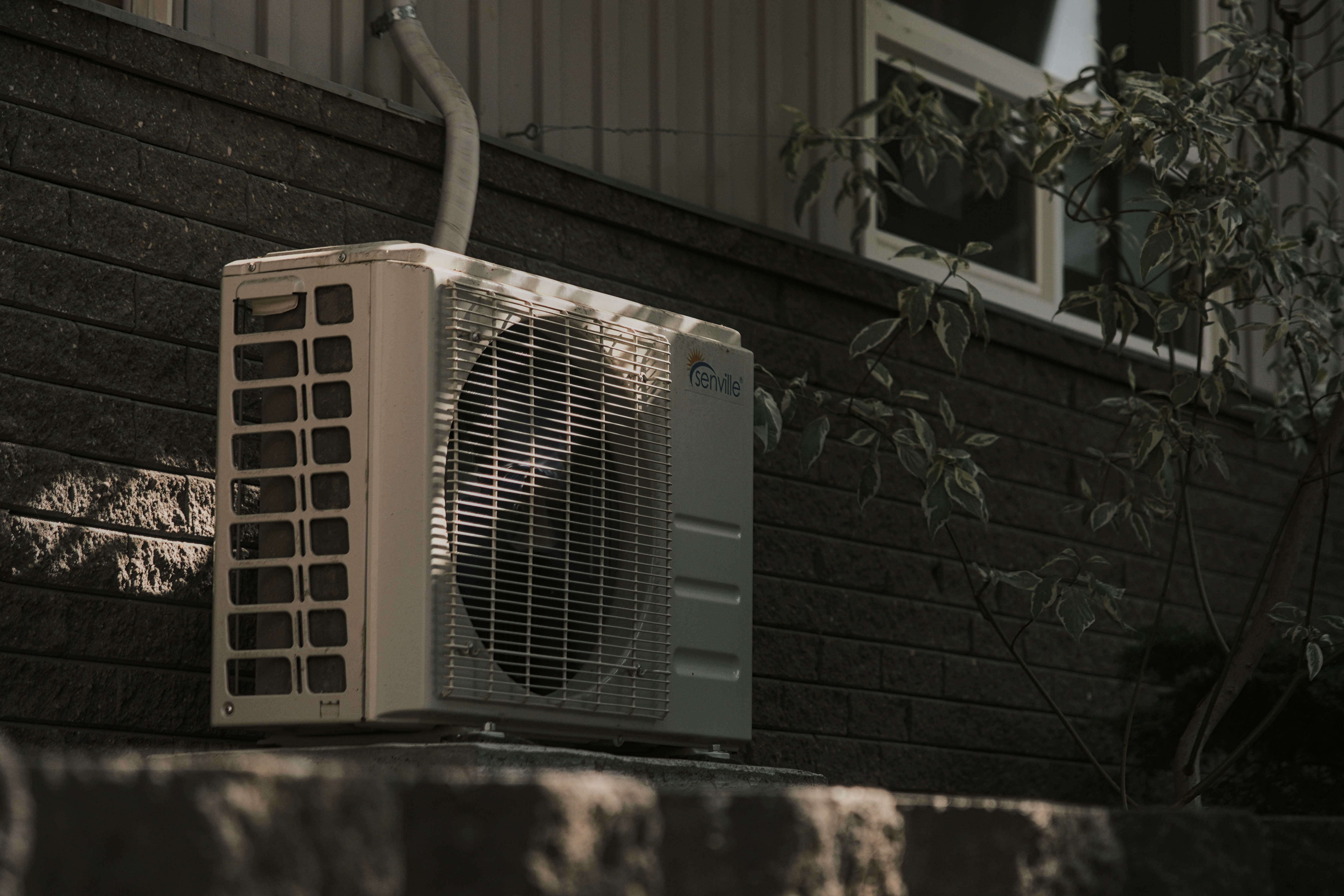
The outdoor unit can't simply go wherever there's a spare piece of wall. The proposed position should account for manufacturer clearance requirements, airflow around the unit, noise, neighbouring properties, distance from bedrooms and windows, the pipework route, maintenance access, condensate disposal, ground clearance and planning requirements. Modern R290 heat pumps, for example, can carry specific location requirements because they use propane as the refrigerant, and these need considering before installation starts, not once the unit has already arrived on site.
8. Planning Permission and Permitted Development
Many domestic air source heat pump installations can go ahead under permitted development rights, but that doesn't mean every installation automatically qualifies. The installer should check the proposed location against the applicable requirements, since listed buildings, conservation areas, unusual property layouts or installations involving multiple outdoor units can all need extra consideration. It's far better to establish this during the survey than to discover a planning issue after the equipment has already been ordered.
9. Electrical Supply and DNO Requirements
A heat pump is a significant electrical appliance, so the property's electrical supply needs proper consideration too. The survey should look at the existing installation and any other major loads in the property, such as an EV charger, electric shower, induction hob, hot tub, solar PV, battery storage or air conditioning. The installer should work out the electrical requirements of the proposed heat pump and establish whether the installation needs to be Connect & Notify or Apply to Connect with the Distribution Network Operator. In some cases, the incoming electrical supply may need upgrading too, and that's something you want to know well before installation day.
10. Controls and How the System Will Actually Operate
A heat pump isn't just an outdoor box connected to some radiators. The controls and operating strategy are a genuine part of the system design. The installer should consider how the property is currently zoned, what controls are already in place, and how the new system will actually run day to day. Good heat pump systems are generally designed around long, steady operating periods and weather compensation, rather than repeatedly blasting the house with very hot water for short bursts, so the control strategy should be part of the design from the beginning rather than an afterthought.
11. Your Existing Energy Use
Previous energy consumption gives a useful sense check against the calculated heat loss. It shouldn't replace a proper calculation, but looking at previous gas, oil or LPG use can help confirm whether the figures look realistic. If a calculation suggests an unusually high heat requirement for a property that's historically used relatively little energy, that's worth investigating before any equipment gets selected.
12. What You Actually Want From the System
This part is surprisingly important. A good survey should involve an actual conversation with the homeowner. Do you keep the house at 18°C or 22°C? Do you heat every room? Are certain bedrooms rarely used? Do you have unusually high hot water demand? Are you planning an extension, an EV charger, solar panels or a hot tub? Do you want cooling if the heat pump supports it? The technically correct system for one household isn't necessarily the correct system for another, so a survey should consider how you actually live in your home, not just its dimensions on paper.
What Should You Receive After a Heat Pump Survey?
By the end of the process, there should be a clear technical basis for the proposed installation. You should be able to understand how much heat your property requires, which heat pump has been selected and why, what flow temperature the system is designed around, whether any radiators need changing, what happens with your hot water, where the unit will be positioned, and whether any electrical or planning work is needed. If major parts of the design are still being guessed at by this point, the survey hasn't really done its job.
Can You Get an Independent Heat Pump Survey?
Yes. You don't need to wait until you've chosen an installer to understand whether your property is suitable for a heat pump. An independent survey is particularly useful if you're considering a heat pump and want to understand the likely requirements before requesting quotes, or if you've already had one or more quotations back and the recommendations don't match. One installer might say you need a 12kW heat pump and every radiator replaced, while another proposes an 8kW unit with only three radiator changes. The underlying calculations should explain why, and if they can't, that's worth questioning.
Independent Heat Loss & Heat Pump Survey
UK Heat Pump Help offers an independent heat loss survey for homeowners who want to understand their property before committing to an installation. We assess the room-by-room heat loss, existing emitters, likely operating temperatures and overall suitability, giving you a clear picture of what your property actually requires. If you've already got a quote in hand and just want it independently checked rather than a full survey from scratch, our Pre-Installation Design & Heat Loss Review is built for exactly that. Either way, the aim isn't to sell you a heat pump. It's to give you the information you need before somebody else tries to.


Sep 30, 2026
5 min read
Best Electricity Tariffs for Heat Pump Owners in the UK
Read More
Sep 30, 2026
5 min read
Best Electricity Tariffs for Heat Pump Owners in the UK
Read More

Sep 27, 2026
5 min read
Are Heat Pumps Noisy? A UK Guide to Noise Levels and What's Normal
Read More
Sep 27, 2026
5 min read
Are Heat Pumps Noisy? A UK Guide to Noise Levels and What's Normal
Read More

Contact Us
Not Sure Which Service You Need?
Not Sure Which Service You Need?
Not Sure Which Service You Need?
Not Sure Which Service You Need?
Not Sure Which Service You Need?
Whether you need help with an existing heat pump, a pre-installation review, cooling advice, servicing or a room-by-room heat loss survey, send us a few details and we'll point you in the right direction.
Whether you need help with an existing heat pump, a pre-installation review, cooling advice, servicing or a room-by-room heat loss survey, send us a few details and we'll point you in the right direction.
Whether you need help with an existing heat pump, a pre-installation review, cooling advice, servicing or a room-by-room heat loss survey, send us a few details and we'll point you in the right direction.

