How Dirty Filters Can Cause Heat Pump Problems
How Dirty Filters Can Cause Heat Pump Problems
How Dirty Filters Can Cause Heat Pump Problems
How Dirty Filters Can Cause Heat Pump Problems
How Dirty Filters Can Cause Heat Pump Problems

UK Heat pump Help Technical Team
Independent Heat Pump Engineer
How Dirty Filters Cause Heat Pump Problems And What To Do About It
When a heat pump starts performing badly, most people's minds jump straight to the expensive explanations wrong sizing, poor installation, faulty components. And sometimes, yes, that's exactly what it is. But a surprising number of the systems we review have a much simpler problem at the root of it: a dirty filter or blocked strainer that's quietly restricting the water flow the heat pump needs to operate properly.
It sounds almost too simple to be the cause of real problems. The reality is that even a partially blocked filter can affect efficiency, increase electricity bills, trigger fault codes, and leave rooms persistently cold and because the symptoms are gradual, many homeowners don't connect them to something as straightforward as a filter that needs cleaning. This guide explains why filters matter so much more with a heat pump than with a traditional boiler, what warning signs to look out for, why older heating systems are especially vulnerable, and what you can actually do about it.
Why Water Flow Is So Critical for Heat Pumps
To understand why a dirty filter causes so many problems, you first need to understand how a heat pump actually distributes heat because it's fundamentally different from how a boiler works. A gas boiler fires up, heats water to 70–80°C very quickly, blasts that heat through the radiators, then shuts off. It's a short, intense burst of energy. The system can cope with partial restrictions because the water pressure and temperature are both high enough to compensate.
A heat pump works in the opposite way. It runs at much lower flow temperatures typically 35–50°C over longer, slower, continuous periods. There's no high-pressure burst to push through a restriction. The heat pump depends entirely on a steady, unobstructed movement of water through the full circuit to transfer heat effectively. That water needs to travel through the heat pump unit itself, all the connecting pipework, every radiator or underfloor heating loop in the building, and any buffer tank or hot water cylinder in the system.
Restrict that circulation even slightly and the heat pump begins to struggle. It detects that it can't move sufficient water, may reduce its output, throw a fault code, or in some cases shut down temporarily to protect its internal components. Unlike a boiler, a heat pump has almost no tolerance for poor circulation. This is also one reason why heat pump system balancing matters so muc the entire system needs to be properly balanced and flowing freely for the heat pump to operate as designed.
What Filters Does a Heat Pump System Actually Contain?
Many homeowners are surprised to learn that their heating system contains filters at all it's rarely mentioned during handover. But most properly installed UK heat pump systems include at least one, and often several, forms of filtration.
Magnetic filters are the most common type. They use a strong magnet inside a sealed housing to pull magnetite the fine black iron oxide particles that form when metal pipework corrodes out of the circulating water. In an older heating system that previously ran on a gas boiler, magnetite levels can be very high, especially in the early months after installation. A magnetic filter that hasn't been cleaned since installation can become heavily loaded within the first year.
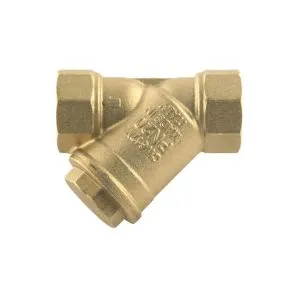
Y-strainers and system strainers are mesh screens fitted in-line in the pipework. Their job is to catch larger particles pieces of scale, installation debris, fragments from old pipe fittings before they can reach sensitive components. The brass Y-strainer shown in the image above is a classic example of this type. Unlike magnetic filters, strainers don't need a magnet to work; they physically intercept solid particles by size. They're effective but need periodic inspection, particularly in the first year after installation on an older system.
Dirt separators are more sophisticated than a basic strainer. They use the physics of water flow typically a centrifugal or vortex action to cause particles and microbubbles to drop out of the water column. They're often installed at a key point in the return circuit and are increasingly common in well-designed heat pump installations.
Some heat pump units also have an internal gauze filter built into the water connections. These are easy to overlook because they're inside the unit rather than on the external pipework. If debris bypasses the external filters, this internal gauze is the last line of defence and one of the most inconvenient places for a blockage to develop.
5 Warning Signs That Filters May Be Blocked
The frustrating thing about blocked filters is that their symptoms rarely look like a filter problem. They look like poor performance, high bills, or a vague sense that the system just isn't doing what it should.
The first and clearest technical indicator is flow fault codes or circulation errors. Heat pumps continuously monitor water flow, and when the flow rate drops below a threshold, the controller logs a fault. You might see a specific error code on the controller display, or you might just notice the system shutting down and restarting more frequently than normal. What makes filter-related flow faults deceptive is that they tend to be intermittent rather than constant. The system might run fine for a few hours, then fault, then clear itself only to fault again. This on-off behaviour leads many people to assume it's an electrical or sensor fault, when the real cause is a filter that's partially blocking flow under certain conditions. This connects directly to the wider issue of why some heat pump systems struggle to circulate through radiators something worth reading alongside this article.
The second warning sign is rooms that won't warm up properly. If certain rooms feel persistently colder than they should, or if radiators that used to reach a good temperature are now only lukewarm, reduced water flow caused by a blocked filter may be the reason. The heat pump is still running, but not enough warm water is circulating to deliver heat effectively to every part of the building. This symptom is especially noticeable in rooms at the end of long pipe runs, or in homes where the system was already marginal in terms of radiator sizing. For a fuller explanation, see our article on why some rooms stay cold with a heat pump. Systems with long pipe runs are particularly sensitive to any flow restriction, because the pressure drop over a long circuit is already higher than in a compact system.
The third warning sign is higher electricity bills. When water flow is restricted, the heat pump has to work harder to extract the same amount of useful heat. The compressor runs for longer, the system efficiency drops, and electricity consumption rises sometimes significantly. This is one of the most financially damaging effects of a blocked filter precisely because it's so gradual. Bills don't spike overnight; they creep up over weeks or months as the filter becomes increasingly loaded. Our article on why heat pumps are expensive to run covers this and other contributing factors in detail, and our guide on how to reduce heat pump electricity bills is a good companion read.
The fourth warning sign is more frequent or aggressive defrost cycles. Air source heat pumps defrost their outdoor coil periodically it's a normal part of operation, especially in cold, damp UK winters. What's not normal is a system defrosting very frequently, or the outdoor unit building up unusually heavy ice before defrost kicks in. Poor internal water circulation can contribute to this, because during a defrost cycle the heat pump draws heat from the building's water circuit to melt ice off the outdoor coil. If water flow is restricted, there's less heat available from the building side to complete the defrost efficiently. See our article on why heat pumps defrost so often for a full breakdown of what drives defrost frequency and when it becomes a problem.
The fifth warning sign is unusual noises in the pipework or from the unit. Restricted flow changes the acoustics of a heating system. You might notice a rushing or gurgling sound in the pipes near the filter or strainer, an increase in circulation pump noise as it works harder against the restriction, or an unusual vibration from the heat pump unit itself. Noise alone doesn't confirm a blocked filter, but if you're hearing something new alongside any of the other symptoms above, it adds to the overall picture and makes it worth investigating the filtration side first.
Why Older Heating Systems Are More Vulnerable
The risk of filter problems is significantly higher when a heat pump has been connected to an existing radiator system that previously ran on a gas boiler which is the situation for the majority of retrofit heat pump installations in the UK. Years of boiler operation leave sludge, magnetite, and scale deposits throughout the pipework, particularly in low-flow areas like the bottom of radiators, bends in the pipe run, and around old valve seats. A thorough powerflush before installation removes a large proportion of this material, but it doesn't get everything. The remainder gets disturbed when the new system starts operating, and it then circulates until it ends up in the filters.
This is one reason the first year of heat pump operation on an older system is the most demanding for filtration. Some installations genuinely need the magnetic filter cleaned every two to three months during that first year alone. There's also a direct link to whether the existing radiators are suitable old radiators coated with internal sludge will perform less effectively even once the system is clean, which is part of why the question of whether heat pumps work with old radiators is more complicated than a simple yes or no. The related question of whether heat pumps work with microbore pipework is also worth considering narrow microbore pipes are particularly vulnerable to flow restriction from even small amounts of debris, making clean filtration even more critical in those installations.
The Maintenance Gap Nobody Mentions
One of the things we hear most often from homeowners is a simple variation of the same sentence: nobody told me the filters needed checking. It's a genuine gap in how heat pump systems are handed over. Installers are often focused on getting the system commissioned and signed off, and ongoing maintenance instructions including filter checking aren't always communicated clearly, or at all. The result is that systems run for months or years with filters that have never been cleaned. In older homes this can lead to significant performance degradation and, in more serious cases, damage to the heat pump's plate heat exchanger which is an expensive component to replace.
In terms of how often filters should be checked: during the first three months on a new installation, especially on an older system, the magnetic filter should ideally be checked monthly the first clean is often needed within four to six weeks. From months four to twelve, checking every two to three months is sensible, with a strainer inspection at the six-month mark. From year two onwards, an annual check of all filters is the minimum, with more frequent checks if any performance symptoms appear. Always check filters after any system work such as a powerflush, radiator replacement, or plumbing work.
If your system has never had a filter check and it's been running for more than six months, making this the first thing you do before investigating any other performance issues is the most practical step available. This also connects to a broader point about whether your system was installed correctly in the first place. Our article on 7 signs your heat pump may not have been installed correctly covers this in full inadequate filtration specification is one of the items on that list.
How to Clean a Heat Pump Filter: Step by Step
Cleaning a magnetic filter is a routine maintenance task that most homeowners can do themselves with basic DIY confidence. You'll need a bucket or towel to catch water drips, a cloth or brush for cleaning the magnetic core, and access to the filter housing usually on the pipework near the heat pump, often with a black or grey body and a twist-off or screw-off base.
Start by turning off the heat pump and allowing the system to cool slightly if it has been running. Locate the filter and close the service valves on either side these isolate it from the system so water doesn't drain out when you open it. Place your bucket or cloth below the filter housing, then unscrew the collection canister at the base, expecting a small amount of water to spill even with the valves closed. Remove the magnetic core from inside the housing and hold it over the bucket while you wipe or rinse off the accumulated magnetite this material is typically black or very dark brown and may have a sludgy or granular texture. Rinse the canister itself under clean water to remove any loose debris, then reassemble the filter, reopen the service valves, and check the system pressure gauge, topping up pressure if it has dropped below the recommended level. Restart the heat pump and monitor for fault codes over the next hour.
For Y-strainers, the process is similar: close the isolation valves, remove the end cap, extract and rinse the mesh screen, reassemble, and restore pressure. After cleaning, watch for two key things whether the system pressure stays within the normal operating range of 1.0 to 1.5 bar when cold, and whether any fault codes clear and stay clear. If flow fault codes clear after cleaning and don't return, the filter was the cause. If fault codes persist, the problem may lie deeper in the pipework, pump, or system design.
When a Dirty Filter Is Not the Whole Story
Cleaning the filter is always a sensible first step, but it's worth being honest about the fact that in some cases, poor circulation has a deeper cause that a filter clean alone won't fix. Some systems have fundamental design issues undersized pipework, incorrect pump settings, a buffer tank specified incorrectly, or a flow temperature set too low for the radiators installed. In these situations a dirty filter may be making things worse, but cleaning it won't fully resolve the problem.
Signs that the issue may be deeper include flow faults that return very quickly after cleaning within days rather than months no meaningful improvement in heating performance or electricity usage after a thorough filter clean, the heat pump running constantly but the house still not reaching temperature, and significant variation in performance between different parts of the house that cleaning doesn't resolve. Our article on why your house is still cold with a heat pump is a good overview of the wider causes. The concept of Delta T on a heat pump system is also directly relevant it's the difference between the flow and return water temperatures and one of the key indicators of whether the system is circulating and exchanging heat correctly. If your heat pump is also losing pressure repeatedly alongside showing flow problems, that combination points to a leak or expansion vessel issue that's worth investigating at the same time.
Planning a New Installation? Filtration Matters From Day One
If you haven't had your heat pump installed yet, the filtration question is worth raising with your installer before any work begins. A well-designed heat pump system should include a properly specified magnetic filter and strainer as standard. If the quote or design you've received doesn't mention filtration, or if you're uncertain whether the proposed setup is adequate for an older existing system, that's worth challenging before you commit. This is one of the areas our Pre-Installation Design & Heat Loss Review covers as part of a full independent assessment of your proposed installation getting the system design right from the start avoids the kind of performance problems that take months to diagnose after the fact.
In Summary
Dirty filters and blocked strainers are genuinely one of the most overlooked causes of heat pump problems in the UK not because they're rare, but because their symptoms are gradual and easily mistaken for something more complicated. If your heat pump is showing flow fault codes, your rooms aren't reaching temperature, your electricity bills have crept up without explanation, or your outdoor unit seems to be defrosting more than it should checking and cleaning your filters is the first, simplest, and cheapest diagnostic step available. In a good proportion of cases, that's all it takes.
If you've cleaned the filters and performance hasn't improved, or if you'd like an independent technical assessment of your system as a whole, our Full Performance Review looks at system design, flow temperatures, circulation, controls, and overall performance and gives you a clear written report on what's causing the problem and what needs to change. You can read more about how we work on the How It Works page, or get in touch directly if you'd prefer to describe the issue first.
How Dirty Filters Cause Heat Pump Problems And What To Do About It
When a heat pump starts performing badly, most people's minds jump straight to the expensive explanations wrong sizing, poor installation, faulty components. And sometimes, yes, that's exactly what it is. But a surprising number of the systems we review have a much simpler problem at the root of it: a dirty filter or blocked strainer that's quietly restricting the water flow the heat pump needs to operate properly.
It sounds almost too simple to be the cause of real problems. The reality is that even a partially blocked filter can affect efficiency, increase electricity bills, trigger fault codes, and leave rooms persistently cold and because the symptoms are gradual, many homeowners don't connect them to something as straightforward as a filter that needs cleaning. This guide explains why filters matter so much more with a heat pump than with a traditional boiler, what warning signs to look out for, why older heating systems are especially vulnerable, and what you can actually do about it.
Why Water Flow Is So Critical for Heat Pumps
To understand why a dirty filter causes so many problems, you first need to understand how a heat pump actually distributes heat because it's fundamentally different from how a boiler works. A gas boiler fires up, heats water to 70–80°C very quickly, blasts that heat through the radiators, then shuts off. It's a short, intense burst of energy. The system can cope with partial restrictions because the water pressure and temperature are both high enough to compensate.
A heat pump works in the opposite way. It runs at much lower flow temperatures typically 35–50°C over longer, slower, continuous periods. There's no high-pressure burst to push through a restriction. The heat pump depends entirely on a steady, unobstructed movement of water through the full circuit to transfer heat effectively. That water needs to travel through the heat pump unit itself, all the connecting pipework, every radiator or underfloor heating loop in the building, and any buffer tank or hot water cylinder in the system.
Restrict that circulation even slightly and the heat pump begins to struggle. It detects that it can't move sufficient water, may reduce its output, throw a fault code, or in some cases shut down temporarily to protect its internal components. Unlike a boiler, a heat pump has almost no tolerance for poor circulation. This is also one reason why heat pump system balancing matters so muc the entire system needs to be properly balanced and flowing freely for the heat pump to operate as designed.
What Filters Does a Heat Pump System Actually Contain?
Many homeowners are surprised to learn that their heating system contains filters at all it's rarely mentioned during handover. But most properly installed UK heat pump systems include at least one, and often several, forms of filtration.
Magnetic filters are the most common type. They use a strong magnet inside a sealed housing to pull magnetite the fine black iron oxide particles that form when metal pipework corrodes out of the circulating water. In an older heating system that previously ran on a gas boiler, magnetite levels can be very high, especially in the early months after installation. A magnetic filter that hasn't been cleaned since installation can become heavily loaded within the first year.
Y-strainers and system strainers are mesh screens fitted in-line in the pipework. Their job is to catch larger particles pieces of scale, installation debris, fragments from old pipe fittings before they can reach sensitive components. The brass Y-strainer shown in the image above is a classic example of this type. Unlike magnetic filters, strainers don't need a magnet to work; they physically intercept solid particles by size. They're effective but need periodic inspection, particularly in the first year after installation on an older system.
Dirt separators are more sophisticated than a basic strainer. They use the physics of water flow typically a centrifugal or vortex action to cause particles and microbubbles to drop out of the water column. They're often installed at a key point in the return circuit and are increasingly common in well-designed heat pump installations.
Some heat pump units also have an internal gauze filter built into the water connections. These are easy to overlook because they're inside the unit rather than on the external pipework. If debris bypasses the external filters, this internal gauze is the last line of defence and one of the most inconvenient places for a blockage to develop.
5 Warning Signs That Filters May Be Blocked
The frustrating thing about blocked filters is that their symptoms rarely look like a filter problem. They look like poor performance, high bills, or a vague sense that the system just isn't doing what it should.
The first and clearest technical indicator is flow fault codes or circulation errors. Heat pumps continuously monitor water flow, and when the flow rate drops below a threshold, the controller logs a fault. You might see a specific error code on the controller display, or you might just notice the system shutting down and restarting more frequently than normal. What makes filter-related flow faults deceptive is that they tend to be intermittent rather than constant. The system might run fine for a few hours, then fault, then clear itself only to fault again. This on-off behaviour leads many people to assume it's an electrical or sensor fault, when the real cause is a filter that's partially blocking flow under certain conditions. This connects directly to the wider issue of why some heat pump systems struggle to circulate through radiators something worth reading alongside this article.
The second warning sign is rooms that won't warm up properly. If certain rooms feel persistently colder than they should, or if radiators that used to reach a good temperature are now only lukewarm, reduced water flow caused by a blocked filter may be the reason. The heat pump is still running, but not enough warm water is circulating to deliver heat effectively to every part of the building. This symptom is especially noticeable in rooms at the end of long pipe runs, or in homes where the system was already marginal in terms of radiator sizing. For a fuller explanation, see our article on why some rooms stay cold with a heat pump. Systems with long pipe runs are particularly sensitive to any flow restriction, because the pressure drop over a long circuit is already higher than in a compact system.
The third warning sign is higher electricity bills. When water flow is restricted, the heat pump has to work harder to extract the same amount of useful heat. The compressor runs for longer, the system efficiency drops, and electricity consumption rises sometimes significantly. This is one of the most financially damaging effects of a blocked filter precisely because it's so gradual. Bills don't spike overnight; they creep up over weeks or months as the filter becomes increasingly loaded. Our article on why heat pumps are expensive to run covers this and other contributing factors in detail, and our guide on how to reduce heat pump electricity bills is a good companion read.
The fourth warning sign is more frequent or aggressive defrost cycles. Air source heat pumps defrost their outdoor coil periodically it's a normal part of operation, especially in cold, damp UK winters. What's not normal is a system defrosting very frequently, or the outdoor unit building up unusually heavy ice before defrost kicks in. Poor internal water circulation can contribute to this, because during a defrost cycle the heat pump draws heat from the building's water circuit to melt ice off the outdoor coil. If water flow is restricted, there's less heat available from the building side to complete the defrost efficiently. See our article on why heat pumps defrost so often for a full breakdown of what drives defrost frequency and when it becomes a problem.
The fifth warning sign is unusual noises in the pipework or from the unit. Restricted flow changes the acoustics of a heating system. You might notice a rushing or gurgling sound in the pipes near the filter or strainer, an increase in circulation pump noise as it works harder against the restriction, or an unusual vibration from the heat pump unit itself. Noise alone doesn't confirm a blocked filter, but if you're hearing something new alongside any of the other symptoms above, it adds to the overall picture and makes it worth investigating the filtration side first.
Why Older Heating Systems Are More Vulnerable
The risk of filter problems is significantly higher when a heat pump has been connected to an existing radiator system that previously ran on a gas boiler which is the situation for the majority of retrofit heat pump installations in the UK. Years of boiler operation leave sludge, magnetite, and scale deposits throughout the pipework, particularly in low-flow areas like the bottom of radiators, bends in the pipe run, and around old valve seats. A thorough powerflush before installation removes a large proportion of this material, but it doesn't get everything. The remainder gets disturbed when the new system starts operating, and it then circulates until it ends up in the filters.
This is one reason the first year of heat pump operation on an older system is the most demanding for filtration. Some installations genuinely need the magnetic filter cleaned every two to three months during that first year alone. There's also a direct link to whether the existing radiators are suitable old radiators coated with internal sludge will perform less effectively even once the system is clean, which is part of why the question of whether heat pumps work with old radiators is more complicated than a simple yes or no. The related question of whether heat pumps work with microbore pipework is also worth considering narrow microbore pipes are particularly vulnerable to flow restriction from even small amounts of debris, making clean filtration even more critical in those installations.
The Maintenance Gap Nobody Mentions
One of the things we hear most often from homeowners is a simple variation of the same sentence: nobody told me the filters needed checking. It's a genuine gap in how heat pump systems are handed over. Installers are often focused on getting the system commissioned and signed off, and ongoing maintenance instructions including filter checking aren't always communicated clearly, or at all. The result is that systems run for months or years with filters that have never been cleaned. In older homes this can lead to significant performance degradation and, in more serious cases, damage to the heat pump's plate heat exchanger which is an expensive component to replace.
In terms of how often filters should be checked: during the first three months on a new installation, especially on an older system, the magnetic filter should ideally be checked monthly the first clean is often needed within four to six weeks. From months four to twelve, checking every two to three months is sensible, with a strainer inspection at the six-month mark. From year two onwards, an annual check of all filters is the minimum, with more frequent checks if any performance symptoms appear. Always check filters after any system work such as a powerflush, radiator replacement, or plumbing work.
If your system has never had a filter check and it's been running for more than six months, making this the first thing you do before investigating any other performance issues is the most practical step available. This also connects to a broader point about whether your system was installed correctly in the first place. Our article on 7 signs your heat pump may not have been installed correctly covers this in full inadequate filtration specification is one of the items on that list.
How to Clean a Heat Pump Filter: Step by Step
Cleaning a magnetic filter is a routine maintenance task that most homeowners can do themselves with basic DIY confidence. You'll need a bucket or towel to catch water drips, a cloth or brush for cleaning the magnetic core, and access to the filter housing usually on the pipework near the heat pump, often with a black or grey body and a twist-off or screw-off base.
Start by turning off the heat pump and allowing the system to cool slightly if it has been running. Locate the filter and close the service valves on either side these isolate it from the system so water doesn't drain out when you open it. Place your bucket or cloth below the filter housing, then unscrew the collection canister at the base, expecting a small amount of water to spill even with the valves closed. Remove the magnetic core from inside the housing and hold it over the bucket while you wipe or rinse off the accumulated magnetite this material is typically black or very dark brown and may have a sludgy or granular texture. Rinse the canister itself under clean water to remove any loose debris, then reassemble the filter, reopen the service valves, and check the system pressure gauge, topping up pressure if it has dropped below the recommended level. Restart the heat pump and monitor for fault codes over the next hour.
For Y-strainers, the process is similar: close the isolation valves, remove the end cap, extract and rinse the mesh screen, reassemble, and restore pressure. After cleaning, watch for two key things whether the system pressure stays within the normal operating range of 1.0 to 1.5 bar when cold, and whether any fault codes clear and stay clear. If flow fault codes clear after cleaning and don't return, the filter was the cause. If fault codes persist, the problem may lie deeper in the pipework, pump, or system design.
When a Dirty Filter Is Not the Whole Story
Cleaning the filter is always a sensible first step, but it's worth being honest about the fact that in some cases, poor circulation has a deeper cause that a filter clean alone won't fix. Some systems have fundamental design issues undersized pipework, incorrect pump settings, a buffer tank specified incorrectly, or a flow temperature set too low for the radiators installed. In these situations a dirty filter may be making things worse, but cleaning it won't fully resolve the problem.
Signs that the issue may be deeper include flow faults that return very quickly after cleaning within days rather than months no meaningful improvement in heating performance or electricity usage after a thorough filter clean, the heat pump running constantly but the house still not reaching temperature, and significant variation in performance between different parts of the house that cleaning doesn't resolve. Our article on why your house is still cold with a heat pump is a good overview of the wider causes. The concept of Delta T on a heat pump system is also directly relevant it's the difference between the flow and return water temperatures and one of the key indicators of whether the system is circulating and exchanging heat correctly. If your heat pump is also losing pressure repeatedly alongside showing flow problems, that combination points to a leak or expansion vessel issue that's worth investigating at the same time.
Planning a New Installation? Filtration Matters From Day One
If you haven't had your heat pump installed yet, the filtration question is worth raising with your installer before any work begins. A well-designed heat pump system should include a properly specified magnetic filter and strainer as standard. If the quote or design you've received doesn't mention filtration, or if you're uncertain whether the proposed setup is adequate for an older existing system, that's worth challenging before you commit. This is one of the areas our Pre-Installation Design & Heat Loss Review covers as part of a full independent assessment of your proposed installation getting the system design right from the start avoids the kind of performance problems that take months to diagnose after the fact.
In Summary
Dirty filters and blocked strainers are genuinely one of the most overlooked causes of heat pump problems in the UK not because they're rare, but because their symptoms are gradual and easily mistaken for something more complicated. If your heat pump is showing flow fault codes, your rooms aren't reaching temperature, your electricity bills have crept up without explanation, or your outdoor unit seems to be defrosting more than it should checking and cleaning your filters is the first, simplest, and cheapest diagnostic step available. In a good proportion of cases, that's all it takes.
If you've cleaned the filters and performance hasn't improved, or if you'd like an independent technical assessment of your system as a whole, our Full Performance Review looks at system design, flow temperatures, circulation, controls, and overall performance and gives you a clear written report on what's causing the problem and what needs to change. You can read more about how we work on the How It Works page, or get in touch directly if you'd prefer to describe the issue first.

Oct 2, 2026
5 min read
Do Heat Pumps Work With Underfloor Heating?
Read More
Oct 2, 2026
5 min read
Do Heat Pumps Work With Underfloor Heating?
Read More

Sep 30, 2026
5 min read
Heat Pump Diverter Valve Problems: Heating and Hot Water Symptoms
Read More
Sep 30, 2026
5 min read
Heat Pump Diverter Valve Problems: Heating and Hot Water Symptoms
Read More


Contact Us
Not Sure Which Service You Need?
Not Sure Which Service You Need?
Not Sure Which Service You Need?
Not Sure Which Service You Need?
Not Sure Which Service You Need?
Whether you need help with an existing heat pump, a pre-installation review, cooling advice, servicing or a room-by-room heat loss survey, send us a few details and we'll point you in the right direction.
Whether you need help with an existing heat pump, a pre-installation review, cooling advice, servicing or a room-by-room heat loss survey, send us a few details and we'll point you in the right direction.
Whether you need help with an existing heat pump, a pre-installation review, cooling advice, servicing or a room-by-room heat loss survey, send us a few details and we'll point you in the right direction.

