What Pressure Should My Heat Pump Run At?
What Pressure Should My Heat Pump Run At?
What Pressure Should My Heat Pump Run At?
What Pressure Should My Heat Pump Run At?
What Pressure Should My Heat Pump Run At?

UK Heat pump Help Technical Team
Independent Heat Pump Engineer
What Pressure Should My Heat Pump Run At?
Pressure is one of those things most heat pump owners only notice when something feels off a fault code on the controller, radiators that stopped heating properly, or a reading on the gauge that looks lower than it should. It is also one of the most common questions we get from UK homeowners, and in many cases the explanation is simpler than people expect.
That said, pressure that keeps dropping week after week, or that swings dramatically as the system runs, is usually telling you something. This guide explains what normal looks like, what causes problems, and how to tell the difference between a minor adjustment and an underlying fault that needs proper attention.
What Is the Normal Operating Pressure for a UK Heat Pump?
For most domestic air source heat pump systems in the UK, normal operating pressure when the system is cold sits between 1.0 and 2.0 bar when cold, with most installers setting the initial fill pressure to around 1.5 bar at commissioning.
The right target for your specific system depends on a few things:
The height of your property taller buildings require a slightly higher base pressure
The total volume of water held in the pipework and emitters
Whether a volumiser or buffer tank has been fitted as part of the installation
The heat pump manufacturer’s specific guidance in the installation manual
For most homeowners, a cold reading between 1.2 and 1.8 bar is completely normal. If you have your original commissioning documentation, it should state the target pressure your installer set at handover — that figure is the most reliable reference point for your specific system.
Why Does the Pressure Rise When the Heating Is Running?
This is the most common pressure question we receive — and the answer is reassuring. If your pressure rises when the system runs and drops back down when it cools, that is thermal expansion and it is entirely normal behaviour, not a fault.
When water heats up, it expands. Your system includes an expansion vessel specifically designed to absorb this expansion, but the pressure reading on the gauge will still climb slightly as the water temperature increases.
The expansion vessel contains a pressurised air cushion separated from the system water by a rubber diaphragm. As long as this vessel is in good condition and correctly charged, it keeps pressure fluctuations within a safe and predictable range.
A typical healthy pressure pattern looks like this:
1.4 bar when the system is cold and at rest
1.7 to 1.9 bar when the heating circuit is actively running
These fluctuations are nothing to worry about. Where it becomes a concern is if the pressure climbs dramatically — reaching 2.5 bar or above during normal operation — which usually points to an expansion vessel fault rather than routine thermal expansion. In that situation, the vessel can no longer absorb the expansion properly and the excess pressure has nowhere safe to go.
What Happens When Heat Pump Pressure Is Too Low?
Low system pressure affects how reliably water circulates around the heating circuit. When pressure drops too far, the typical effects include:
Poor or intermittent circulation, with some radiators staying cold
Flow faults and error codes appearing on the controller
The flow temperature reading lower than expected or set
Reduced heating performance across the property
Automatic lockouts on some systems to protect the heat pump from running in unsafe conditions
In practice, anything below 1 bar is where most systems begin to struggle. Some heat pumps will display a flow error or warning before any noticeable performance drop if you are seeing flow-related fault codes alongside a low pressure reading, the two are almost certainly connected. A single pressure drop after bleeding a radiator or following maintenance is usually a one-off that just needs topping up. Pressure that keeps falling week after week is a different situation entirely.
It is also worth knowing that repeatedly adding fresh water to compensate introduces oxygen into the system. Over time, that oxygen accelerates internal corrosion and can cause sludge to build up in the pipework and radiators — which creates a separate set of problems.
Why Does My Heat Pump Keep Losing Pressure?
Occasional small drops are a normal part of any closed heating system. Regularly needing to top up is not, and it is always worth establishing the cause rather than treating it as routine maintenance.
The most common causes of persistent pressure loss are:
Small Water Leaks
Even a very small, almost invisible leak will gradually reduce system pressure over time. It does not have to be a dripping pipe or a visible puddle a hairline crack in a seal, a weeping joint, or a slightly loose connection at a valve is enough to cause a slow but steady pressure drop that only becomes noticeable over days or weeks. In some cases the source of the leak is not immediately obvious even on inspection. We reviewed one case in Suffolk where a faulty anti-freeze valve had been causing pressure loss and heat pump lockouts for months with no visible sign of a leak anywhere outside the property.
Leaks are most commonly found around:
Radiator valves, particularly older thermostatic heads
Automatic air vents — these can weep small amounts of water as they operate
Pipe joints and compression fittings
Cylinder connections and heat exchanger fittings
External pipework runs, especially where insulation may conceal a joint
Expansion Vessel Problems
A failed or under-pressurised expansion vessel is one of the most common causes of recurring pressure problems in heat pump systems. The vessel contains a rubber diaphragm that separates a cushion of pressurised air from the system water. When the diaphragm fails or the pre-charge pressure drops too low, the vessel can no longer absorb expansion properly and the system behaves as if it has a leak pressure builds up during heating and falls back too far when the system cools.
Signs that the expansion vessel may be the issue:
Pressure climbs rapidly or unusually high when heating starts
Pressure falls back below 1 bar when the system cools again
Water discharging from the external pressure relief valve pipe
Automatic Air Vents
Automatic air vents are designed to release trapped air from the heating circuit. In doing so, they occasionally discharge small amounts of water alongside the air. This is usually a very slow process that can go unnoticed until the pressure gauge eventually drops below its normal range.
If you notice a slow but steady decline in pressure and cannot find a visible leak around any radiator valves or pipe joints, an automatic air vent that is passing water is worth checking they are typically located at high points in the circuit or inside the heat pump unit itself.
Recent Maintenance or Servicing
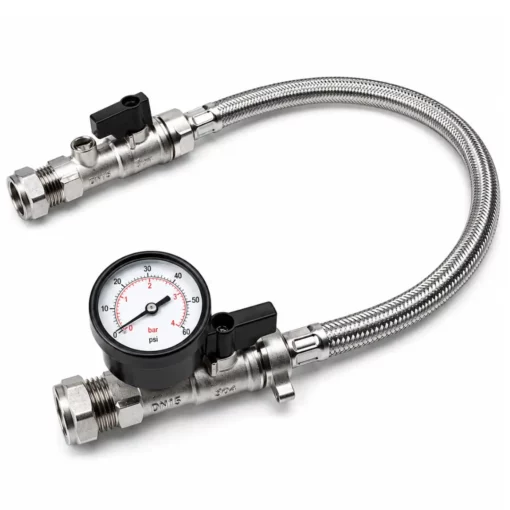
If radiators have recently been bled, or any work has been carried out on the heating circuit, system pressure will typically drop slightly. This is entirely normal and usually just needs a single top-up using the filling loop. It becomes a concern only if the pressure continues to fall after that initial correction.
Can I Just Keep Topping the System Up?
As a one-off adjustment after maintenance or servicing, yes. As an ongoing fix, no.
Every time you add fresh water through the filling loop, you introduce dissolved oxygen into the closed system. Over time that oxygen accelerates corrosion inside the pipework, radiators, and heat exchanger. It can also contribute to sludge formation, which gradually reduces flow efficiency and creates a separate performance problem on top of the pressure issue.
A practical rule of thumb: if you are topping up more than once every few months, something is causing the pressure drop and it is worth finding out what.
In many cases the fix is straightforward a failed expansion vessel, a weeping joint, or an air vent that is passing water. In others it can be less obvious, particularly when pressure loss is connected to a component elsewhere in the system that is not immediately visible.
We reviewed one situation in West Yorkshire where pressure kept dropping on a large underfloor heating system without any visible leak anywhere on the property. The real cause was a hydraulic issue with how the system had been installed. A single diagnostic session identified it and stopped months of unnecessary topping up.
What If the Pressure Is Too High?
Pressure that regularly climbs well above 2.5 bar is also a problem and should not be ignored. Sustained high pressure puts unnecessary strain on seals, valves, and joints throughout the system and if the pressure relief valve opens repeatedly to compensate, that causes its own set of issues.
Common causes of high or rapidly rising pressure include:
A failed expansion vessel that can no longer absorb thermal expansion
Incorrect use of the filling loop, leaving the system overfilled
An overfilled system from commissioning
A faulty or stuck-open pressure relief valve
If pressure regularly climbs toward 3 bar during normal operation, do not simply bleed pressure off and leave it. The underlying cause typically an expansion vessel fault needs identifying and correcting properly.
When Should You Get This Looked At Properly?
Get proper advice if any of the following apply to your system:
Pressure falls below 1 bar regularly, not just after maintenance
You are topping up the system more than once every few months
Pressure rises dramatically above 2.5 bar when the heating runs
You can hear water discharging from an external pipe (pressure relief valve)
The heat pump is showing flow faults or circulation error codes alongside the pressure drop
Many pressure problems can be diagnosed remotely. A short video call, some photographs of your expansion vessel, pressure gauge, and pipework, and a few basic checks are usually enough to establish whether the issue is a straightforward adjustment or whether something in the system needs replacing or correcting.
Need Help Diagnosing a Heat Pump Pressure Problem?
If your heat pump keeps losing pressure, shows recurring flow faults, or you are unsure whether what you are seeing is normal, our Fix My Heat Pump service can help identify the actual cause before you spend money on unnecessary call-outs or replacement parts.
We review your system setup, photographs, settings, and fault history remotely giving you a clear picture of what is actually happening and what needs to change. Most pressure-related issues are simpler to resolve than they initially appear, once the right checks have been made.
Related reading: Can A Heat Pump Lose Pressure Without A Leak?
You may also find Can A Heat Pump Lose Pressure Without A Leak? useful.
What Pressure Should My Heat Pump Run At?
Pressure is one of those things most heat pump owners only notice when something feels off a fault code on the controller, radiators that stopped heating properly, or a reading on the gauge that looks lower than it should. It is also one of the most common questions we get from UK homeowners, and in many cases the explanation is simpler than people expect.
That said, pressure that keeps dropping week after week, or that swings dramatically as the system runs, is usually telling you something. This guide explains what normal looks like, what causes problems, and how to tell the difference between a minor adjustment and an underlying fault that needs proper attention.
What Is the Normal Operating Pressure for a UK Heat Pump?
For most domestic air source heat pump systems in the UK, normal operating pressure when the system is cold sits between 1.0 and 2.0 bar when cold, with most installers setting the initial fill pressure to around 1.5 bar at commissioning.
The right target for your specific system depends on a few things:
The height of your property taller buildings require a slightly higher base pressure
The total volume of water held in the pipework and emitters
Whether a volumiser or buffer tank has been fitted as part of the installation
The heat pump manufacturer’s specific guidance in the installation manual
For most homeowners, a cold reading between 1.2 and 1.8 bar is completely normal. If you have your original commissioning documentation, it should state the target pressure your installer set at handover — that figure is the most reliable reference point for your specific system.
Why Does the Pressure Rise When the Heating Is Running?
This is the most common pressure question we receive — and the answer is reassuring. If your pressure rises when the system runs and drops back down when it cools, that is thermal expansion and it is entirely normal behaviour, not a fault.
When water heats up, it expands. Your system includes an expansion vessel specifically designed to absorb this expansion, but the pressure reading on the gauge will still climb slightly as the water temperature increases.
The expansion vessel contains a pressurised air cushion separated from the system water by a rubber diaphragm. As long as this vessel is in good condition and correctly charged, it keeps pressure fluctuations within a safe and predictable range.
A typical healthy pressure pattern looks like this:
1.4 bar when the system is cold and at rest
1.7 to 1.9 bar when the heating circuit is actively running
These fluctuations are nothing to worry about. Where it becomes a concern is if the pressure climbs dramatically — reaching 2.5 bar or above during normal operation — which usually points to an expansion vessel fault rather than routine thermal expansion. In that situation, the vessel can no longer absorb the expansion properly and the excess pressure has nowhere safe to go.
What Happens When Heat Pump Pressure Is Too Low?
Low system pressure affects how reliably water circulates around the heating circuit. When pressure drops too far, the typical effects include:
Poor or intermittent circulation, with some radiators staying cold
Flow faults and error codes appearing on the controller
The flow temperature reading lower than expected or set
Reduced heating performance across the property
Automatic lockouts on some systems to protect the heat pump from running in unsafe conditions
In practice, anything below 1 bar is where most systems begin to struggle. Some heat pumps will display a flow error or warning before any noticeable performance drop if you are seeing flow-related fault codes alongside a low pressure reading, the two are almost certainly connected. A single pressure drop after bleeding a radiator or following maintenance is usually a one-off that just needs topping up. Pressure that keeps falling week after week is a different situation entirely.
It is also worth knowing that repeatedly adding fresh water to compensate introduces oxygen into the system. Over time, that oxygen accelerates internal corrosion and can cause sludge to build up in the pipework and radiators — which creates a separate set of problems.
Why Does My Heat Pump Keep Losing Pressure?
Occasional small drops are a normal part of any closed heating system. Regularly needing to top up is not, and it is always worth establishing the cause rather than treating it as routine maintenance.
The most common causes of persistent pressure loss are:
Small Water Leaks
Even a very small, almost invisible leak will gradually reduce system pressure over time. It does not have to be a dripping pipe or a visible puddle a hairline crack in a seal, a weeping joint, or a slightly loose connection at a valve is enough to cause a slow but steady pressure drop that only becomes noticeable over days or weeks. In some cases the source of the leak is not immediately obvious even on inspection. We reviewed one case in Suffolk where a faulty anti-freeze valve had been causing pressure loss and heat pump lockouts for months with no visible sign of a leak anywhere outside the property.
Leaks are most commonly found around:
Radiator valves, particularly older thermostatic heads
Automatic air vents — these can weep small amounts of water as they operate
Pipe joints and compression fittings
Cylinder connections and heat exchanger fittings
External pipework runs, especially where insulation may conceal a joint
Expansion Vessel Problems
A failed or under-pressurised expansion vessel is one of the most common causes of recurring pressure problems in heat pump systems. The vessel contains a rubber diaphragm that separates a cushion of pressurised air from the system water. When the diaphragm fails or the pre-charge pressure drops too low, the vessel can no longer absorb expansion properly and the system behaves as if it has a leak pressure builds up during heating and falls back too far when the system cools.
Signs that the expansion vessel may be the issue:
Pressure climbs rapidly or unusually high when heating starts
Pressure falls back below 1 bar when the system cools again
Water discharging from the external pressure relief valve pipe
Automatic Air Vents
Automatic air vents are designed to release trapped air from the heating circuit. In doing so, they occasionally discharge small amounts of water alongside the air. This is usually a very slow process that can go unnoticed until the pressure gauge eventually drops below its normal range.
If you notice a slow but steady decline in pressure and cannot find a visible leak around any radiator valves or pipe joints, an automatic air vent that is passing water is worth checking they are typically located at high points in the circuit or inside the heat pump unit itself.
Recent Maintenance or Servicing
If radiators have recently been bled, or any work has been carried out on the heating circuit, system pressure will typically drop slightly. This is entirely normal and usually just needs a single top-up using the filling loop. It becomes a concern only if the pressure continues to fall after that initial correction.
Can I Just Keep Topping the System Up?
As a one-off adjustment after maintenance or servicing, yes. As an ongoing fix, no.
Every time you add fresh water through the filling loop, you introduce dissolved oxygen into the closed system. Over time that oxygen accelerates corrosion inside the pipework, radiators, and heat exchanger. It can also contribute to sludge formation, which gradually reduces flow efficiency and creates a separate performance problem on top of the pressure issue.
A practical rule of thumb: if you are topping up more than once every few months, something is causing the pressure drop and it is worth finding out what.
In many cases the fix is straightforward a failed expansion vessel, a weeping joint, or an air vent that is passing water. In others it can be less obvious, particularly when pressure loss is connected to a component elsewhere in the system that is not immediately visible.
We reviewed one situation in West Yorkshire where pressure kept dropping on a large underfloor heating system without any visible leak anywhere on the property. The real cause was a hydraulic issue with how the system had been installed. A single diagnostic session identified it and stopped months of unnecessary topping up.
What If the Pressure Is Too High?
Pressure that regularly climbs well above 2.5 bar is also a problem and should not be ignored. Sustained high pressure puts unnecessary strain on seals, valves, and joints throughout the system and if the pressure relief valve opens repeatedly to compensate, that causes its own set of issues.
Common causes of high or rapidly rising pressure include:
A failed expansion vessel that can no longer absorb thermal expansion
Incorrect use of the filling loop, leaving the system overfilled
An overfilled system from commissioning
A faulty or stuck-open pressure relief valve
If pressure regularly climbs toward 3 bar during normal operation, do not simply bleed pressure off and leave it. The underlying cause typically an expansion vessel fault needs identifying and correcting properly.
When Should You Get This Looked At Properly?
Get proper advice if any of the following apply to your system:
Pressure falls below 1 bar regularly, not just after maintenance
You are topping up the system more than once every few months
Pressure rises dramatically above 2.5 bar when the heating runs
You can hear water discharging from an external pipe (pressure relief valve)
The heat pump is showing flow faults or circulation error codes alongside the pressure drop
Many pressure problems can be diagnosed remotely. A short video call, some photographs of your expansion vessel, pressure gauge, and pipework, and a few basic checks are usually enough to establish whether the issue is a straightforward adjustment or whether something in the system needs replacing or correcting.
Need Help Diagnosing a Heat Pump Pressure Problem?
If your heat pump keeps losing pressure, shows recurring flow faults, or you are unsure whether what you are seeing is normal, our Fix My Heat Pump service can help identify the actual cause before you spend money on unnecessary call-outs or replacement parts.
We review your system setup, photographs, settings, and fault history remotely giving you a clear picture of what is actually happening and what needs to change. Most pressure-related issues are simpler to resolve than they initially appear, once the right checks have been made.
Related reading: Can A Heat Pump Lose Pressure Without A Leak?
You may also find Can A Heat Pump Lose Pressure Without A Leak? useful.
Sep 20, 2026
5 min read
How Often Should You Service a Heat Pump?
Read More
Sep 20, 2026
5 min read
How Often Should You Service a Heat Pump?
Read More

Sep 18, 2026
5 min read
Why Is My Heat Pump Not Reaching Temperature? (UK Guide)
Read More
Sep 18, 2026
5 min read
Why Is My Heat Pump Not Reaching Temperature? (UK Guide)
Read More


Contact Us
Not Sure Which Service You Need?
Not Sure Which Service You Need?
Not Sure Which Service You Need?
Not Sure Which Service You Need?
Not Sure Which Service You Need?
Whether you need help with an existing heat pump, a pre-installation review, cooling advice, servicing or a room-by-room heat loss survey, send us a few details and we'll point you in the right direction.
Whether you need help with an existing heat pump, a pre-installation review, cooling advice, servicing or a room-by-room heat loss survey, send us a few details and we'll point you in the right direction.
Whether you need help with an existing heat pump, a pre-installation review, cooling advice, servicing or a room-by-room heat loss survey, send us a few details and we'll point you in the right direction.

