Family Home In Suffolk – Faulty Anti-Freeze Valve Causing Pressure Loss And Heat Pump Lockouts
Family Home In Suffolk – Faulty Anti-Freeze Valve Causing Pressure Loss And Heat Pump Lockouts
Family Home In Suffolk – Faulty Anti-Freeze Valve Causing Pressure Loss And Heat Pump Lockouts
Family Home In Suffolk – Faulty Anti-Freeze Valve Causing Pressure Loss And Heat Pump Lockouts
Family Home In Suffolk – Faulty Anti-Freeze Valve Causing Pressure Loss And Heat Pump Lockouts

UK Heat pump Help Technical Team
Independent Heat Pump Engineer
Family Home In Suffolk – Faulty Anti-Freeze Valve Causing Pressure Loss And Heat Pump Lockouts
A homeowner in Suffolk contacted us after spending nearly a week battling with a heat pump that was repeatedly losing pressure and locking out. The family had been effectively without reliable heating and hot water for several days, which by any measure is a serious situation particularly with young children or elderly people in the home. Every time the system was topped up with water to restore pressure, it would gradually lose pressure again and shut down. The cycle kept repeating with no clear explanation.
The homeowner had searched the property thoroughly for signs of a water leak. No wet patches. No damp on walls or floors. No obvious drips anywhere near the pipework or cylinder. From the inside, nothing appeared to be wrong at all.
The Problem
Repeated pressure loss on a heat pump system is one of the more stressful faults a homeowner can deal with, because the cause is not always immediately visible and the consequences no heating, no hot water, a system that shuts itself down are felt immediately by the whole household. Our article on why does my heat pump keep losing pressure explains the full range of causes, from expansion vessel failures and microbore leaks through to external component faults like the one found in this case. It is worth reading if your system is experiencing similar symptoms, because the cause is not always where you expect to find it.
Initial Assessment
During our first conversation with the homeowner, we discussed the symptoms in detail. The pressure loss appeared genuine the gauge was dropping steadily rather than fluctuating but the outdoor weather conditions at the time were not particularly cold. The heating was running regularly, but temperatures were nowhere near freezing and there was no logical reason for any frost protection device to be actively operating.
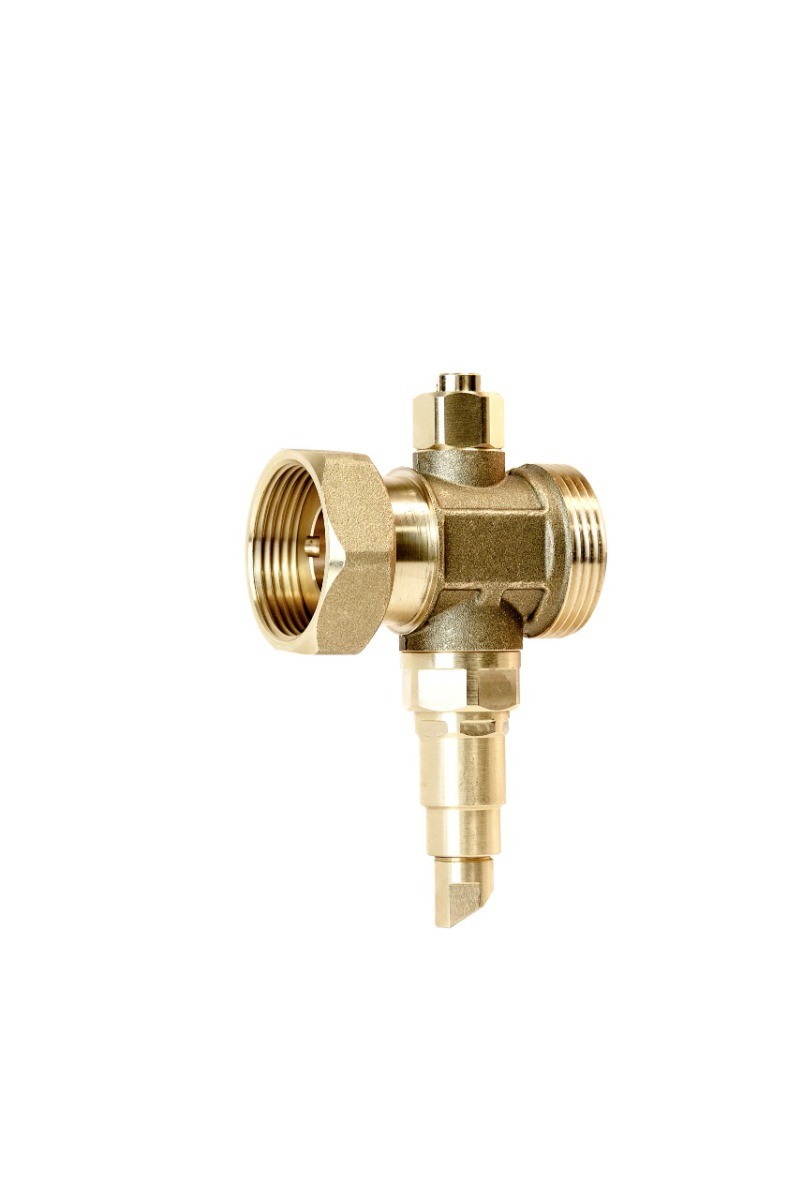
The homeowner mentioned that the outdoor unit was fitted with two anti-freeze valves. This is completely normal on heat pump installations. Two anti-freeze valves are often fitted as a safety measure so that if one fails to operate correctly during a genuine freeze, the second provides backup protection for the pipework and outdoor components. However, something about the symptom pattern suggested that one of these valves was not behaving as it should under current conditions.
What We Found
During a video call, we asked the homeowner to show us the outdoor unit and trace the pipework visible around it. After working through the installation layout together, it became increasingly clear that one of the anti-freeze valves was intermittently discharging water from the system. The temperatures outside, whilst cool enough for the heating to be running normally, were nowhere near low enough to justify any discharge from a correctly functioning anti-freeze valve. The valve was activating when it had no reason to, and each time it discharged, water was leaving the sealed system slowly reducing pressure until the heat pump reached its lockout threshold and shut down.
This is an easy fault to miss on a routine site visit because the discharge is intermittent. The valve may not be actively discharging at the moment an engineer arrives, which can make the system appear normal. Without specifically checking the anti-freeze valves as a potential source of pressure loss, the real cause can go unidentified for a long time and the homeowner continues topping up the system indefinitely, which is exactly what had been happening here.
Unexplained pressure loss where no internal leak can be found is always a prompt for us to look at external components. The semi in West Yorkshire case study on pressure kept dropping on a large underfloor heating system is another example of a pressure loss fault that had nothing to do with a leak in that case, the cause was a missing expansion vessel rather than a faulty external valve, but the diagnostic principle is the same: look beyond the obvious before assuming the worst.
The Challenge
The homeowner was understandably frustrated and the family were cold. Waiting for a replacement part to arrive before restoring the heating was not a realistic option. The system needed to be made operational as quickly as possible whilst a permanent solution was arranged in parallel. This is a situation we encounter more often than might be expected where the correct long-term fix requires a part or a follow-up visit, but the immediate priority is getting the family warm again.
We therefore discussed a temporary solution that would allow the system to operate safely in the short term without the faulty valve in place.
The Solution
Whilst remaining on the call, we talked the homeowner through temporarily removing the faulty anti-freeze valve from the system. Anti-freeze valves can be isolated or removed when weather conditions do not require them, provided the homeowner understands the implications and appropriate temporary measures are in place. The homeowner completed the work successfully and the heat pump was returned to normal operation. For the first time in nearly a week, the family had reliable heating and hot water.
Once the immediate situation was resolved, we arranged for a replacement anti-freeze valve to be supplied. We provided written step-by-step instructions for installing the new valve, and made it clear that if any questions came up during the installation process, we would be available to talk the homeowner through it directly. This approach resolving the immediate problem remotely, then supporting the permanent fix is one that works well for installation-related faults where a physical part needs replacing but the diagnosis and temporary management can be handled without an engineer visit.
The Outcome
The pressure loss stopped immediately once the faulty valve was isolated. The heat pump returned to stable operation and the family had consistent heating and hot water restored on the same day as the video call. The homeowner also came away from the experience with a clear understanding of what had caused the problem, which is something we consider important a homeowner who understands what happened is in a much better position to manage their system confidently going forward.
Could This Have Gone On Longer?
Easily. Without identifying the anti-freeze valve as the source, the homeowner would have continued topping up the system every day or two indefinitely. The heat pump would have kept locking out. The family would have kept losing heating. And at some point, an engineer visiting without specifically checking the external valves may have concluded there was no visible fault which had effectively already been happening.
This case is a useful reminder that heat pump repairs are often misunderstood in the UK. The heat pump unit itself was operating correctly throughout. The problem was entirely with an external component that was malfunctioning in a way that was not immediately visible. Correct diagnosis including looking beyond the obvious is what resolved it.
If your heat pump is repeatedly losing pressure and you cannot identify a visible leak inside the property, it is always worth checking external components including anti-freeze valves, pressure relief valves, and any other devices fitted to the outdoor pipework before assuming the problem is inside the building. Our article on why does my heat pump keep losing pressure covers the full range of causes and how to work through them systematically.
Related Case Studies
The semi in West Yorkshire — pressure kept dropping on a large underfloor heating system is another case where repeated pressure loss had no visible internal leak — the cause turned out to be a missing expansion vessel rather than a faulty valve, but it shows how often the real source of pressure problems is found outside the house rather than inside it.
The new build in Hampshire Samsung E910 fault caused by incorrect pump wiring is a comparable example of a heat pump fault that was caused entirely by an installation component issue rather than any failure in the heat pump unit itself — a recurring theme across many of the cases we diagnose.
The poor heating and limited hot water — cylinder temperature probe fault case shows how a single faulty or incorrectly positioned component caused widespread disruption to both heating and hot water performance, resolved remotely without replacing the heat pump or any major system component.
The detached home in Sussex — Samsung E911 fault fixed remotely during video call is another example of a fault that was causing repeated lockouts and was resolved entirely during a single remote session the same outcome as the Suffolk case.
Related Articles
Our article on why does my heat pump keep losing pressure covers every common cause of pressure loss on heat pump systems, including expansion vessel failures, genuine leaks, and external component faults like the anti-freeze valve issue found in this case.
Our article on 7 signs your heat pump may not be installed correctly is useful for any homeowner who suspects their system has an underlying installation issue that is only now beginning to cause problems.
Our article on why heat pump repairs are often misunderstood in the UK explains why fault codes and performance problems are so frequently misattributed to the heat pump unit itself when the real cause is a component, design, or installation issue exactly the pattern seen in this Suffolk case.
Our article on how do I know if my heat pump was installed correctly gives homeowners a practical framework for assessing whether their system was set up properly from the outset, which is often the first question worth asking when unexplained faults begin to appear.
Need Help With Your Heat Pump?
If your heat pump is losing pressure repeatedly, displaying fault codes, or has never felt right since installation, we may be able to help identify the cause. Many problems like this one including pressure faults with no obvious visible leak — can be diagnosed during a single remote video call. We are also happy to work directly alongside your plumber, heating engineer, or electrician throughout the process. Visit our Fix My Heat Pump page to find out more, or contact us directly to describe your situation.
Family Home In Suffolk – Faulty Anti-Freeze Valve Causing Pressure Loss And Heat Pump Lockouts
A homeowner in Suffolk contacted us after spending nearly a week battling with a heat pump that was repeatedly losing pressure and locking out. The family had been effectively without reliable heating and hot water for several days, which by any measure is a serious situation particularly with young children or elderly people in the home. Every time the system was topped up with water to restore pressure, it would gradually lose pressure again and shut down. The cycle kept repeating with no clear explanation.
The homeowner had searched the property thoroughly for signs of a water leak. No wet patches. No damp on walls or floors. No obvious drips anywhere near the pipework or cylinder. From the inside, nothing appeared to be wrong at all.
The Problem
Repeated pressure loss on a heat pump system is one of the more stressful faults a homeowner can deal with, because the cause is not always immediately visible and the consequences no heating, no hot water, a system that shuts itself down are felt immediately by the whole household. Our article on why does my heat pump keep losing pressure explains the full range of causes, from expansion vessel failures and microbore leaks through to external component faults like the one found in this case. It is worth reading if your system is experiencing similar symptoms, because the cause is not always where you expect to find it.
Initial Assessment
During our first conversation with the homeowner, we discussed the symptoms in detail. The pressure loss appeared genuine the gauge was dropping steadily rather than fluctuating but the outdoor weather conditions at the time were not particularly cold. The heating was running regularly, but temperatures were nowhere near freezing and there was no logical reason for any frost protection device to be actively operating.
The homeowner mentioned that the outdoor unit was fitted with two anti-freeze valves. This is completely normal on heat pump installations. Two anti-freeze valves are often fitted as a safety measure so that if one fails to operate correctly during a genuine freeze, the second provides backup protection for the pipework and outdoor components. However, something about the symptom pattern suggested that one of these valves was not behaving as it should under current conditions.
What We Found
During a video call, we asked the homeowner to show us the outdoor unit and trace the pipework visible around it. After working through the installation layout together, it became increasingly clear that one of the anti-freeze valves was intermittently discharging water from the system. The temperatures outside, whilst cool enough for the heating to be running normally, were nowhere near low enough to justify any discharge from a correctly functioning anti-freeze valve. The valve was activating when it had no reason to, and each time it discharged, water was leaving the sealed system slowly reducing pressure until the heat pump reached its lockout threshold and shut down.
This is an easy fault to miss on a routine site visit because the discharge is intermittent. The valve may not be actively discharging at the moment an engineer arrives, which can make the system appear normal. Without specifically checking the anti-freeze valves as a potential source of pressure loss, the real cause can go unidentified for a long time and the homeowner continues topping up the system indefinitely, which is exactly what had been happening here.
Unexplained pressure loss where no internal leak can be found is always a prompt for us to look at external components. The semi in West Yorkshire case study on pressure kept dropping on a large underfloor heating system is another example of a pressure loss fault that had nothing to do with a leak in that case, the cause was a missing expansion vessel rather than a faulty external valve, but the diagnostic principle is the same: look beyond the obvious before assuming the worst.
The Challenge
The homeowner was understandably frustrated and the family were cold. Waiting for a replacement part to arrive before restoring the heating was not a realistic option. The system needed to be made operational as quickly as possible whilst a permanent solution was arranged in parallel. This is a situation we encounter more often than might be expected where the correct long-term fix requires a part or a follow-up visit, but the immediate priority is getting the family warm again.
We therefore discussed a temporary solution that would allow the system to operate safely in the short term without the faulty valve in place.
The Solution
Whilst remaining on the call, we talked the homeowner through temporarily removing the faulty anti-freeze valve from the system. Anti-freeze valves can be isolated or removed when weather conditions do not require them, provided the homeowner understands the implications and appropriate temporary measures are in place. The homeowner completed the work successfully and the heat pump was returned to normal operation. For the first time in nearly a week, the family had reliable heating and hot water.
Once the immediate situation was resolved, we arranged for a replacement anti-freeze valve to be supplied. We provided written step-by-step instructions for installing the new valve, and made it clear that if any questions came up during the installation process, we would be available to talk the homeowner through it directly. This approach resolving the immediate problem remotely, then supporting the permanent fix is one that works well for installation-related faults where a physical part needs replacing but the diagnosis and temporary management can be handled without an engineer visit.
The Outcome
The pressure loss stopped immediately once the faulty valve was isolated. The heat pump returned to stable operation and the family had consistent heating and hot water restored on the same day as the video call. The homeowner also came away from the experience with a clear understanding of what had caused the problem, which is something we consider important a homeowner who understands what happened is in a much better position to manage their system confidently going forward.
Could This Have Gone On Longer?
Easily. Without identifying the anti-freeze valve as the source, the homeowner would have continued topping up the system every day or two indefinitely. The heat pump would have kept locking out. The family would have kept losing heating. And at some point, an engineer visiting without specifically checking the external valves may have concluded there was no visible fault which had effectively already been happening.
This case is a useful reminder that heat pump repairs are often misunderstood in the UK. The heat pump unit itself was operating correctly throughout. The problem was entirely with an external component that was malfunctioning in a way that was not immediately visible. Correct diagnosis including looking beyond the obvious is what resolved it.
If your heat pump is repeatedly losing pressure and you cannot identify a visible leak inside the property, it is always worth checking external components including anti-freeze valves, pressure relief valves, and any other devices fitted to the outdoor pipework before assuming the problem is inside the building. Our article on why does my heat pump keep losing pressure covers the full range of causes and how to work through them systematically.
Related Case Studies
The semi in West Yorkshire — pressure kept dropping on a large underfloor heating system is another case where repeated pressure loss had no visible internal leak — the cause turned out to be a missing expansion vessel rather than a faulty valve, but it shows how often the real source of pressure problems is found outside the house rather than inside it.
The new build in Hampshire Samsung E910 fault caused by incorrect pump wiring is a comparable example of a heat pump fault that was caused entirely by an installation component issue rather than any failure in the heat pump unit itself — a recurring theme across many of the cases we diagnose.
The poor heating and limited hot water — cylinder temperature probe fault case shows how a single faulty or incorrectly positioned component caused widespread disruption to both heating and hot water performance, resolved remotely without replacing the heat pump or any major system component.
The detached home in Sussex — Samsung E911 fault fixed remotely during video call is another example of a fault that was causing repeated lockouts and was resolved entirely during a single remote session the same outcome as the Suffolk case.
Related Articles
Our article on why does my heat pump keep losing pressure covers every common cause of pressure loss on heat pump systems, including expansion vessel failures, genuine leaks, and external component faults like the anti-freeze valve issue found in this case.
Our article on 7 signs your heat pump may not be installed correctly is useful for any homeowner who suspects their system has an underlying installation issue that is only now beginning to cause problems.
Our article on why heat pump repairs are often misunderstood in the UK explains why fault codes and performance problems are so frequently misattributed to the heat pump unit itself when the real cause is a component, design, or installation issue exactly the pattern seen in this Suffolk case.
Our article on how do I know if my heat pump was installed correctly gives homeowners a practical framework for assessing whether their system was set up properly from the outset, which is often the first question worth asking when unexplained faults begin to appear.
Need Help With Your Heat Pump?
If your heat pump is losing pressure repeatedly, displaying fault codes, or has never felt right since installation, we may be able to help identify the cause. Many problems like this one including pressure faults with no obvious visible leak — can be diagnosed during a single remote video call. We are also happy to work directly alongside your plumber, heating engineer, or electrician throughout the process. Visit our Fix My Heat Pump page to find out more, or contact us directly to describe your situation.

Contact Us
Not Sure Which Service You Need?
Not Sure Which Service You Need?
Not Sure Which Service You Need?
Not Sure Which Service You Need?
Not Sure Which Service You Need?
Whether you need help with an existing heat pump, a pre-installation review, cooling advice, servicing or a room-by-room heat loss survey, send us a few details and we'll point you in the right direction.
Whether you need help with an existing heat pump, a pre-installation review, cooling advice, servicing or a room-by-room heat loss survey, send us a few details and we'll point you in the right direction.
Whether you need help with an existing heat pump, a pre-installation review, cooling advice, servicing or a room-by-room heat loss survey, send us a few details and we'll point you in the right direction.

