Family Home in Nottingham Hot Water Never Getting Hot & Heating Always Falling Behind
Family Home in Nottingham Hot Water Never Getting Hot & Heating Always Falling Behind
Family Home in Nottingham Hot Water Never Getting Hot & Heating Always Falling Behind
Family Home in Nottingham Hot Water Never Getting Hot & Heating Always Falling Behind
Family Home in Nottingham Hot Water Never Getting Hot & Heating Always Falling Behind

UK Heat pump Help Technical Team
Independent Heat Pump Engineer
"Family Home in Nottingham — Hot Water Never Getting Hot & Heating Always Falling Behind"
A homeowner in Nottingham contacted us because their heat pump system felt like it was permanently struggling. The hot water never reached a satisfying temperature, the heating felt slow to respond, the house frequently failed to recover temperature after being set back, and the heat pump appeared to be running for unusually long periods. The natural assumption was that something was wrong with the heat pump itself but the real cause turned out to be a factory default setting that had simply never been adjusted after installation.
During a remote video call, we reviewed the controller settings together with the homeowner. It became clear very quickly that the hot water run time had been left at the LG factory default. On this particular system, the default hot water cycle was set to 30 minutes on and 30 minutes off one of the shorter factory presets available. For many properties and cylinder combinations, this is simply not long enough for the cylinder to heat fully before the system switches back to heating mode.
The reason this matters so much comes down to how heat pumps manage hot water and space heating. Most heat pump systems give hot water priority when a hot water demand is active, the system pauses the heating circuit and focuses on heating the cylinder. If the hot water run time is too short, the cylinder never reaches the target temperature before the cycle ends. The system then switches to heating mode, and when the next hot water demand comes around, it starts from an already-depleted cylinder. This creates a pattern where both hot water and heating feel permanently behind exactly what this homeowner was experiencing. If you've noticed similar problems with your hot water performance, our article on why your heat pump isn't heating hot water properly explains the underlying causes in detail.
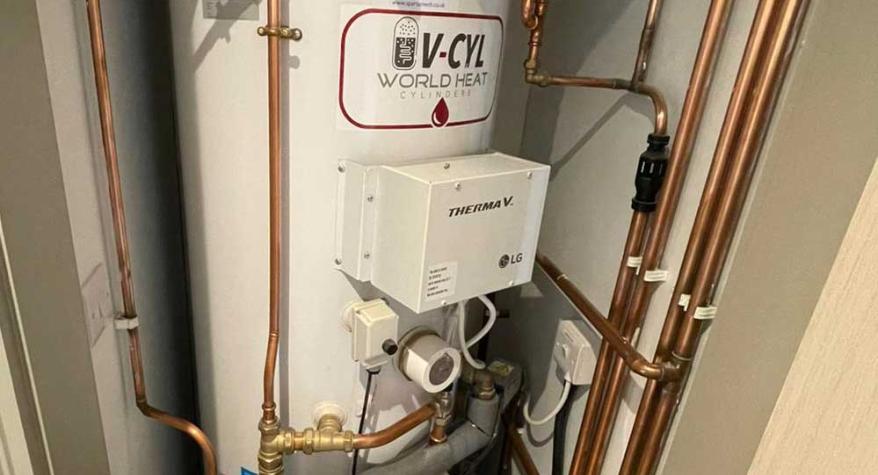
For this property a 7kW heat pump paired with a 180-litre cylinder we felt that approximately 90 minutes of hot water run time was the appropriate setting. This gave the system enough time to complete a full hot water heating cycle properly, before returning to space heating. The previous 30-minute window was simply too short for a cylinder of that size to heat adequately in a single cycle. Understanding what temperature the cylinder should actually reach is also important our article on what temperature a heat pump cylinder should run at covers this clearly.
Following the adjustment, the homeowner noticed immediate improvements. Hot water temperatures improved to a level the household was happy with, the heating kept pace with demand without the system appearing to fall further and further behind, and the sense of the system constantly struggling disappeared. No parts were replaced, no engineer visited the property, and no hardware changes were made. The fix was a single setting that had never been reviewed since installation.
This case is a reminder that heat pump performance problems are very often not caused by the heat pump hardware at all. Factory default settings are designed to be broadly functional across many different configurations they are not optimised for a specific property, cylinder, or household usage pattern. Without a proper system review at handover, these defaults can remain in place indefinitely, quietly undermining performance in ways that are difficult to trace without knowing where to look. A closely related case where factory defaults and incorrect setup caused similar issues can be read in our Family Home in Cheshire hot water running out by 7AM case study. For a broader look at why settings matter so much to overall performance, our guide on how to set a heat pump for maximum efficiency is a useful reference.
If your heat pump is struggling with hot water or heating performance and you're not sure why, our Fix My Heat Pump service looks at controls, settings, temperatures, and system design to identify exactly what's happening. If you're still at the planning stage, our Pre-Installation Design and Heat Loss Review can help make sure the system is configured correctly from the beginning.
"Family Home in Nottingham — Hot Water Never Getting Hot & Heating Always Falling Behind"
A homeowner in Nottingham contacted us because their heat pump system felt like it was permanently struggling. The hot water never reached a satisfying temperature, the heating felt slow to respond, the house frequently failed to recover temperature after being set back, and the heat pump appeared to be running for unusually long periods. The natural assumption was that something was wrong with the heat pump itself but the real cause turned out to be a factory default setting that had simply never been adjusted after installation.
During a remote video call, we reviewed the controller settings together with the homeowner. It became clear very quickly that the hot water run time had been left at the LG factory default. On this particular system, the default hot water cycle was set to 30 minutes on and 30 minutes off one of the shorter factory presets available. For many properties and cylinder combinations, this is simply not long enough for the cylinder to heat fully before the system switches back to heating mode.
The reason this matters so much comes down to how heat pumps manage hot water and space heating. Most heat pump systems give hot water priority when a hot water demand is active, the system pauses the heating circuit and focuses on heating the cylinder. If the hot water run time is too short, the cylinder never reaches the target temperature before the cycle ends. The system then switches to heating mode, and when the next hot water demand comes around, it starts from an already-depleted cylinder. This creates a pattern where both hot water and heating feel permanently behind exactly what this homeowner was experiencing. If you've noticed similar problems with your hot water performance, our article on why your heat pump isn't heating hot water properly explains the underlying causes in detail.
For this property a 7kW heat pump paired with a 180-litre cylinder we felt that approximately 90 minutes of hot water run time was the appropriate setting. This gave the system enough time to complete a full hot water heating cycle properly, before returning to space heating. The previous 30-minute window was simply too short for a cylinder of that size to heat adequately in a single cycle. Understanding what temperature the cylinder should actually reach is also important our article on what temperature a heat pump cylinder should run at covers this clearly.
Following the adjustment, the homeowner noticed immediate improvements. Hot water temperatures improved to a level the household was happy with, the heating kept pace with demand without the system appearing to fall further and further behind, and the sense of the system constantly struggling disappeared. No parts were replaced, no engineer visited the property, and no hardware changes were made. The fix was a single setting that had never been reviewed since installation.
This case is a reminder that heat pump performance problems are very often not caused by the heat pump hardware at all. Factory default settings are designed to be broadly functional across many different configurations they are not optimised for a specific property, cylinder, or household usage pattern. Without a proper system review at handover, these defaults can remain in place indefinitely, quietly undermining performance in ways that are difficult to trace without knowing where to look. A closely related case where factory defaults and incorrect setup caused similar issues can be read in our Family Home in Cheshire hot water running out by 7AM case study. For a broader look at why settings matter so much to overall performance, our guide on how to set a heat pump for maximum efficiency is a useful reference.
If your heat pump is struggling with hot water or heating performance and you're not sure why, our Fix My Heat Pump service looks at controls, settings, temperatures, and system design to identify exactly what's happening. If you're still at the planning stage, our Pre-Installation Design and Heat Loss Review can help make sure the system is configured correctly from the beginning.

Contact Us
Not Sure Which Service You Need?
Not Sure Which Service You Need?
Not Sure Which Service You Need?
Not Sure Which Service You Need?
Not Sure Which Service You Need?
Whether you need help with an existing heat pump, a pre-installation review, cooling advice, servicing or a room-by-room heat loss survey, send us a few details and we'll point you in the right direction.
Whether you need help with an existing heat pump, a pre-installation review, cooling advice, servicing or a room-by-room heat loss survey, send us a few details and we'll point you in the right direction.
Whether you need help with an existing heat pump, a pre-installation review, cooling advice, servicing or a room-by-room heat loss survey, send us a few details and we'll point you in the right direction.

