How to Set a Heat Pump for Maximum Efficiency
How to Set a Heat Pump for Maximum Efficiency
How to Set a Heat Pump for Maximum Efficiency
How to Set a Heat Pump for Maximum Efficiency
How to Set a Heat Pump for Maximum Efficiency

UK Heat pump Help Technical Team
Independent Heat Pump Engineer
If you’ve recently had a heat pump installed or you’ve had one running for a while and it feels like it’s costing more than it should you’re probably wondering whether the settings are right.
Most homeowners assume there’s a magic number to dial in. The truth is that a heat pump’s efficiency isn’t really about one setting. It’s about how the whole system is configured to run and whether the way you’re using it is working with the technology or against it.
This guide covers the key areas that actually make a difference to heat pump efficiency in UK homes, written from experience reviewing real systems that are both performing well and those that clearly aren’t.
Why Heat Pump Efficiency Works Differently to a Boiler
Before getting into settings, it helps to understand one fundamental difference between a heat pump and a gas boiler.
A boiler burns fuel to generate heat at high temperatures quickly. A heat pump moves heat from the outside air into your home and it does this most efficiently at lower temperatures, running steadily over longer periods.
That distinction matters for everything that follows. The biggest enemy of heat pump efficiency is asking it to behave like a boiler.
Flow Temperature: The Single Biggest Factor
If there’s one setting that has the greatest impact on how efficiently your heat pump runs, it’s flow temperature the temperature of the water leaving the heat pump and entering your heating system.
In simple terms: the lower the flow temperature, the less electricity the heat pump uses to produce the same amount of heat.
Most modern air source heat pumps achieve their best efficiency measured as COP (Coefficient of Performance) at flow temperatures between 35°C and 45°C. Run a system at 55°C or higher, and you’re typically seeing COPs drop significantly, which means higher electricity bills for the same level of warmth.
However, turning the flow temperature down only works if the system has been designed to heat the house at those lower temperatures. That comes down to radiator sizing. If the radiators are too small to deliver enough heat at 40°C, the house won’t reach temperature and you’ll end up turning the flow temperature back up to compensate.
If you find yourself constantly increasing the flow temperature just to stay warm, that’s not a settings problem. That’s a system design issue that won’t be fixed by adjusting the controller.
How to Use Weather Compensation Properly
Weather compensation is one of the most effective tools for improving heat pump efficiency, and one of the most commonly misconfigured.
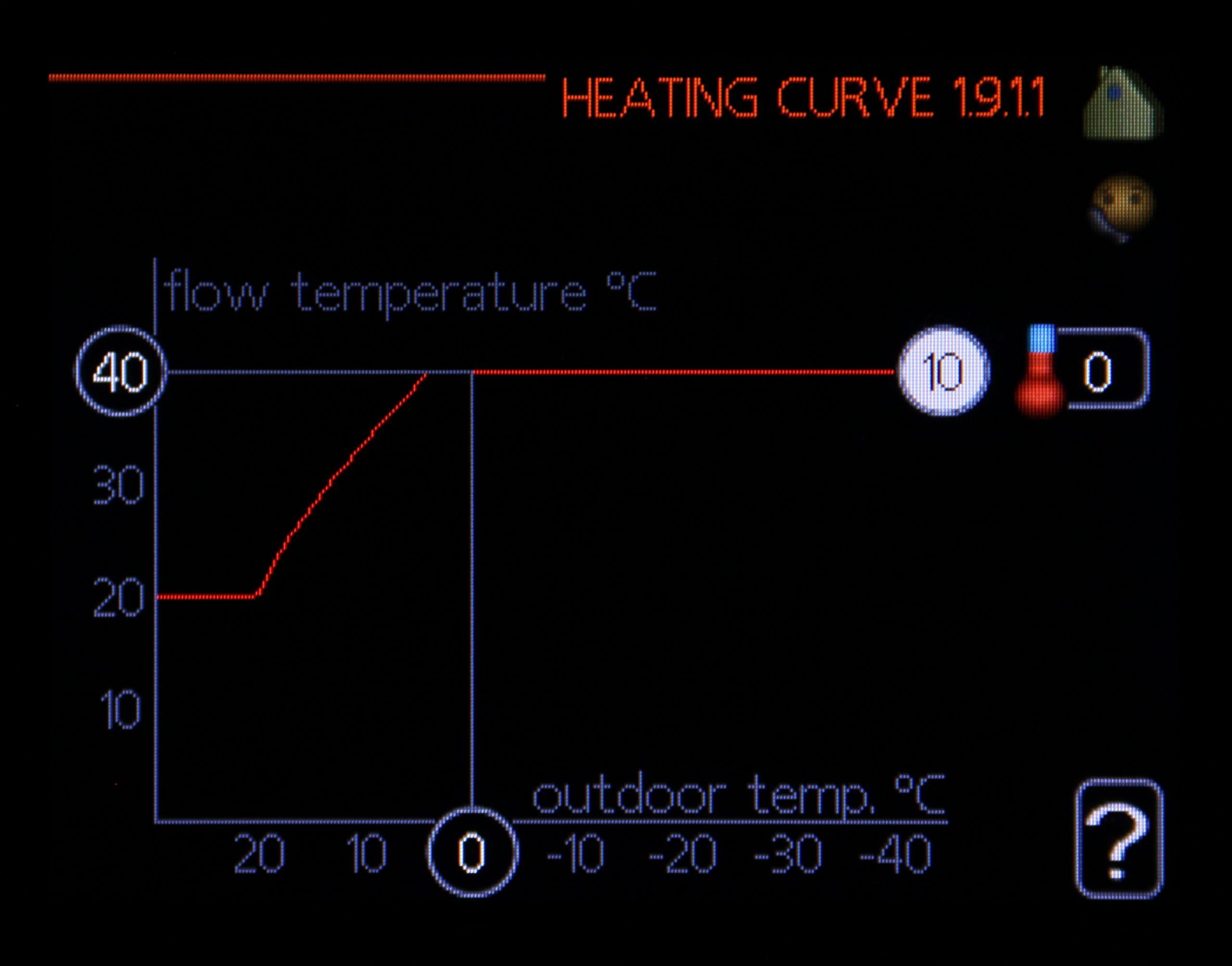
The idea is straightforward: instead of running at a fixed flow temperature regardless of outdoor conditions, the system automatically adjusts. On a mild day say, 12°C outside the flow temperature might drop to 35°C. On a cold day at -2°C, it rises to 50°C. The system delivers exactly as much heat as the house needs, no more.
When weather compensation is set correctly, two things happen. The system runs at lower average temperatures across the year, which improves overall efficiency. And the heating feels more consistent rooms don’t overheat on mild days and then struggle on cold ones.
When it’s set incorrectly, you tend to see the opposite: rooms that overshoot in spring and autumn, a system that cycles on and off more than it should, and homeowners who end up overriding it manually and wondering why the controller seems to have a mind of its own.
The specific curve settings will depend on your property’s heat loss and your radiator output. Getting this dialled in properly is one of the most valuable adjustments that can be made to a heat pump system but it needs to be based on your actual system data, not a generic default.
Stop Treating It Like a Boiler
This is the most common cause of poor efficiency we see during heat pump performance reviews.
With a gas boiler, most people are used to turning the heating on in the morning, off in the afternoon, back on in the evening. Blasting the system to 70°C to heat a cold house quickly, then switching off. Large overnight setbacks where the house drops significantly in temperature before being heated back up.
None of that works well with a heat pump.
Heat pumps are designed to maintain a steady temperature not to heat a cold house in 30 minutes. When you switch a heat pump off overnight and let the house cool down, you’re asking the system to do exactly what it struggles with most: produce a lot of heat quickly in cold conditions. That means higher flow temperatures, lower efficiency, and more wear on the compressor.
The more efficient approach is to run the system at a low level more continuously, maintaining a steady indoor temperature rather than chasing it. Many homeowners find this uncomfortable initially it feels like the heating is always on. But the total amount of electricity used is typically lower, and the house feels more comfortable.
Radiators, Flow Rates and Why Balance Matters
For a heat pump to deliver heat efficiently around the house, the water in the system needs to flow correctly through every radiator.
Two of the most common issues we identify during reviews are:
Homeowners turning radiators off in rooms they’re not using. This sounds logical why heat a room you’re not in? But on a heat pump system, closing off radiators disrupts the system’s flow balance. The pump is designed to move a certain volume of water, and when you reduce the number of radiators available, the flow rate through the remaining radiators increases, which affects heat output and can cause the system to cycle more frequently.
Radiators not being properly balanced from installation. If one side of the house is getting significantly more heat than the other, or some radiators are noticeably hotter than others, the system hasn’t been hydraulically balanced. This is a commissioning issue that no amount of controller adjustments will fix.
The general rule for heat pump systems: leave radiators open and let the system circulate freely. If some rooms are noticeably too warm or too cold, get the system balanced properly.
Hot Water: Often Overlooked, Always Worth Checking
Domestic hot water production is one of the less-discussed contributors to heat pump running costs, but it adds up.
Heat pumps produce hot water less efficiently than they produce space heating, because hot water needs to be stored at a higher temperature typically 55°C or above for legionella control. Every time the system switches from space heating to hot water production, it has to run at those higher temperatures, which reduces efficiency.
Some of the most common issues include:
Setting the hot water temperature unnecessarily high some systems default to 60°C or above when 55°C is sufficient for safe hot water storage.
Allowing the immersion heater to cut in too frequently. Many systems have an immersion backup that comes on when the heat pump can’t meet the hot water demand quickly enough. If this is happening regularly, it’s worth investigating why.
Running unnecessary hot water cycles for example, scheduling hot water at times when demand is low, or allowing reheat cycles more frequently than the household actually needs.
None of these are complicated to address, but they require looking at how the system is configured and used, not just what the controller displays.
The Part Settings Can’t Fix: System Design
Everything covered above assumes the system was reasonably well designed to begin with. If it wasn’t, no combination of settings will get it running efficiently.
The most common design issues we see in heat pump systems that are struggling are:
Undersized heat pump the unit is too small for the property’s actual heat demand, meaning it has to work harder in cold weather and runs at higher flow temperatures to compensate.
Undersized or unsuitable radiators that were originally installed for a boiler running at 70-80°C often can’t deliver enough heat at 40-45°C without being upgraded or supplemented.
Poorly designed pipework particularly in older properties where the pipework layout creates high resistance or flow rate problems.
Buffer tanks installed where they’re not needed or not installed where they are. A poorly specified buffer setup can cause unnecessary cycling and efficiency loss.
If your system is experiencing high running costs, inconsistent temperatures, or it’s running constantly without reaching the desired room temperature, it’s worth having the underlying design reviewed not just the settings.
Signs Your Heat Pump Isn’t Running as Efficiently as It Should
You don’t need to understand the technical data to spot whether something is off. Common warning signs include:
Your electricity bills are higher than you expected based on your installer’s estimates, and they haven’t improved since the system was commissioned.
The heat pump runs almost constantly but rooms still feel slightly cold, particularly in colder weather.
You find yourself regularly increasing the flow temperature on the controller just to keep the house comfortable.
The system cycles frequently switching on and off multiple times per hour rather than running in long steady periods.
Some rooms are significantly warmer or cooler than others despite radiators being open.
Any of these point to something that needs looking at whether that’s settings, balance, design, or control strategy.
Already Have a System Installed?
If your heat pump is already running and you’re not convinced it’s performing as efficiently as it should, our Full Performance Review covers exactly these areas flow temperatures, controls, system behaviour, cycling patterns, and underlying design. You’ll receive a clear written report explaining what’s happening and what adjustments are likely to make the biggest difference.
If you’re still in the planning stage, our Pre-Installation Design & Heat Loss Review ensures the system is designed to run efficiently from day one so you’re not relying on settings to compensate for design decisions made before installation.
Related reading: How Is Maximum Demand Calculated for a Heat Pump?
You may also find What Is COP and SCOP on a Heat Pump? useful.
If you’ve recently had a heat pump installed or you’ve had one running for a while and it feels like it’s costing more than it should you’re probably wondering whether the settings are right.
Most homeowners assume there’s a magic number to dial in. The truth is that a heat pump’s efficiency isn’t really about one setting. It’s about how the whole system is configured to run and whether the way you’re using it is working with the technology or against it.
This guide covers the key areas that actually make a difference to heat pump efficiency in UK homes, written from experience reviewing real systems that are both performing well and those that clearly aren’t.
Why Heat Pump Efficiency Works Differently to a Boiler
Before getting into settings, it helps to understand one fundamental difference between a heat pump and a gas boiler.
A boiler burns fuel to generate heat at high temperatures quickly. A heat pump moves heat from the outside air into your home and it does this most efficiently at lower temperatures, running steadily over longer periods.
That distinction matters for everything that follows. The biggest enemy of heat pump efficiency is asking it to behave like a boiler.
Flow Temperature: The Single Biggest Factor
If there’s one setting that has the greatest impact on how efficiently your heat pump runs, it’s flow temperature the temperature of the water leaving the heat pump and entering your heating system.
In simple terms: the lower the flow temperature, the less electricity the heat pump uses to produce the same amount of heat.
Most modern air source heat pumps achieve their best efficiency measured as COP (Coefficient of Performance) at flow temperatures between 35°C and 45°C. Run a system at 55°C or higher, and you’re typically seeing COPs drop significantly, which means higher electricity bills for the same level of warmth.
However, turning the flow temperature down only works if the system has been designed to heat the house at those lower temperatures. That comes down to radiator sizing. If the radiators are too small to deliver enough heat at 40°C, the house won’t reach temperature and you’ll end up turning the flow temperature back up to compensate.
If you find yourself constantly increasing the flow temperature just to stay warm, that’s not a settings problem. That’s a system design issue that won’t be fixed by adjusting the controller.
How to Use Weather Compensation Properly
Weather compensation is one of the most effective tools for improving heat pump efficiency, and one of the most commonly misconfigured.
The idea is straightforward: instead of running at a fixed flow temperature regardless of outdoor conditions, the system automatically adjusts. On a mild day say, 12°C outside the flow temperature might drop to 35°C. On a cold day at -2°C, it rises to 50°C. The system delivers exactly as much heat as the house needs, no more.
When weather compensation is set correctly, two things happen. The system runs at lower average temperatures across the year, which improves overall efficiency. And the heating feels more consistent rooms don’t overheat on mild days and then struggle on cold ones.
When it’s set incorrectly, you tend to see the opposite: rooms that overshoot in spring and autumn, a system that cycles on and off more than it should, and homeowners who end up overriding it manually and wondering why the controller seems to have a mind of its own.
The specific curve settings will depend on your property’s heat loss and your radiator output. Getting this dialled in properly is one of the most valuable adjustments that can be made to a heat pump system but it needs to be based on your actual system data, not a generic default.
Stop Treating It Like a Boiler
This is the most common cause of poor efficiency we see during heat pump performance reviews.
With a gas boiler, most people are used to turning the heating on in the morning, off in the afternoon, back on in the evening. Blasting the system to 70°C to heat a cold house quickly, then switching off. Large overnight setbacks where the house drops significantly in temperature before being heated back up.
None of that works well with a heat pump.
Heat pumps are designed to maintain a steady temperature not to heat a cold house in 30 minutes. When you switch a heat pump off overnight and let the house cool down, you’re asking the system to do exactly what it struggles with most: produce a lot of heat quickly in cold conditions. That means higher flow temperatures, lower efficiency, and more wear on the compressor.
The more efficient approach is to run the system at a low level more continuously, maintaining a steady indoor temperature rather than chasing it. Many homeowners find this uncomfortable initially it feels like the heating is always on. But the total amount of electricity used is typically lower, and the house feels more comfortable.
Radiators, Flow Rates and Why Balance Matters
For a heat pump to deliver heat efficiently around the house, the water in the system needs to flow correctly through every radiator.
Two of the most common issues we identify during reviews are:
Homeowners turning radiators off in rooms they’re not using. This sounds logical why heat a room you’re not in? But on a heat pump system, closing off radiators disrupts the system’s flow balance. The pump is designed to move a certain volume of water, and when you reduce the number of radiators available, the flow rate through the remaining radiators increases, which affects heat output and can cause the system to cycle more frequently.
Radiators not being properly balanced from installation. If one side of the house is getting significantly more heat than the other, or some radiators are noticeably hotter than others, the system hasn’t been hydraulically balanced. This is a commissioning issue that no amount of controller adjustments will fix.
The general rule for heat pump systems: leave radiators open and let the system circulate freely. If some rooms are noticeably too warm or too cold, get the system balanced properly.
Hot Water: Often Overlooked, Always Worth Checking
Domestic hot water production is one of the less-discussed contributors to heat pump running costs, but it adds up.
Heat pumps produce hot water less efficiently than they produce space heating, because hot water needs to be stored at a higher temperature typically 55°C or above for legionella control. Every time the system switches from space heating to hot water production, it has to run at those higher temperatures, which reduces efficiency.
Some of the most common issues include:
Setting the hot water temperature unnecessarily high some systems default to 60°C or above when 55°C is sufficient for safe hot water storage.
Allowing the immersion heater to cut in too frequently. Many systems have an immersion backup that comes on when the heat pump can’t meet the hot water demand quickly enough. If this is happening regularly, it’s worth investigating why.
Running unnecessary hot water cycles for example, scheduling hot water at times when demand is low, or allowing reheat cycles more frequently than the household actually needs.
None of these are complicated to address, but they require looking at how the system is configured and used, not just what the controller displays.
The Part Settings Can’t Fix: System Design
Everything covered above assumes the system was reasonably well designed to begin with. If it wasn’t, no combination of settings will get it running efficiently.
The most common design issues we see in heat pump systems that are struggling are:
Undersized heat pump the unit is too small for the property’s actual heat demand, meaning it has to work harder in cold weather and runs at higher flow temperatures to compensate.
Undersized or unsuitable radiators that were originally installed for a boiler running at 70-80°C often can’t deliver enough heat at 40-45°C without being upgraded or supplemented.
Poorly designed pipework particularly in older properties where the pipework layout creates high resistance or flow rate problems.
Buffer tanks installed where they’re not needed or not installed where they are. A poorly specified buffer setup can cause unnecessary cycling and efficiency loss.
If your system is experiencing high running costs, inconsistent temperatures, or it’s running constantly without reaching the desired room temperature, it’s worth having the underlying design reviewed not just the settings.
Signs Your Heat Pump Isn’t Running as Efficiently as It Should
You don’t need to understand the technical data to spot whether something is off. Common warning signs include:
Your electricity bills are higher than you expected based on your installer’s estimates, and they haven’t improved since the system was commissioned.
The heat pump runs almost constantly but rooms still feel slightly cold, particularly in colder weather.
You find yourself regularly increasing the flow temperature on the controller just to keep the house comfortable.
The system cycles frequently switching on and off multiple times per hour rather than running in long steady periods.
Some rooms are significantly warmer or cooler than others despite radiators being open.
Any of these point to something that needs looking at whether that’s settings, balance, design, or control strategy.
Already Have a System Installed?
If your heat pump is already running and you’re not convinced it’s performing as efficiently as it should, our Full Performance Review covers exactly these areas flow temperatures, controls, system behaviour, cycling patterns, and underlying design. You’ll receive a clear written report explaining what’s happening and what adjustments are likely to make the biggest difference.
If you’re still in the planning stage, our Pre-Installation Design & Heat Loss Review ensures the system is designed to run efficiently from day one so you’re not relying on settings to compensate for design decisions made before installation.
Related reading: How Is Maximum Demand Calculated for a Heat Pump?
You may also find What Is COP and SCOP on a Heat Pump? useful.
Oct 15, 2026
5 min read
Heat Pump Efficiency UK: What’s Normal and How to Check
Read More
Oct 15, 2026
5 min read
Heat Pump Efficiency UK: What’s Normal and How to Check
Read More
Oct 15, 2026
5 min read
Heat Pump Replacement Cost UK: Repair or Replace?
Read More
Oct 15, 2026
5 min read
Heat Pump Replacement Cost UK: Repair or Replace?
Read More

Contact Us
Not Sure Which Service You Need?
Not Sure Which Service You Need?
Not Sure Which Service You Need?
Not Sure Which Service You Need?
Not Sure Which Service You Need?
Whether you need help with an existing heat pump, a pre-installation review, cooling advice, servicing or a room-by-room heat loss survey, send us a few details and we'll point you in the right direction.
Whether you need help with an existing heat pump, a pre-installation review, cooling advice, servicing or a room-by-room heat loss survey, send us a few details and we'll point you in the right direction.
Whether you need help with an existing heat pump, a pre-installation review, cooling advice, servicing or a room-by-room heat loss survey, send us a few details and we'll point you in the right direction.

