House in Dorset — Buffer Tank Installed Incorrectly, Causing System Inefficiency
House in Dorset — Buffer Tank Installed Incorrectly, Causing System Inefficiency
House in Dorset — Buffer Tank Installed Incorrectly, Causing System Inefficiency
House in Dorset — Buffer Tank Installed Incorrectly, Causing System Inefficiency
House in Dorset — Buffer Tank Installed Incorrectly, Causing System Inefficiency

UK Heat pump Help Technical Team
Independent Heat Pump Engineer
House in Dorset Buffer Tank Installed Incorrectly, Causing System Inefficiency
A homeowner contacted us after noticing their heat pump seemed to be using far more electricity than expected whenever the hot water was heating. The system itself generally worked the house was reaching temperature and hot water was available but the heat pump was running for unusually long periods during hot water cycles, and overall efficiency simply did not feel right.
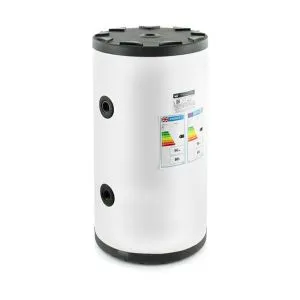
After reviewing the system layout in detail, it became clear why the original installer had piped the system the way they had. The property still used pipework routes connected to the old airing cupboard location, and there was no practical way to install a completely separate dedicated hot water supply pipe without causing significant disruption throughout the house. To avoid lifting carpets and carrying out extensive pipework alterations, the hot water circuit had been routed through the buffer tank as well as the heating circuit.
The problem with this arrangement was straightforward but costly in practice. Every time there was a demand for hot water, the system was also unnecessarily heating the buffer tank before sending any heat upstairs to the cylinder. This meant extra heat loss on every hot water cycle, longer periods of operation, reduced overall efficiency, and unnecessary energy being used to reheat water that was simply not needed during hot water production. This type of inefficiency is often invisible to the homeowner because the hot water still arrives and the house still heats the loss happens silently in the background on every single cycle.
This is a pattern we see more often than many homeowners might expect. Practical installation constraints around existing pipework routes frequently influence how systems end up being designed, and the results are not always optimal from an efficiency perspective. If you are interested in understanding how buffer tanks are supposed to work and when they are genuinely needed, our article on whether heat pumps should have buffer tanks explains the topic clearly. Our article on whether a heat pump can work without a buffer at all is also useful background reading for homeowners trying to understand their own system layout.
The plumber who carried out the original installation was still involved with the project, and after discussing the system together we developed a practical solution that avoided major disruption for the homeowner. Rather than completely re-piping the property, we recommended installing an additional three-port valve positioned before the buffer tank. This allowed the system to bypass the buffer entirely during hot water production, sending heat directly upstairs to the cylinder, while still using the buffer normally during space heating operation when it is genuinely useful.
The outcome was positive on every front. No carpets needed lifting. Disruption remained minimal. The overall system efficiency improved significantly because hot water cycles no longer wasted energy heating a volume of water that served no purpose during that demand. The plumber appreciated the solution and completed the additional labour free of charge for the homeowner, meaning the customer only needed to purchase the valve itself a very small cost compared to the ongoing energy savings achieved.
This case is a good illustration of how heat pump inefficiency is not always caused by poor workmanship or a faulty unit. Sometimes it comes down to practical installation decisions made at the time that have unintended consequences for efficiency further down the line. Small hydraulic and control changes can make a surprisingly large difference to how a system actually performs. If your heat pump seems to be using more electricity than expected, or running for longer than it should during hot water cycles, it may be worth looking at how your system has been piped rather than assuming the heat pump itself is at fault. Our article on why your heat pump might not be heating hot water properly covers some of the common causes of hot water inefficiency in more detail.
Final Thoughts
This was a good example of how some heat pump problems are not the result of poor workmanship, but of practical installation constraints where relatively small hydraulic and control changes can make a significant difference to overall efficiency and system behaviour. If your heat pump system seems to be running inefficiently, using more electricity than expected, or simply not operating as it should, our Fix My Heat Pump service provides independent troubleshooting and practical advice to help identify what may be happening and what improvements are possible. And if you are still planning a heat pump installation, our Pre-Installation Design & Heat Loss Review helps homeowners identify potential design and system layout issues before installation begins.
House in Dorset Buffer Tank Installed Incorrectly, Causing System Inefficiency
A homeowner contacted us after noticing their heat pump seemed to be using far more electricity than expected whenever the hot water was heating. The system itself generally worked the house was reaching temperature and hot water was available but the heat pump was running for unusually long periods during hot water cycles, and overall efficiency simply did not feel right.
After reviewing the system layout in detail, it became clear why the original installer had piped the system the way they had. The property still used pipework routes connected to the old airing cupboard location, and there was no practical way to install a completely separate dedicated hot water supply pipe without causing significant disruption throughout the house. To avoid lifting carpets and carrying out extensive pipework alterations, the hot water circuit had been routed through the buffer tank as well as the heating circuit.
The problem with this arrangement was straightforward but costly in practice. Every time there was a demand for hot water, the system was also unnecessarily heating the buffer tank before sending any heat upstairs to the cylinder. This meant extra heat loss on every hot water cycle, longer periods of operation, reduced overall efficiency, and unnecessary energy being used to reheat water that was simply not needed during hot water production. This type of inefficiency is often invisible to the homeowner because the hot water still arrives and the house still heats the loss happens silently in the background on every single cycle.
This is a pattern we see more often than many homeowners might expect. Practical installation constraints around existing pipework routes frequently influence how systems end up being designed, and the results are not always optimal from an efficiency perspective. If you are interested in understanding how buffer tanks are supposed to work and when they are genuinely needed, our article on whether heat pumps should have buffer tanks explains the topic clearly. Our article on whether a heat pump can work without a buffer at all is also useful background reading for homeowners trying to understand their own system layout.
The plumber who carried out the original installation was still involved with the project, and after discussing the system together we developed a practical solution that avoided major disruption for the homeowner. Rather than completely re-piping the property, we recommended installing an additional three-port valve positioned before the buffer tank. This allowed the system to bypass the buffer entirely during hot water production, sending heat directly upstairs to the cylinder, while still using the buffer normally during space heating operation when it is genuinely useful.
The outcome was positive on every front. No carpets needed lifting. Disruption remained minimal. The overall system efficiency improved significantly because hot water cycles no longer wasted energy heating a volume of water that served no purpose during that demand. The plumber appreciated the solution and completed the additional labour free of charge for the homeowner, meaning the customer only needed to purchase the valve itself a very small cost compared to the ongoing energy savings achieved.
This case is a good illustration of how heat pump inefficiency is not always caused by poor workmanship or a faulty unit. Sometimes it comes down to practical installation decisions made at the time that have unintended consequences for efficiency further down the line. Small hydraulic and control changes can make a surprisingly large difference to how a system actually performs. If your heat pump seems to be using more electricity than expected, or running for longer than it should during hot water cycles, it may be worth looking at how your system has been piped rather than assuming the heat pump itself is at fault. Our article on why your heat pump might not be heating hot water properly covers some of the common causes of hot water inefficiency in more detail.
Final Thoughts
This was a good example of how some heat pump problems are not the result of poor workmanship, but of practical installation constraints where relatively small hydraulic and control changes can make a significant difference to overall efficiency and system behaviour. If your heat pump system seems to be running inefficiently, using more electricity than expected, or simply not operating as it should, our Fix My Heat Pump service provides independent troubleshooting and practical advice to help identify what may be happening and what improvements are possible. And if you are still planning a heat pump installation, our Pre-Installation Design & Heat Loss Review helps homeowners identify potential design and system layout issues before installation begins.

Contact Us
Not Sure Which Service You Need?
Not Sure Which Service You Need?
Not Sure Which Service You Need?
Not Sure Which Service You Need?
Not Sure Which Service You Need?
Whether you need help with an existing heat pump, a pre-installation review, cooling advice, servicing or a room-by-room heat loss survey, send us a few details and we'll point you in the right direction.
Whether you need help with an existing heat pump, a pre-installation review, cooling advice, servicing or a room-by-room heat loss survey, send us a few details and we'll point you in the right direction.
Whether you need help with an existing heat pump, a pre-installation review, cooling advice, servicing or a room-by-room heat loss survey, send us a few details and we'll point you in the right direction.

