Can a Heat Pump Work Without a Buffer tank?
Can a Heat Pump Work Without a Buffer tank?
Can a Heat Pump Work Without a Buffer tank?
Can a Heat Pump Work Without a Buffer tank?
Can a Heat Pump Work Without a Buffer tank?

UK Heat pump Help Technical Team
Independent Heat Pump Engineer
Can a Heat Pump Work Without a Buffer Tank?
Buffer tanks come up in almost every heat pump conversation but whether you actually need one depends heavily on how your system is set up. It’s not a simple yes or no, and the answer matters more than most people realise.
The Short Answer
Yes, a heat pump can work without a buffer tank. In many cases, it performs better without one.
That said, there are situations where a buffer genuinely helps. The difference comes down to system design not a blanket rule either way.
What a Buffer Tank Is Actually Doing
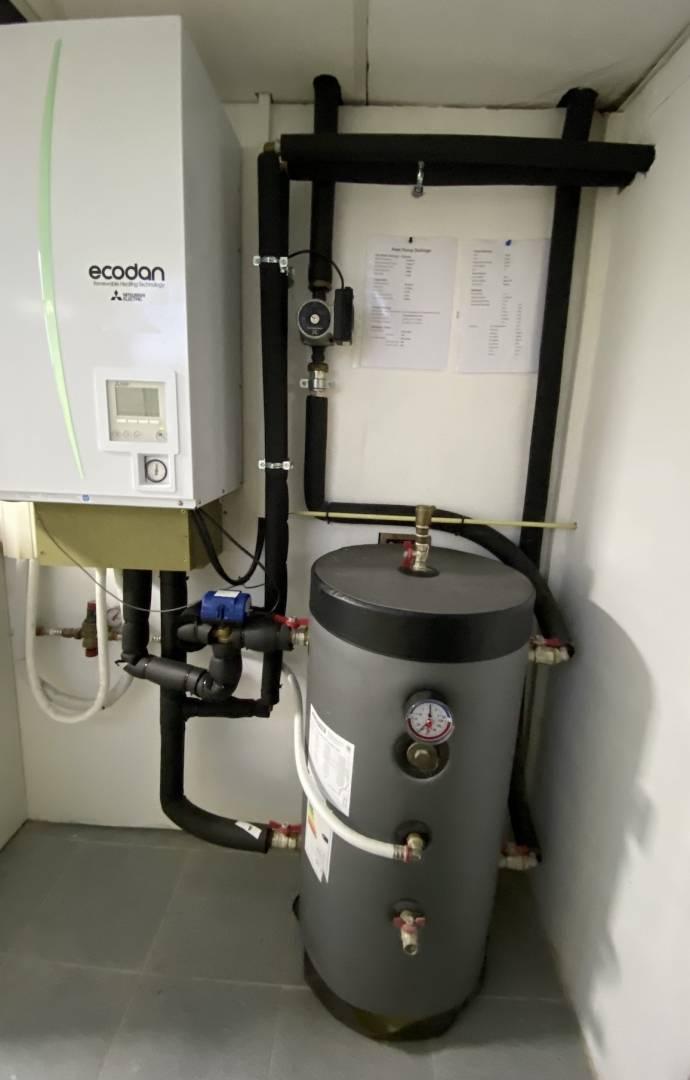
A buffer tank adds water volume to the system and sits between the heat pump circuit and the rest of the heating distribution.
The practical effect is that it smooths out flow, increases the total volume of water in the system, and can reduce short cycling where the heat pump keeps switching on and off in short bursts.
Those things can be useful. But they’re not always necessary, and in some setups, the buffer creates more problems than it solves.
When a Heat Pump Runs Fine Without One
A well-designed system correct radiator sizing, stable flow rates, adequate pipe volume generally doesn’t need a buffer at all.
In that kind of setup, removing the buffer often improves things:
The heat pump responds directly to demand rather than through an intermediary
Flow temperatures tend to be lower, which is where heat pumps are most efficient
The system is more responsive and easier to control
If the fundamentals are right, a buffer is simply an extra component that isn’t pulling its weight.
When a Buffer Tank Is Genuinely Needed
There are real scenarios where a buffer earns its place:
The system has very low water volume and the heat pump cycles too frequently without it
Multiple zones open and close independently, causing flow to drop suddenly
The heat pump is slightly oversized relative to the load
Flow rates are inconsistent across the circuit
In these cases, the buffer helps stabilise behaviour. The caveat is that it’s usually compensating for a design limitation rather than being the ideal fix.
Why Buffers Get Fitted So Often
From an installer’s perspective, buffer tanks make systems more predictable. They reduce the likelihood of flow-related call-backs and cycling complaints after installation.
That’s understandable but it means buffers sometimes get added as a precaution rather than because the system genuinely needs one. For the homeowner, that can quietly work against efficiency.
The Efficiency Side Nobody Mentions
Running a buffer tank when you don’t need one has a real cost.
When flow and return water mix inside the tank, the heat pump sees a higher average temperature than it otherwise would. Higher temperatures mean lower efficiency the heat pump works harder to deliver the same output.
It Always Comes Back to the Design
The question of whether a buffer is needed can’t be answered without looking at the full picture heat loss, radiator sizing, pipework layout, and achievable flow rates.
Get those right, and a buffer often isn’t required. Get them wrong, and a buffer might paper over the cracks without fixing what’s actually causing the problem.
Already Have a Buffer and Not Sure It’s Helping?
If your system has a buffer tank and performance isn’t where it should be or you’re running without one and experiencing cycling issues it’s worth looking at how the system was set up, not just the components involved.
Our Full Performance Review covers system behaviour, flow rates, and whether existing components like buffer tanks are helping or holding things back.
Our Pre-Installation Design & Heat Loss Review is the place to start if you’re still at the planning stage and want the system designed properly from the outset.
Can a Heat Pump Work Without a Buffer Tank?
Buffer tanks come up in almost every heat pump conversation but whether you actually need one depends heavily on how your system is set up. It’s not a simple yes or no, and the answer matters more than most people realise.
The Short Answer
Yes, a heat pump can work without a buffer tank. In many cases, it performs better without one.
That said, there are situations where a buffer genuinely helps. The difference comes down to system design not a blanket rule either way.
What a Buffer Tank Is Actually Doing
A buffer tank adds water volume to the system and sits between the heat pump circuit and the rest of the heating distribution.
The practical effect is that it smooths out flow, increases the total volume of water in the system, and can reduce short cycling where the heat pump keeps switching on and off in short bursts.
Those things can be useful. But they’re not always necessary, and in some setups, the buffer creates more problems than it solves.
When a Heat Pump Runs Fine Without One
A well-designed system correct radiator sizing, stable flow rates, adequate pipe volume generally doesn’t need a buffer at all.
In that kind of setup, removing the buffer often improves things:
The heat pump responds directly to demand rather than through an intermediary
Flow temperatures tend to be lower, which is where heat pumps are most efficient
The system is more responsive and easier to control
If the fundamentals are right, a buffer is simply an extra component that isn’t pulling its weight.
When a Buffer Tank Is Genuinely Needed
There are real scenarios where a buffer earns its place:
The system has very low water volume and the heat pump cycles too frequently without it
Multiple zones open and close independently, causing flow to drop suddenly
The heat pump is slightly oversized relative to the load
Flow rates are inconsistent across the circuit
In these cases, the buffer helps stabilise behaviour. The caveat is that it’s usually compensating for a design limitation rather than being the ideal fix.
Why Buffers Get Fitted So Often
From an installer’s perspective, buffer tanks make systems more predictable. They reduce the likelihood of flow-related call-backs and cycling complaints after installation.
That’s understandable but it means buffers sometimes get added as a precaution rather than because the system genuinely needs one. For the homeowner, that can quietly work against efficiency.
The Efficiency Side Nobody Mentions
Running a buffer tank when you don’t need one has a real cost.
When flow and return water mix inside the tank, the heat pump sees a higher average temperature than it otherwise would. Higher temperatures mean lower efficiency the heat pump works harder to deliver the same output.
It Always Comes Back to the Design
The question of whether a buffer is needed can’t be answered without looking at the full picture heat loss, radiator sizing, pipework layout, and achievable flow rates.
Get those right, and a buffer often isn’t required. Get them wrong, and a buffer might paper over the cracks without fixing what’s actually causing the problem.
Already Have a Buffer and Not Sure It’s Helping?
If your system has a buffer tank and performance isn’t where it should be or you’re running without one and experiencing cycling issues it’s worth looking at how the system was set up, not just the components involved.
Our Full Performance Review covers system behaviour, flow rates, and whether existing components like buffer tanks are helping or holding things back.
Our Pre-Installation Design & Heat Loss Review is the place to start if you’re still at the planning stage and want the system designed properly from the outset.
Oct 21, 2026
5 min read
Air to Water Heat Pump: How It Works and What It Needs
Read More
Oct 21, 2026
5 min read
Air to Water Heat Pump: How It Works and What It Needs
Read More
Oct 19, 2026
5 min read
Heat Pump System Water Treatment: Inhibitor, Filters and Annual Water Tests
Read More
Oct 19, 2026
5 min read
Heat Pump System Water Treatment: Inhibitor, Filters and Annual Water Tests
Read More

Contact Us
Not Sure Which Service You Need?
Not Sure Which Service You Need?
Not Sure Which Service You Need?
Not Sure Which Service You Need?
Not Sure Which Service You Need?
Whether you need help with an existing heat pump, a pre-installation review, cooling advice, servicing or a room-by-room heat loss survey, send us a few details and we'll point you in the right direction.
Whether you need help with an existing heat pump, a pre-installation review, cooling advice, servicing or a room-by-room heat loss survey, send us a few details and we'll point you in the right direction.
Whether you need help with an existing heat pump, a pre-installation review, cooling advice, servicing or a room-by-room heat loss survey, send us a few details and we'll point you in the right direction.

