Should Heat Pumps Have Buffer Tanks? (UK Guide)
Should Heat Pumps Have Buffer Tanks? (UK Guide)
Should Heat Pumps Have Buffer Tanks? (UK Guide)
Should Heat Pumps Have Buffer Tanks? (UK Guide)
Should Heat Pumps Have Buffer Tanks? (UK Guide)

UK Heat pump Help Technical Team
Independent Heat Pump Engineer
Buffer tanks come up in nearly every pre-installation conversation I have with homeowners. Usually because their installer has included one in the quote, they’ve searched online, and now they’re caught between sources saying buffer tanks are essential and sources saying they’re a waste of money.
Both sides have a point. And both sides are wrong when they make it a blanket statement.
Whether your system needs a buffer tank depends on your specific system design the water volume in your pipework and emitters, how your zones are controlled, and the heat pump model you’re installing. Get it right and the buffer stabilises the system. Get it wrong and you’ve spent £400 to £800 on a component that makes your heat pump less efficient.
What a buffer tank actually does
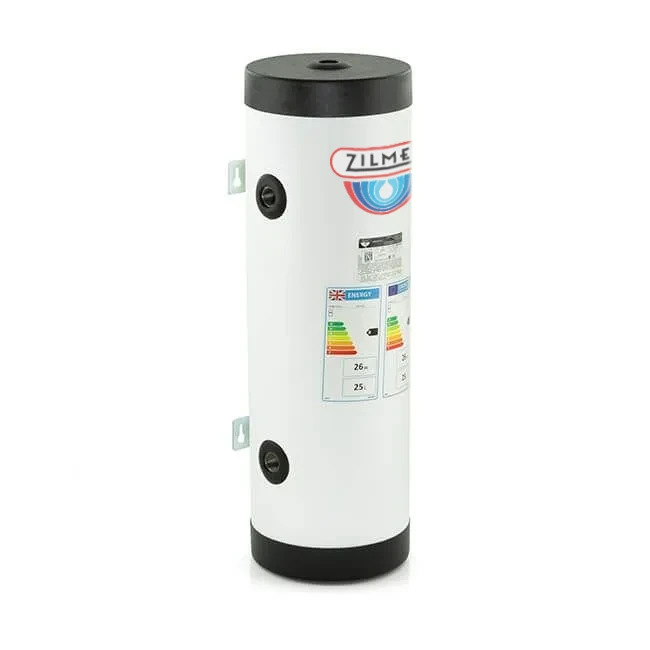
A buffer tank is an insulated cylinder typically 25 to 100 litres plumbed between the heat pump and the heating circuit. It adds water volume to the system.
Why does volume matter? Because heat pumps and boilers behave very differently.
A gas boiler fires hard, heats water to 70°C in minutes, and switches off. A heat pump produces heat at a much lower intensity over a much longer period. It needs enough water in the system to absorb that gradual heat output without the temperature spiking too quickly. If the total system volume is too small, the water temperature rises fast, the heat pump hits its target, shuts off and then restarts a few minutes later when the water cools. This stop-start behaviour is called short cycling. It wears the compressor, wastes electricity, and is one of the things I look for in every performance review I carry out.
A buffer tank prevents short cycling by giving the heat pump a larger body of water to work with.
There’s a second function that’s worth separating out: hydraulic separation. In some configurations, the buffer tank (or a dedicated hydraulic separator) sits between the heat pump circuit and the distribution circuit so the two can run at different flow rates. This matters when you have multiple zones opening and closing independently the heat pump sees a stable, consistent circuit regardless of what the radiator or underfloor side is doing.
These are two different jobs. An installer should be able to tell you which one the buffer tank in your quote is there for. If the answer is vague, that’s a flag.
When you genuinely need one
Low system water volume
This is the most common legitimate reason. Every heat pump manufacturer publishes a minimum system volume the smallest amount of water the system can contain before short cycling becomes a risk.
The numbers vary. Vaillant aroTHERM units typically require around 20 to 30 litres minimum depending on the model. NIBE and Mitsubishi Ecodan units have their own figures in the installation manuals, usually expressed as litres per kW of output commonly 7 to 15 litres per kW, depending on whether the unit has an inverter compressor that can modulate down.
In practice, most systems with a reasonable run of pipework and a full set of radiators already meet the minimum volume requirement without needing a buffer. Where it becomes an issue is homes with small underfloor heating manifolds, minimal pipework runs, or microbore pipe throughout.
One system I reviewed last year a modern 3-bed semi in Hertfordshire, underfloor heating on the ground floor, radiators upstairs had a total system volume of around 40 litres against an 8kW heat pump. The unit was short cycling every 6 to 8 minutes during mild weather. A 25-litre buffer tank resolved it completely. That’s exactly the kind of situation where a buffer earns its place.
Multiple independent heating zones
If your system has zone valves downstairs and upstairs operating independently, or separate underfloor and radiator circuits the flow rate changes significantly when zones open and close. The heat pump can struggle with this. One moment it sees full system flow, the next moment only half the circuit is open and the flow rate drops sharply.
I reviewed a 4-bed detached in Essex with a Samsung Gen6 and three separate zones. When only the upstairs bathroom zone was calling for heat (small towel radiator, short pipe run), the system volume the heat pump was working against dropped to about 15 litres. The unit was cycling every 3 to 4 minutes. A 50-litre buffer plumbed as a hydraulic separator fixed the cycling.
Worth noting: not every zoned system needs a buffer. If the zones are large enough that even the smallest single zone still provides adequate volume and flow, you might not need one. The calculation matters.
Air source heat pumps during defrost
This one gets overlooked. When an air source heat pump defrosts its outdoor unit which happens periodically in cold, damp weather it temporarily reverses its refrigeration cycle. During that defrost period, the heat pump is pulling heat out of the heating circuit rather than putting heat in.
If there’s no buffer tank, the defrost cycle draws heat directly from the radiators. In a small system with limited water volume, you can sometimes feel the radiators cooling briefly during a defrost. In larger or well-buffered systems, the buffer tank supplies the defrost energy without the homeowner noticing anything.
Ground source heat pumps don’t defrost, so this point doesn’t apply to them.
The heat pump is oversized
An oversized heat pump one that produces more heat than the building actually needs will heat the system water too quickly and cycle on and off constantly. A buffer tank can soften this by adding thermal mass for the oversized unit to work into.
I should be direct here though: a buffer tank in this situation is managing a design mistake, not fixing it. The correct solution is proper sizing based on a room-by-room heat loss calculation. A buffer tank just makes the consequences of oversizing less immediately obvious.
When a buffer tank hurts more than it helps
This is the part most online guides skip over, and it matters.
If your system already has adequate volume, consistent flow, and properly sized emitters a buffer tank actively reduces efficiency. Here’s why.
In a standard buffer tank installation, hot water from the heat pump and cooler return water from the radiator circuit mix inside the tank. This mixing raises the temperature the heat pump is working against. Heat pumps become less efficient as the temperature they have to produce goes up. Every 1°C increase in flow temperature reduces the COP by roughly 1.5 to 2.5 per cent. It doesn’t sound like much. Across a full winter, it adds up to a real increase in electricity costs.
There’s also a responsiveness issue I notice in reviews. Without a buffer, the heat pump responds directly to what the house needs — the return water temperature gives it a live signal of actual demand. With a buffer, the heat pump responds to the temperature of the water sitting in the tank, which lags behind what the house is actually doing. During mild weather especially, this can mean the heat pump runs when it doesn’t need to, or undershoots when conditions change quickly.
I reviewed a system in a well-insulated new-build in Suffolk last autumn. Four-bed detached, underfloor heating throughout, 11kW Vaillant aroTHERM plus. Total system volume was well over 200 litres without any buffer. The installer had fitted a 150-litre buffer tank anyway “standard practice,” they said. The homeowner’s electricity bills were higher than expected and the weather compensation was behaving oddly because the return temperature to the heat pump was being skewed by the buffer. Removing the buffer and adjusting the weather comp curve brought the monthly cost down by around £35 to £40 in heating season. That’s a real number, from a real system, and it illustrates why “always fit a buffer” is bad advice.
Why installers fit them anyway
I want to be honest about this because it affects real decisions homeowners are making right now.
Buffer tanks are popular with installers partly for legitimate technical reasons and partly because they make systems more forgiving to commission. A buffer tank can mask problems that would otherwise cause callbacks. Marginally undersized radiators? The buffer smooths out the cycling that would expose it. Slightly inconsistent flow balance? The buffer absorbs the variation. Heat pump a bit too large? The buffer gives it somewhere to dump excess heat.
From a business standpoint, I understand it. From a performance standpoint, it means some homeowners are paying for a component that’s papering over design work that should have been done properly.
The tell-tale sign: if your installer has included a buffer tank but can’t explain in specific terms system volume numbers, manufacturer minimum requirements, zone configuration why your particular system needs one, it’s worth pushing back.
That said, I don’t want to suggest installers are being deliberately careless. Many genuinely believe buffer tanks are always beneficial. The industry has repeated “always fit a buffer” for years, and when you’re commissioning three systems a week, the extra margin a buffer provides is genuinely useful. The issue is when it becomes default rather than designed.
How to figure out whether you need one
Rather than a tidy list of questions (which always feels a bit artificial to me), here’s what I’d actually want to know if I were in your position:
First, what is the total system water volume without a buffer? Your installer should be able to calculate this it’s the volume in the pipework plus the volume in the radiators or underfloor manifolds plus any cylinder coil. Then compare that number to your heat pump manufacturer’s minimum system volume requirement. If your calculated volume is comfortably above the minimum say 30 per cent or more you probably don’t need a buffer for volume reasons.
Second, how is the system zoned? If you have multiple zone valves, check what the smallest single zone looks like in terms of volume and flow. If it’s tiny (one small radiator, short pipe run), a buffer or separator might be justified.
Third, is the buffer being quoted as a hydraulic separator or purely as a volume addition? These are different applications. A separator makes sense in certain multi-zone or mixed-emitter (radiators plus underfloor) configurations. A pure volume buffer only makes sense if the calculated volume falls short.
If your installer can answer those three things clearly, they’ve thought about it properly. If the response is “we always fit one” that’s not engineering, it’s habit.
The bigger picture
The buffer tank decision should be made at the design stage, not on installation day. By the time the system is in, changes are expensive and disruptive. Fit one unnecessarily and it’s a permanent drag on efficiency. Skip one when the system genuinely needed it and the compressor takes a beating from constant cycling.
This is exactly the kind of detail a proper pre-installation design review catches. We look at your calculated heat loss, your total system volume, your emitter specification, your pipework layout, and your zone control strategy and give you a clear answer before anything gets installed.
If you’re specifically trying to understand whether your setup can operate effectively without a buffer at all, we’ve covered that question in a separate guide on whether a heat pump can work without a buffer tank — which looks at this from a practical, system-by-system perspective.
Already installed and having issues?
If your system is already in and you’re seeing short cycling, inconsistent temperatures, or electricity bills that don’t match what you were told to expect and you’re not sure whether the buffer tank setup is part of the problem a full performance review can tell you exactly what’s going on. Sometimes the buffer needs to stay. Sometimes it needs to go. Sometimes it just needs to be plumbed differently.
Details and pricing are on our services page.
For homeowners who aren’t sure whether the buffer tank setup is the cause or just one contributing factor, our heat pump troubleshooting support can work through the full picture remotely and tell you exactly where the problem lies.
Related reading: Will Cooling Work With a Buffer Tank? · Can a Heat Pump Work Without a Buffer tank?
You may also find Will Cooling Work With a Buffer Tank? useful.
Buffer tanks come up in nearly every pre-installation conversation I have with homeowners. Usually because their installer has included one in the quote, they’ve searched online, and now they’re caught between sources saying buffer tanks are essential and sources saying they’re a waste of money.
Both sides have a point. And both sides are wrong when they make it a blanket statement.
Whether your system needs a buffer tank depends on your specific system design the water volume in your pipework and emitters, how your zones are controlled, and the heat pump model you’re installing. Get it right and the buffer stabilises the system. Get it wrong and you’ve spent £400 to £800 on a component that makes your heat pump less efficient.
What a buffer tank actually does
A buffer tank is an insulated cylinder typically 25 to 100 litres plumbed between the heat pump and the heating circuit. It adds water volume to the system.
Why does volume matter? Because heat pumps and boilers behave very differently.
A gas boiler fires hard, heats water to 70°C in minutes, and switches off. A heat pump produces heat at a much lower intensity over a much longer period. It needs enough water in the system to absorb that gradual heat output without the temperature spiking too quickly. If the total system volume is too small, the water temperature rises fast, the heat pump hits its target, shuts off and then restarts a few minutes later when the water cools. This stop-start behaviour is called short cycling. It wears the compressor, wastes electricity, and is one of the things I look for in every performance review I carry out.
A buffer tank prevents short cycling by giving the heat pump a larger body of water to work with.
There’s a second function that’s worth separating out: hydraulic separation. In some configurations, the buffer tank (or a dedicated hydraulic separator) sits between the heat pump circuit and the distribution circuit so the two can run at different flow rates. This matters when you have multiple zones opening and closing independently the heat pump sees a stable, consistent circuit regardless of what the radiator or underfloor side is doing.
These are two different jobs. An installer should be able to tell you which one the buffer tank in your quote is there for. If the answer is vague, that’s a flag.
When you genuinely need one
Low system water volume
This is the most common legitimate reason. Every heat pump manufacturer publishes a minimum system volume the smallest amount of water the system can contain before short cycling becomes a risk.
The numbers vary. Vaillant aroTHERM units typically require around 20 to 30 litres minimum depending on the model. NIBE and Mitsubishi Ecodan units have their own figures in the installation manuals, usually expressed as litres per kW of output commonly 7 to 15 litres per kW, depending on whether the unit has an inverter compressor that can modulate down.
In practice, most systems with a reasonable run of pipework and a full set of radiators already meet the minimum volume requirement without needing a buffer. Where it becomes an issue is homes with small underfloor heating manifolds, minimal pipework runs, or microbore pipe throughout.
One system I reviewed last year a modern 3-bed semi in Hertfordshire, underfloor heating on the ground floor, radiators upstairs had a total system volume of around 40 litres against an 8kW heat pump. The unit was short cycling every 6 to 8 minutes during mild weather. A 25-litre buffer tank resolved it completely. That’s exactly the kind of situation where a buffer earns its place.
Multiple independent heating zones
If your system has zone valves downstairs and upstairs operating independently, or separate underfloor and radiator circuits the flow rate changes significantly when zones open and close. The heat pump can struggle with this. One moment it sees full system flow, the next moment only half the circuit is open and the flow rate drops sharply.
I reviewed a 4-bed detached in Essex with a Samsung Gen6 and three separate zones. When only the upstairs bathroom zone was calling for heat (small towel radiator, short pipe run), the system volume the heat pump was working against dropped to about 15 litres. The unit was cycling every 3 to 4 minutes. A 50-litre buffer plumbed as a hydraulic separator fixed the cycling.
Worth noting: not every zoned system needs a buffer. If the zones are large enough that even the smallest single zone still provides adequate volume and flow, you might not need one. The calculation matters.
Air source heat pumps during defrost
This one gets overlooked. When an air source heat pump defrosts its outdoor unit which happens periodically in cold, damp weather it temporarily reverses its refrigeration cycle. During that defrost period, the heat pump is pulling heat out of the heating circuit rather than putting heat in.
If there’s no buffer tank, the defrost cycle draws heat directly from the radiators. In a small system with limited water volume, you can sometimes feel the radiators cooling briefly during a defrost. In larger or well-buffered systems, the buffer tank supplies the defrost energy without the homeowner noticing anything.
Ground source heat pumps don’t defrost, so this point doesn’t apply to them.
The heat pump is oversized
An oversized heat pump one that produces more heat than the building actually needs will heat the system water too quickly and cycle on and off constantly. A buffer tank can soften this by adding thermal mass for the oversized unit to work into.
I should be direct here though: a buffer tank in this situation is managing a design mistake, not fixing it. The correct solution is proper sizing based on a room-by-room heat loss calculation. A buffer tank just makes the consequences of oversizing less immediately obvious.
When a buffer tank hurts more than it helps
This is the part most online guides skip over, and it matters.
If your system already has adequate volume, consistent flow, and properly sized emitters a buffer tank actively reduces efficiency. Here’s why.
In a standard buffer tank installation, hot water from the heat pump and cooler return water from the radiator circuit mix inside the tank. This mixing raises the temperature the heat pump is working against. Heat pumps become less efficient as the temperature they have to produce goes up. Every 1°C increase in flow temperature reduces the COP by roughly 1.5 to 2.5 per cent. It doesn’t sound like much. Across a full winter, it adds up to a real increase in electricity costs.
There’s also a responsiveness issue I notice in reviews. Without a buffer, the heat pump responds directly to what the house needs — the return water temperature gives it a live signal of actual demand. With a buffer, the heat pump responds to the temperature of the water sitting in the tank, which lags behind what the house is actually doing. During mild weather especially, this can mean the heat pump runs when it doesn’t need to, or undershoots when conditions change quickly.
I reviewed a system in a well-insulated new-build in Suffolk last autumn. Four-bed detached, underfloor heating throughout, 11kW Vaillant aroTHERM plus. Total system volume was well over 200 litres without any buffer. The installer had fitted a 150-litre buffer tank anyway “standard practice,” they said. The homeowner’s electricity bills were higher than expected and the weather compensation was behaving oddly because the return temperature to the heat pump was being skewed by the buffer. Removing the buffer and adjusting the weather comp curve brought the monthly cost down by around £35 to £40 in heating season. That’s a real number, from a real system, and it illustrates why “always fit a buffer” is bad advice.
Why installers fit them anyway
I want to be honest about this because it affects real decisions homeowners are making right now.
Buffer tanks are popular with installers partly for legitimate technical reasons and partly because they make systems more forgiving to commission. A buffer tank can mask problems that would otherwise cause callbacks. Marginally undersized radiators? The buffer smooths out the cycling that would expose it. Slightly inconsistent flow balance? The buffer absorbs the variation. Heat pump a bit too large? The buffer gives it somewhere to dump excess heat.
From a business standpoint, I understand it. From a performance standpoint, it means some homeowners are paying for a component that’s papering over design work that should have been done properly.
The tell-tale sign: if your installer has included a buffer tank but can’t explain in specific terms system volume numbers, manufacturer minimum requirements, zone configuration why your particular system needs one, it’s worth pushing back.
That said, I don’t want to suggest installers are being deliberately careless. Many genuinely believe buffer tanks are always beneficial. The industry has repeated “always fit a buffer” for years, and when you’re commissioning three systems a week, the extra margin a buffer provides is genuinely useful. The issue is when it becomes default rather than designed.
How to figure out whether you need one
Rather than a tidy list of questions (which always feels a bit artificial to me), here’s what I’d actually want to know if I were in your position:
First, what is the total system water volume without a buffer? Your installer should be able to calculate this it’s the volume in the pipework plus the volume in the radiators or underfloor manifolds plus any cylinder coil. Then compare that number to your heat pump manufacturer’s minimum system volume requirement. If your calculated volume is comfortably above the minimum say 30 per cent or more you probably don’t need a buffer for volume reasons.
Second, how is the system zoned? If you have multiple zone valves, check what the smallest single zone looks like in terms of volume and flow. If it’s tiny (one small radiator, short pipe run), a buffer or separator might be justified.
Third, is the buffer being quoted as a hydraulic separator or purely as a volume addition? These are different applications. A separator makes sense in certain multi-zone or mixed-emitter (radiators plus underfloor) configurations. A pure volume buffer only makes sense if the calculated volume falls short.
If your installer can answer those three things clearly, they’ve thought about it properly. If the response is “we always fit one” that’s not engineering, it’s habit.
The bigger picture
The buffer tank decision should be made at the design stage, not on installation day. By the time the system is in, changes are expensive and disruptive. Fit one unnecessarily and it’s a permanent drag on efficiency. Skip one when the system genuinely needed it and the compressor takes a beating from constant cycling.
This is exactly the kind of detail a proper pre-installation design review catches. We look at your calculated heat loss, your total system volume, your emitter specification, your pipework layout, and your zone control strategy and give you a clear answer before anything gets installed.
If you’re specifically trying to understand whether your setup can operate effectively without a buffer at all, we’ve covered that question in a separate guide on whether a heat pump can work without a buffer tank — which looks at this from a practical, system-by-system perspective.
Already installed and having issues?
If your system is already in and you’re seeing short cycling, inconsistent temperatures, or electricity bills that don’t match what you were told to expect and you’re not sure whether the buffer tank setup is part of the problem a full performance review can tell you exactly what’s going on. Sometimes the buffer needs to stay. Sometimes it needs to go. Sometimes it just needs to be plumbed differently.
Details and pricing are on our services page.
For homeowners who aren’t sure whether the buffer tank setup is the cause or just one contributing factor, our heat pump troubleshooting support can work through the full picture remotely and tell you exactly where the problem lies.
Related reading: Will Cooling Work With a Buffer Tank? · Can a Heat Pump Work Without a Buffer tank?
You may also find Will Cooling Work With a Buffer Tank? useful.
Oct 14, 2026
5 min read
How to Compare Heat Pump Quotes: What a Good UK Quote Includes (and Red Flags)
Read More
Oct 14, 2026
5 min read
How to Compare Heat Pump Quotes: What a Good UK Quote Includes (and Red Flags)
Read More
Oct 12, 2026
5 min read
Heat Pump Holiday Settings: What to Do When You Go Away in Winter
Read More
Oct 12, 2026
5 min read
Heat Pump Holiday Settings: What to Do When You Go Away in Winter
Read More


Contact Us
Not Sure Which Service You Need?
Not Sure Which Service You Need?
Not Sure Which Service You Need?
Not Sure Which Service You Need?
Not Sure Which Service You Need?
Whether you need help with an existing heat pump, a pre-installation review, cooling advice, servicing or a room-by-room heat loss survey, send us a few details and we'll point you in the right direction.
Whether you need help with an existing heat pump, a pre-installation review, cooling advice, servicing or a room-by-room heat loss survey, send us a few details and we'll point you in the right direction.
Whether you need help with an existing heat pump, a pre-installation review, cooling advice, servicing or a room-by-room heat loss survey, send us a few details and we'll point you in the right direction.

