Should You Use TRVs With a Heat Pump?
Should You Use TRVs With a Heat Pump?
Should You Use TRVs With a Heat Pump?
Should You Use TRVs With a Heat Pump?
Should You Use TRVs With a Heat Pump?

UK Heat pump Help Technical Team
Independent Heat Pump Engineer
Should You Use TRVs With a Heat Pump?
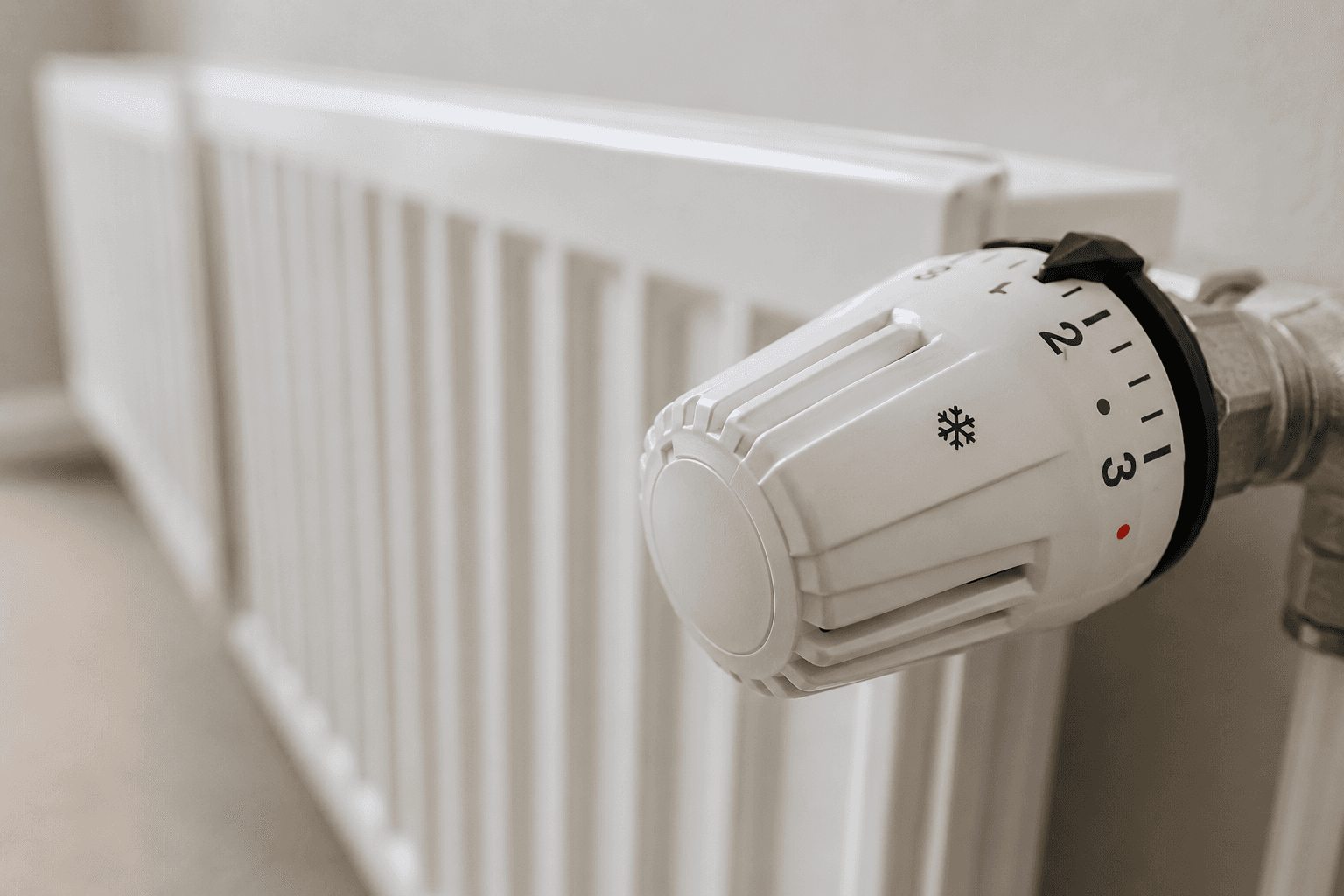
One of the most confusing pieces of advice UK homeowners encounter after a heat pump installation is the question of what to do with their thermostatic radiator valves. Some engineers say leave every radiator fully open at all times. Others say use TRVs exactly as you did with your old gas boiler. Both pieces of advice get repeated with complete confidence, and yet they directly contradict each other. The honest answer is that both can be correct depending on how the specific system has been designed and that reality is rarely explained properly at the point of installation.
Why the Advice to Leave Everything Open Exists
Heat pumps operate very differently to traditional gas boilers. A boiler can run at flow temperatures of 70°C to 80°C and respond quickly to sudden changes in heating demand. A heat pump works most efficiently at much lower flow temperatures typically somewhere between 35°C and 45°C and relies on running steadily for long periods rather than reacting in short bursts. The reasoning behind leaving all radiators fully open follows from this. When the entire house is heated steadily and continuously, the heat pump has a stable, consistent load to work against. The available water volume in the system stays high, cycling is reduced, lower flow temperatures become viable, and the overall fabric of the building holds heat more evenly. This is why many system designers recommend leaving TRVs fully open, particularly in houses where the system has been designed around whole-house low-temperature operation. Our guide on what flow temperature your heat pump should run at explains the relationship between flow temperature, efficiency, and system stability in more detail.
Why Real Homes Do Not Always Work That Way
The challenge with whole-house open-radiator advice is that people do not use their homes in perfectly uniform ways. Many homeowners keep spare bedrooms cooler, prefer sleeping in colder rooms, work from home in a single room that needs more heat than the rest, or have parts of the house that are rarely used at all. Asking someone to permanently heat every room to the same temperature regardless of how they actually live there is not always realistic, and in many cases it is not even necessary if the system has been designed with sufficient flexibility. The genuine concern is not whether any TRVs are used at all it is whether too many radiators are being closed simultaneously, and what that does to the system's ability to function correctly.
What Happens When Too Many Radiators Are Closed at Once
When multiple TRVs shut down at the same time, the available water volume in the system reduces. Flow rates can drop below what the heat pump needs to operate stably. Short cycling can increase the heat pump starts and stops more frequently, which reduces efficiency and places additional mechanical strain on the compressor. Some heat pumps display flow errors or fault codes under these conditions. Defrost performance can also be affected, because the system no longer has the thermal mass it needs to manage those cycles properly. We regularly come across situations where a homeowner has turned several rooms down to save money and then finds that heating performance has changed, running costs have actually increased, or fault codes have appeared that were not there before. Our article on why a heat pump keeps turning on and off explains the short cycling problem in detail, and our case study on a new-build in Essex where a COP of just 1.2 was traced to over-zoning shows how dramatically this kind of issue can affect real-world efficiency even on a brand-new installation.
The Balanced Approach That Often Works Best
Rather than choosing between leaving everything permanently open or using TRVs exactly as before, many systems perform well with a more considered middle ground. Keeping regularly used rooms fully open allows the heat pump to maintain adequate flow and water volume during normal operation. Slightly reducing temperatures in rarely used rooms rather than closing them off completely preserves enough thermal mass for the system to work against. Avoiding the simultaneous closure of large numbers of radiators prevents the flow rate from dropping to a level that triggers cycling or faults. This is not a rigid prescription that works identically for every system it depends on how the system was sized, how much water volume is available, whether a buffer tank is fitted, and how the controls have been configured. Our article on whether heat pumps need a buffer tank and our guide on heat pump system balancing explained are both worth reading alongside this to understand how those factors interact.
Buffer Tanks and Zoning Flexibility
Buffer tanks can increase the available water volume in a system and provide greater flexibility around zoning including more scope to use TRVs in different rooms without destabilising the heat pump. However, a buffer tank is not an automatic solution to every zoning problem. Poorly designed buffer arrangements can increase heat losses, reduce overall efficiency, and add cost without addressing the underlying issue. The goal is never simply to add more components it is to ensure the whole system works together in a way that suits how the house is actually used. A related case study worth reading is our example of a family home in Cheshire where the hot water setup rather than the zoning was the root cause of the problem, which shows how symptoms that appear to be about system flow can sometimes trace back to a completely different configuration issue.
So Should You Use TRVs With a Heat Pump?
The answer is usually yes but with awareness of what closing multiple radiators simultaneously does to flow, volume, and cycling behaviour. TRVs are not automatically harmful to a heat pump system. Closing large sections of the house completely, however, can create the kind of low-flow conditions that reduce efficiency and increase running costs in ways that are difficult to diagnose without a proper technical review. The best approach always depends on how the specific system was designed, how much water volume is available, how the radiators are sized, and how the controls are configured. There is no single rule that applies universally across every UK heat pump installation. If your system is short cycling, struggling to heat rooms correctly, or you are unsure whether the controls are set up properly for the way you use your home, our Full Performance Review can identify what is actually happening and what practical changes will make a difference. And if you are still planning a heat pump installation, our Pre-Installation Design and Heat Loss Review helps identify potential system design issues before installation begins including how zoning and water volume should be planned for the specific property.
Should You Use TRVs With a Heat Pump?
One of the most confusing pieces of advice UK homeowners encounter after a heat pump installation is the question of what to do with their thermostatic radiator valves. Some engineers say leave every radiator fully open at all times. Others say use TRVs exactly as you did with your old gas boiler. Both pieces of advice get repeated with complete confidence, and yet they directly contradict each other. The honest answer is that both can be correct depending on how the specific system has been designed and that reality is rarely explained properly at the point of installation.
Why the Advice to Leave Everything Open Exists
Heat pumps operate very differently to traditional gas boilers. A boiler can run at flow temperatures of 70°C to 80°C and respond quickly to sudden changes in heating demand. A heat pump works most efficiently at much lower flow temperatures typically somewhere between 35°C and 45°C and relies on running steadily for long periods rather than reacting in short bursts. The reasoning behind leaving all radiators fully open follows from this. When the entire house is heated steadily and continuously, the heat pump has a stable, consistent load to work against. The available water volume in the system stays high, cycling is reduced, lower flow temperatures become viable, and the overall fabric of the building holds heat more evenly. This is why many system designers recommend leaving TRVs fully open, particularly in houses where the system has been designed around whole-house low-temperature operation. Our guide on what flow temperature your heat pump should run at explains the relationship between flow temperature, efficiency, and system stability in more detail.
Why Real Homes Do Not Always Work That Way
The challenge with whole-house open-radiator advice is that people do not use their homes in perfectly uniform ways. Many homeowners keep spare bedrooms cooler, prefer sleeping in colder rooms, work from home in a single room that needs more heat than the rest, or have parts of the house that are rarely used at all. Asking someone to permanently heat every room to the same temperature regardless of how they actually live there is not always realistic, and in many cases it is not even necessary if the system has been designed with sufficient flexibility. The genuine concern is not whether any TRVs are used at all it is whether too many radiators are being closed simultaneously, and what that does to the system's ability to function correctly.
What Happens When Too Many Radiators Are Closed at Once
When multiple TRVs shut down at the same time, the available water volume in the system reduces. Flow rates can drop below what the heat pump needs to operate stably. Short cycling can increase the heat pump starts and stops more frequently, which reduces efficiency and places additional mechanical strain on the compressor. Some heat pumps display flow errors or fault codes under these conditions. Defrost performance can also be affected, because the system no longer has the thermal mass it needs to manage those cycles properly. We regularly come across situations where a homeowner has turned several rooms down to save money and then finds that heating performance has changed, running costs have actually increased, or fault codes have appeared that were not there before. Our article on why a heat pump keeps turning on and off explains the short cycling problem in detail, and our case study on a new-build in Essex where a COP of just 1.2 was traced to over-zoning shows how dramatically this kind of issue can affect real-world efficiency even on a brand-new installation.
The Balanced Approach That Often Works Best
Rather than choosing between leaving everything permanently open or using TRVs exactly as before, many systems perform well with a more considered middle ground. Keeping regularly used rooms fully open allows the heat pump to maintain adequate flow and water volume during normal operation. Slightly reducing temperatures in rarely used rooms rather than closing them off completely preserves enough thermal mass for the system to work against. Avoiding the simultaneous closure of large numbers of radiators prevents the flow rate from dropping to a level that triggers cycling or faults. This is not a rigid prescription that works identically for every system it depends on how the system was sized, how much water volume is available, whether a buffer tank is fitted, and how the controls have been configured. Our article on whether heat pumps need a buffer tank and our guide on heat pump system balancing explained are both worth reading alongside this to understand how those factors interact.
Buffer Tanks and Zoning Flexibility
Buffer tanks can increase the available water volume in a system and provide greater flexibility around zoning including more scope to use TRVs in different rooms without destabilising the heat pump. However, a buffer tank is not an automatic solution to every zoning problem. Poorly designed buffer arrangements can increase heat losses, reduce overall efficiency, and add cost without addressing the underlying issue. The goal is never simply to add more components it is to ensure the whole system works together in a way that suits how the house is actually used. A related case study worth reading is our example of a family home in Cheshire where the hot water setup rather than the zoning was the root cause of the problem, which shows how symptoms that appear to be about system flow can sometimes trace back to a completely different configuration issue.
So Should You Use TRVs With a Heat Pump?
The answer is usually yes but with awareness of what closing multiple radiators simultaneously does to flow, volume, and cycling behaviour. TRVs are not automatically harmful to a heat pump system. Closing large sections of the house completely, however, can create the kind of low-flow conditions that reduce efficiency and increase running costs in ways that are difficult to diagnose without a proper technical review. The best approach always depends on how the specific system was designed, how much water volume is available, how the radiators are sized, and how the controls are configured. There is no single rule that applies universally across every UK heat pump installation. If your system is short cycling, struggling to heat rooms correctly, or you are unsure whether the controls are set up properly for the way you use your home, our Full Performance Review can identify what is actually happening and what practical changes will make a difference. And if you are still planning a heat pump installation, our Pre-Installation Design and Heat Loss Review helps identify potential system design issues before installation begins including how zoning and water volume should be planned for the specific property.
Oct 8, 2026
5 min read
Where Should an Air Source Heat Pump Outdoor Unit Go?
Read More
Oct 8, 2026
5 min read
Where Should an Air Source Heat Pump Outdoor Unit Go?
Read More

Oct 6, 2026
5 min read
Why Does My Heat Pump Run Out of Hot Water So Quickly?
Read More
Oct 6, 2026
5 min read
Why Does My Heat Pump Run Out of Hot Water So Quickly?
Read More

Contact Us
Not Sure Which Service You Need?
Not Sure Which Service You Need?
Not Sure Which Service You Need?
Not Sure Which Service You Need?
Not Sure Which Service You Need?
Whether you need help with an existing heat pump, a pre-installation review, cooling advice, servicing or a room-by-room heat loss survey, send us a few details and we'll point you in the right direction.
Whether you need help with an existing heat pump, a pre-installation review, cooling advice, servicing or a room-by-room heat loss survey, send us a few details and we'll point you in the right direction.
Whether you need help with an existing heat pump, a pre-installation review, cooling advice, servicing or a room-by-room heat loss survey, send us a few details and we'll point you in the right direction.

