Why is my heat pump so noisy ( UK Heat Pump Help Guide )
Why is my heat pump so noisy ( UK Heat Pump Help Guide )
Why is my heat pump so noisy ( UK Heat Pump Help Guide )
Why is my heat pump so noisy ( UK Heat Pump Help Guide )
Why is my heat pump so noisy ( UK Heat Pump Help Guide )

UK Heat pump Help Technical Team
Independent Heat Pump Engineer
Why Is My Heat Pump So Noisy? Causes & Solutions (UK Guide)
One of the most common concerns homeowners raise after a heat pump installation is noise. Sometimes the issue comes from the outdoor unit itself. Other times it is vibration travelling through walls or floors, pipe noises, rushing water sounds, low humming, clicking, or strange sounds during defrost cycles. Because many homeowners are unfamiliar with how heat pumps actually operate, it can be genuinely difficult to know what is perfectly normal and what might point towards a problem that needs attention.
Some Heat Pump Noise Is Completely Normal
Heat pumps contain fans, compressors, pumps, valves, moving refrigerant, and circulating water. Unlike a gas boiler hidden away quietly inside a cupboard, heat pumps are not silent systems by nature. Most will produce some level of fan noise, a low background hum, airflow sound, and occasional clicking during normal operation. This tends to be most noticeable during colder weather when the system is working harder to maintain the temperatures your home needs. If you have ever wondered whether your heat pump is working harder than it should be, our article on why your heat pump might be running constantly covers this in more detail.
Defrost Cycles Can Sound Unusual
One thing that catches many homeowners off guard is the defrost cycle. During colder or damp weather, the outdoor unit periodically needs to clear ice that builds up on the coil. When this happens, you might notice the fan behaving differently, hissing sounds, gurgling, temporary changes in the operating noise, or water draining away from the outdoor unit. All of this is completely normal behaviour. If your system is defrosting unusually often, it can sometimes be a sign of a wider issue our article on why your heat pump defrosts so often explains what drives defrost frequency and when it becomes a concern.
When Noise May Point Towards a Problem
Whilst some operational noise is entirely expected, certain sounds can indicate installation or system issues worth investigating properly.
1. Vibration Through Walls or Floors
This is one of the most common noise problems we come across. If the outdoor unit or the pipework connecting it to the property is not properly isolated, vibration can travel through walls, floors, timber frames, and pipe clips amplifying sound significantly inside the home. In many cases, the heat pump itself is operating completely normally, but poor installation is making it sound far worse than it actually is. Correct mounting, anti-vibration feet, and properly supported pipework make a considerable difference here.
2. Rushing Water or Flow Noise
Loud rushing water sounds from within the pipework can sometimes point towards excessive flow velocity, system balancing issues, air trapped within the system, circulation problems, or partially blocked filters and strainers. Heat pumps rely heavily on stable and correct flow rates, so anything that disrupts circulation can create noticeable noise as well as efficiency problems. If you suspect circulation issues on your system, it is worth reading our article on why some heat pump systems struggle to circulate through radiators, which explains how flow problems develop and what can be done about them. Dirty or blocked filters are a particularly common cause our article on how dirty filters can cause heat pump problems is worth reading if you suspect this might be a factor on your system.
3. Transit Packing Left Inside the Unit
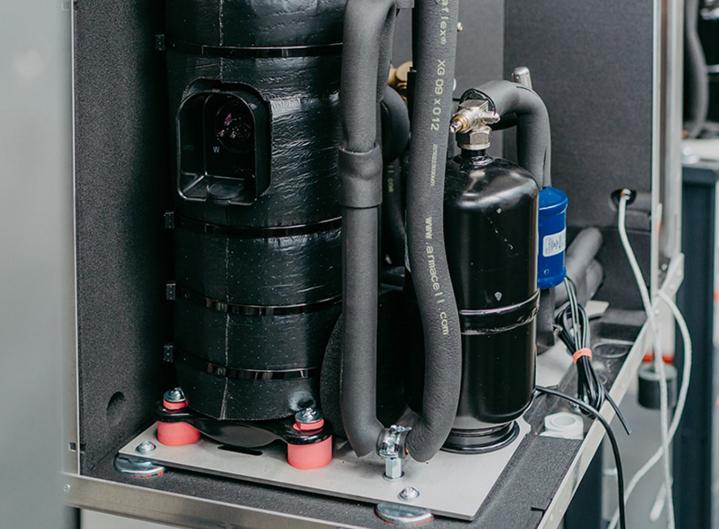
This is something we have seen cause significant noise problems on otherwise correctly installed systems. Some heat pump models are delivered with packing materials placed around the compressor compartment to protect the unit during transport. If these materials are not removed during installation, they can cause unusually loud humming, vibration, rattling, and resonance through the casing. Because many homeowners have no reference point for what a heat pump should normally sound like, this kind of problem can go unnoticed for months. If your system has been noisier than expected right from the start, it is worth checking whether all transit packing was removed at installation. Our article on 7 signs your heat pump may not have been installed correctly covers other installation-related issues that are commonly overlooked.
4. Buzzing or Low-Frequency Humming Indoors
Some homeowners notice a persistent low-frequency hum inside the property, particularly at night when background noise levels are lower. This can sometimes be linked to vibration transferring from the outdoor unit into the building fabric, resonance in the pipework, problems with how the indoor unit or circulation pump is mounted, or specific compressor frequencies. Correct installation practice, adequate pipe support, and appropriate anti-vibration measures at mounting points can make a very significant difference to indoor noise levels.
5. Clicking and Expansion Noises
As pipework heats and cools throughout the day, materials naturally expand and contract. This can create ticking, clicking, or creaking noises, particularly on installations where pipe routes pass through floor joists, under floorboards, or through tight spaces. While often harmless, persistent creaking or clicking can sometimes indicate that pipework is not adequately supported or has been clipped too tightly, preventing normal movement.
6. Fan Noise Becoming Excessive
Outdoor fan noise can become more pronounced if airflow around the unit is restricted, if the system is working harder than it should be, if defrost cycles are occurring frequently, or if there are circulation problems elsewhere on the system. Systems running at unnecessarily high flow temperatures can also cause the heat pump to work harder than necessary, which increases both noise and running costs. If your bills seem higher than expected alongside the noise, our article on why your heat pump might be expensive to run is relevant reading. Understanding what flow temperature your heat pump should run at is also important context if you suspect the system settings may be contributing to the noise.
Heat Pumps Sound Different to Boilers
It is worth remembering that many homeowners are simply not used to hearing their heating equipment at all. A gas boiler sits inside a cupboard and fires quietly. A heat pump runs outdoors for extended periods, which can feel very different in practice. A system that sounds unfamiliar is not automatically a system that has a problem. The key is understanding the difference between normal operational sounds and noises that suggest a genuine installation or setup issue.
Final Thoughts
Some level of heat pump noise is completely normal particularly during colder weather and defrost cycles. However, excessive vibration, unusual sounds, or noises that have changed or worsened over time can sometimes point towards underlying circulation issues, installation problems, or system setup faults. The good news is that many noise-related issues can be significantly improved once the real cause is properly identified.
If your heat pump seems unusually noisy or something simply does not feel right, our Fix My Heat Pump service can help identify what is causing the problem and what practical steps can improve performance and comfort. And if you are still in the planning stages, our Pre-Installation Design & Heat Loss Review helps homeowners identify potential design and installation issues before any work begins.
You may also find What Does Quiet Mode Actually Do On A Heat Pump? useful.
Why Is My Heat Pump So Noisy? Causes & Solutions (UK Guide)
One of the most common concerns homeowners raise after a heat pump installation is noise. Sometimes the issue comes from the outdoor unit itself. Other times it is vibration travelling through walls or floors, pipe noises, rushing water sounds, low humming, clicking, or strange sounds during defrost cycles. Because many homeowners are unfamiliar with how heat pumps actually operate, it can be genuinely difficult to know what is perfectly normal and what might point towards a problem that needs attention.
Some Heat Pump Noise Is Completely Normal
Heat pumps contain fans, compressors, pumps, valves, moving refrigerant, and circulating water. Unlike a gas boiler hidden away quietly inside a cupboard, heat pumps are not silent systems by nature. Most will produce some level of fan noise, a low background hum, airflow sound, and occasional clicking during normal operation. This tends to be most noticeable during colder weather when the system is working harder to maintain the temperatures your home needs. If you have ever wondered whether your heat pump is working harder than it should be, our article on why your heat pump might be running constantly covers this in more detail.
Defrost Cycles Can Sound Unusual
One thing that catches many homeowners off guard is the defrost cycle. During colder or damp weather, the outdoor unit periodically needs to clear ice that builds up on the coil. When this happens, you might notice the fan behaving differently, hissing sounds, gurgling, temporary changes in the operating noise, or water draining away from the outdoor unit. All of this is completely normal behaviour. If your system is defrosting unusually often, it can sometimes be a sign of a wider issue our article on why your heat pump defrosts so often explains what drives defrost frequency and when it becomes a concern.
When Noise May Point Towards a Problem
Whilst some operational noise is entirely expected, certain sounds can indicate installation or system issues worth investigating properly.
1. Vibration Through Walls or Floors
This is one of the most common noise problems we come across. If the outdoor unit or the pipework connecting it to the property is not properly isolated, vibration can travel through walls, floors, timber frames, and pipe clips amplifying sound significantly inside the home. In many cases, the heat pump itself is operating completely normally, but poor installation is making it sound far worse than it actually is. Correct mounting, anti-vibration feet, and properly supported pipework make a considerable difference here.
2. Rushing Water or Flow Noise
Loud rushing water sounds from within the pipework can sometimes point towards excessive flow velocity, system balancing issues, air trapped within the system, circulation problems, or partially blocked filters and strainers. Heat pumps rely heavily on stable and correct flow rates, so anything that disrupts circulation can create noticeable noise as well as efficiency problems. If you suspect circulation issues on your system, it is worth reading our article on why some heat pump systems struggle to circulate through radiators, which explains how flow problems develop and what can be done about them. Dirty or blocked filters are a particularly common cause our article on how dirty filters can cause heat pump problems is worth reading if you suspect this might be a factor on your system.
3. Transit Packing Left Inside the Unit
This is something we have seen cause significant noise problems on otherwise correctly installed systems. Some heat pump models are delivered with packing materials placed around the compressor compartment to protect the unit during transport. If these materials are not removed during installation, they can cause unusually loud humming, vibration, rattling, and resonance through the casing. Because many homeowners have no reference point for what a heat pump should normally sound like, this kind of problem can go unnoticed for months. If your system has been noisier than expected right from the start, it is worth checking whether all transit packing was removed at installation. Our article on 7 signs your heat pump may not have been installed correctly covers other installation-related issues that are commonly overlooked.
4. Buzzing or Low-Frequency Humming Indoors
Some homeowners notice a persistent low-frequency hum inside the property, particularly at night when background noise levels are lower. This can sometimes be linked to vibration transferring from the outdoor unit into the building fabric, resonance in the pipework, problems with how the indoor unit or circulation pump is mounted, or specific compressor frequencies. Correct installation practice, adequate pipe support, and appropriate anti-vibration measures at mounting points can make a very significant difference to indoor noise levels.
5. Clicking and Expansion Noises
As pipework heats and cools throughout the day, materials naturally expand and contract. This can create ticking, clicking, or creaking noises, particularly on installations where pipe routes pass through floor joists, under floorboards, or through tight spaces. While often harmless, persistent creaking or clicking can sometimes indicate that pipework is not adequately supported or has been clipped too tightly, preventing normal movement.
6. Fan Noise Becoming Excessive
Outdoor fan noise can become more pronounced if airflow around the unit is restricted, if the system is working harder than it should be, if defrost cycles are occurring frequently, or if there are circulation problems elsewhere on the system. Systems running at unnecessarily high flow temperatures can also cause the heat pump to work harder than necessary, which increases both noise and running costs. If your bills seem higher than expected alongside the noise, our article on why your heat pump might be expensive to run is relevant reading. Understanding what flow temperature your heat pump should run at is also important context if you suspect the system settings may be contributing to the noise.
Heat Pumps Sound Different to Boilers
It is worth remembering that many homeowners are simply not used to hearing their heating equipment at all. A gas boiler sits inside a cupboard and fires quietly. A heat pump runs outdoors for extended periods, which can feel very different in practice. A system that sounds unfamiliar is not automatically a system that has a problem. The key is understanding the difference between normal operational sounds and noises that suggest a genuine installation or setup issue.
Final Thoughts
Some level of heat pump noise is completely normal particularly during colder weather and defrost cycles. However, excessive vibration, unusual sounds, or noises that have changed or worsened over time can sometimes point towards underlying circulation issues, installation problems, or system setup faults. The good news is that many noise-related issues can be significantly improved once the real cause is properly identified.
If your heat pump seems unusually noisy or something simply does not feel right, our Fix My Heat Pump service can help identify what is causing the problem and what practical steps can improve performance and comfort. And if you are still in the planning stages, our Pre-Installation Design & Heat Loss Review helps homeowners identify potential design and installation issues before any work begins.
You may also find What Does Quiet Mode Actually Do On A Heat Pump? useful.
Oct 3, 2026
5 min read
Air Source vs Ground Source Heat Pump: Which Is Right for Your UK Home?
Read More
Oct 3, 2026
5 min read
Air Source vs Ground Source Heat Pump: Which Is Right for Your UK Home?
Read More
Oct 3, 2026
5 min read
Do Heat Pumps Work Well With Solar Panels?
Read More
Oct 3, 2026
5 min read
Do Heat Pumps Work Well With Solar Panels?
Read More


Contact Us
Not Sure Which Service You Need?
Not Sure Which Service You Need?
Not Sure Which Service You Need?
Not Sure Which Service You Need?
Not Sure Which Service You Need?
Whether you need help with an existing heat pump, a pre-installation review, cooling advice, servicing or a room-by-room heat loss survey, send us a few details and we'll point you in the right direction.
Whether you need help with an existing heat pump, a pre-installation review, cooling advice, servicing or a room-by-room heat loss survey, send us a few details and we'll point you in the right direction.
Whether you need help with an existing heat pump, a pre-installation review, cooling advice, servicing or a room-by-room heat loss survey, send us a few details and we'll point you in the right direction.

