Family Home in Birmingham — Heat Pump Running at 55°C All Winter, Bills Higher Than Expected
Family Home in Birmingham — Heat Pump Running at 55°C All Winter, Bills Higher Than Expected
Family Home in Birmingham — Heat Pump Running at 55°C All Winter, Bills Higher Than Expected
Family Home in Birmingham — Heat Pump Running at 55°C All Winter, Bills Higher Than Expected
Family Home in Birmingham — Heat Pump Running at 55°C All Winter, Bills Higher Than Expected

UK Heat pump Help Technical Team
Independent Heat Pump Engineer
Family Home in Birmingham Heat Pump Running at 55°C All Winter, Bills Higher Than Expected
A homeowner contacted us after noticing that running costs felt much higher than expected. The house was generally warm enough, but the heat pump appeared to be working very hard and electricity bills felt disproportionate to the level of comfort being achieved. During a video call, we began reviewing the controller settings and quickly noticed something that stood out immediately.
The heat pump had been set to run at a fixed 55°C flow temperature at all times, regardless of what the outdoor temperature was doing. The homeowner had no idea what flow temperatures were, and had simply assumed the system had been configured correctly at installation. Nobody had ever explained the settings to them.
Looking At the Existing Information
We asked whether they had a copy of the original heat loss calculations from their installer. The response was that they did not think they had ever received one. To build a clearer picture, we put together an approximate heat loss assessment using their EPC information, room measurements, window sizes, and a video walkthrough of the property. While this method works surprisingly well for an initial assessment, we always make clear that a properly measured room-by-room heat loss calculation is always more accurate.
Something Did Not Add Up
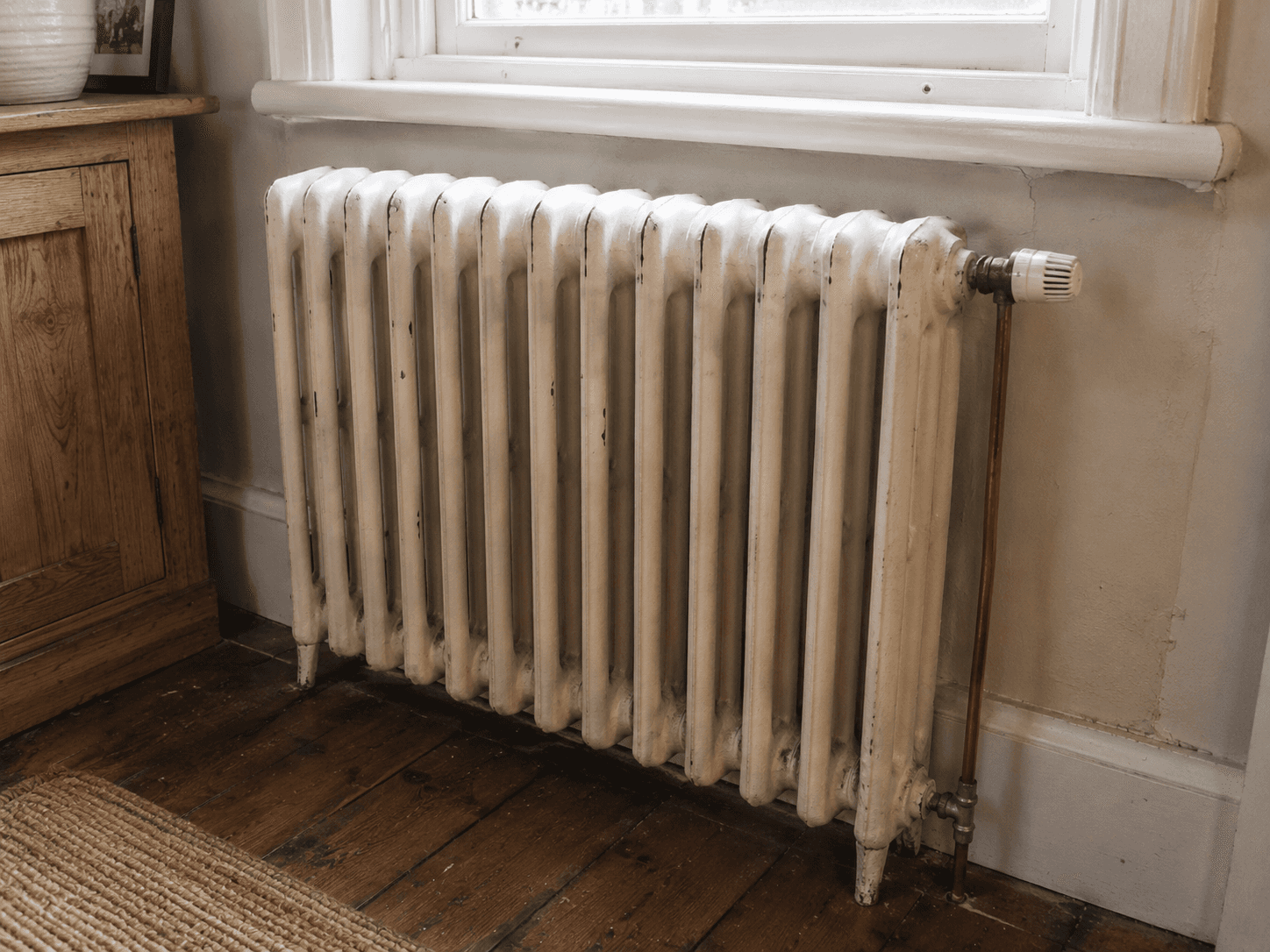
When reviewing the radiator outputs against the heat loss figures, things looked inconsistent. Some radiators appeared oversized for the rooms they were heating. Others appeared undersized. Our overall impression was that the original system had likely been designed around 55°C flow temperatures, which would explain why the larger living room radiators had never been replaced at 55°C they were adequate, but the efficiency cost of running at that temperature all winter was significant.
Our Recommendation
Because the homeowner had a log burner in the living room, we felt there was a better approach available without major upheaval. We recommended enabling weather compensation and setting the curve so the system would run at approximately 51°C flow at -2°C outside temperature, dropping to approximately 43°C flow at 15°C outside temperature. This would allow the heat pump to run far more efficiently during milder weather while still maintaining comfort on the coldest days. We also recommended having an independent heat loss calculation completed before making any further changes. Our article on what flow temperature a heat pump should run at explains why this balance matters so much for efficiency. You can also read our article on how to reduce heat pump electricity bills for a broader overview of where efficiency gains are usually found.
Outcome
The homeowner arranged an independent heat loss calculation within a week. The results came back surprisingly close to what we had estimated from our remote assessment. Following that report, we recommended upgrading the living room radiators, which the homeowner completed. The result was better comfort throughout the property, a warmer house on cold days, lower running costs, and genuine confidence in how the system was working. Instead of replacing major components, only the areas that actually needed attention were addressed.
If this sounds familiar, our Fix My Heat Pump service can help identify whether settings, controls, or system design are causing performance issues in your home. If you are considering a heat pump installation and want to avoid these problems from the start, our Pre-Installation Design and Heat Loss Review can help identify potential issues before any work begins.
Family Home in Birmingham Heat Pump Running at 55°C All Winter, Bills Higher Than Expected
A homeowner contacted us after noticing that running costs felt much higher than expected. The house was generally warm enough, but the heat pump appeared to be working very hard and electricity bills felt disproportionate to the level of comfort being achieved. During a video call, we began reviewing the controller settings and quickly noticed something that stood out immediately.
The heat pump had been set to run at a fixed 55°C flow temperature at all times, regardless of what the outdoor temperature was doing. The homeowner had no idea what flow temperatures were, and had simply assumed the system had been configured correctly at installation. Nobody had ever explained the settings to them.
Looking At the Existing Information
We asked whether they had a copy of the original heat loss calculations from their installer. The response was that they did not think they had ever received one. To build a clearer picture, we put together an approximate heat loss assessment using their EPC information, room measurements, window sizes, and a video walkthrough of the property. While this method works surprisingly well for an initial assessment, we always make clear that a properly measured room-by-room heat loss calculation is always more accurate.
Something Did Not Add Up
When reviewing the radiator outputs against the heat loss figures, things looked inconsistent. Some radiators appeared oversized for the rooms they were heating. Others appeared undersized. Our overall impression was that the original system had likely been designed around 55°C flow temperatures, which would explain why the larger living room radiators had never been replaced at 55°C they were adequate, but the efficiency cost of running at that temperature all winter was significant.
Our Recommendation
Because the homeowner had a log burner in the living room, we felt there was a better approach available without major upheaval. We recommended enabling weather compensation and setting the curve so the system would run at approximately 51°C flow at -2°C outside temperature, dropping to approximately 43°C flow at 15°C outside temperature. This would allow the heat pump to run far more efficiently during milder weather while still maintaining comfort on the coldest days. We also recommended having an independent heat loss calculation completed before making any further changes. Our article on what flow temperature a heat pump should run at explains why this balance matters so much for efficiency. You can also read our article on how to reduce heat pump electricity bills for a broader overview of where efficiency gains are usually found.
Outcome
The homeowner arranged an independent heat loss calculation within a week. The results came back surprisingly close to what we had estimated from our remote assessment. Following that report, we recommended upgrading the living room radiators, which the homeowner completed. The result was better comfort throughout the property, a warmer house on cold days, lower running costs, and genuine confidence in how the system was working. Instead of replacing major components, only the areas that actually needed attention were addressed.
If this sounds familiar, our Fix My Heat Pump service can help identify whether settings, controls, or system design are causing performance issues in your home. If you are considering a heat pump installation and want to avoid these problems from the start, our Pre-Installation Design and Heat Loss Review can help identify potential issues before any work begins.

Contact Us
Not Sure Which Service You Need?
Not Sure Which Service You Need?
Not Sure Which Service You Need?
Not Sure Which Service You Need?
Not Sure Which Service You Need?
Whether you need help with an existing heat pump, a pre-installation review, cooling advice, servicing or a room-by-room heat loss survey, send us a few details and we'll point you in the right direction.
Whether you need help with an existing heat pump, a pre-installation review, cooling advice, servicing or a room-by-room heat loss survey, send us a few details and we'll point you in the right direction.
Whether you need help with an existing heat pump, a pre-installation review, cooling advice, servicing or a room-by-room heat loss survey, send us a few details and we'll point you in the right direction.

