Homeowner Paying For Repeated Fault Visits – A Blocked Filter Was The Real Cause
Homeowner Paying For Repeated Fault Visits – A Blocked Filter Was The Real Cause
Homeowner Paying For Repeated Fault Visits – A Blocked Filter Was The Real Cause
Homeowner Paying For Repeated Fault Visits – A Blocked Filter Was The Real Cause
Homeowner Paying For Repeated Fault Visits – A Blocked Filter Was The Real Cause

UK Heat pump Help Technical Team
Independent Heat Pump Engineer
The Problem
This homeowner had been dealing with the same pattern for a while — their heat pump kept throwing low-flow faults, and over time the system had started to feel less and less reliable.
By the time they got in touch with us, they’d already paid for multiple engineer visits over the years. The faults would clear after each one, then come back. They were starting to wonder whether the heat pump itself was fundamentally faulty.
It’s a pattern we see regularly. Repeat faults don’t necessarily mean the heat pump is failing — more often, the cause is something in the water circuit. We’ve written about this in: How Dirty Filters Can Cause Heat Pump Problems.
Our Investigation
The first thing we asked was simple: where’s the filter, and when was it last cleaned?
What we found explained everything. The filter was accessible, but it had no isolation valves around it meaning there was no safe way to remove and clean it without risking a flood. It had almost certainly never been serviced since installation.
Rather than telling the homeowner to push ahead and risk flooding the property, we put together a simple sketch of the pipework changes needed and explained in plain terms what a plumber would need to do to fix it.
We also gave them a ballpark figure for what the work should cost, so they could tell whether any quotes they received were in the right range.
Restricted flow is one of the most frequently misdiagnosed heat pump problems. If your system is showing low-flow warnings, this is worth reading: Why Your Heat Pump Shows a Flow Error (And What It Actually Means).
The Solution
Once they had the sketch and a cost guide in hand, the homeowner arranged for a local plumber to carry out the pipework changes.
On our recommendation, the plumber also powerflushed the system while on site. Given how long the filter had gone without cleaning, we felt it was the right call just clearing the filter alone would have bought some time, but not addressed the contamination built up in the rest of the system.
The pipework changes and powerflush came to around £650 in total.
Once the isolation valves were properly in place, the homeowner came back to us.
On a follow-up call, we walked them through how to isolate, remove, and clean the filter themselves. That’s a straightforward job when the valves are there and now they know how to do it without needing an engineer.
The Outcome
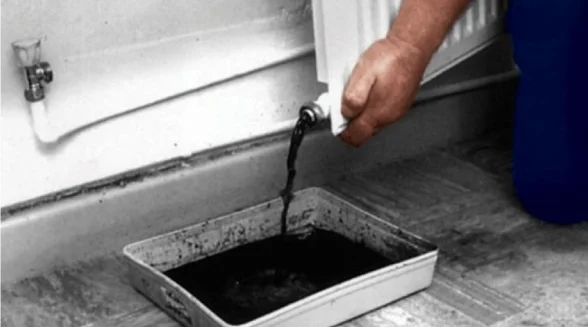
The filter was in a bad way. Heavy debris, significant contamination it was clearly the source of the recurring faults.
After the clean and the powerflush, circulation improved noticeably and the fault pattern stopped entirely. The heat pump just got on with the job.
The bigger win, though, was knowing they were on top of it. The homeowner went into winter with a clean system, working isolation valves, and the confidence to carry out the maintenance themselves going forward.
They’d spent years paying for fault visits that never actually fixed anything. One proper diagnosis changed all of that.
We’ve seen similar flow and circulation issues in other cases:
Family Home In Suffolk — Faulty Anti-Freeze Valve Causing Pressure Loss And Heat Pump Lockouts
Detached Home In Sussex — Samsung E911 Fault Fixed Remotely During Video Call
Different symptoms, same root cause — restricted flow preventing the heat pump from operating as it should.
Key Takeaway
Heat pump faults don’t always come from the heat pump itself.
Blocked filters, dirty system water, restricted circulation, and basic installation details left incomplete are responsible for a large number of call-outs that end up getting blamed on the unit.
Getting to the actual cause and fixing it properly is almost always cheaper and more effective in the long run than resetting faults and hoping they don’t come back.
If your heat pump keeps throwing the same faults and nobody seems to be getting to the bottom of it, our Fix My Heat Pump service can give you an independent view of what’s actually going on and what needs to happen next.
If you’re planning a new installation and want to avoid this kind of problem from day one, our Pre-Installation Review service reviews the design and specification before any work starts — so issues like missing isolation valves are caught before they become a problem.
The Problem
This homeowner had been dealing with the same pattern for a while — their heat pump kept throwing low-flow faults, and over time the system had started to feel less and less reliable.
By the time they got in touch with us, they’d already paid for multiple engineer visits over the years. The faults would clear after each one, then come back. They were starting to wonder whether the heat pump itself was fundamentally faulty.
It’s a pattern we see regularly. Repeat faults don’t necessarily mean the heat pump is failing — more often, the cause is something in the water circuit. We’ve written about this in: How Dirty Filters Can Cause Heat Pump Problems.
Our Investigation
The first thing we asked was simple: where’s the filter, and when was it last cleaned?
What we found explained everything. The filter was accessible, but it had no isolation valves around it meaning there was no safe way to remove and clean it without risking a flood. It had almost certainly never been serviced since installation.
Rather than telling the homeowner to push ahead and risk flooding the property, we put together a simple sketch of the pipework changes needed and explained in plain terms what a plumber would need to do to fix it.
We also gave them a ballpark figure for what the work should cost, so they could tell whether any quotes they received were in the right range.
Restricted flow is one of the most frequently misdiagnosed heat pump problems. If your system is showing low-flow warnings, this is worth reading: Why Your Heat Pump Shows a Flow Error (And What It Actually Means).
The Solution
Once they had the sketch and a cost guide in hand, the homeowner arranged for a local plumber to carry out the pipework changes.
On our recommendation, the plumber also powerflushed the system while on site. Given how long the filter had gone without cleaning, we felt it was the right call just clearing the filter alone would have bought some time, but not addressed the contamination built up in the rest of the system.
The pipework changes and powerflush came to around £650 in total.
Once the isolation valves were properly in place, the homeowner came back to us.
On a follow-up call, we walked them through how to isolate, remove, and clean the filter themselves. That’s a straightforward job when the valves are there and now they know how to do it without needing an engineer.
The Outcome
The filter was in a bad way. Heavy debris, significant contamination it was clearly the source of the recurring faults.
After the clean and the powerflush, circulation improved noticeably and the fault pattern stopped entirely. The heat pump just got on with the job.
The bigger win, though, was knowing they were on top of it. The homeowner went into winter with a clean system, working isolation valves, and the confidence to carry out the maintenance themselves going forward.
They’d spent years paying for fault visits that never actually fixed anything. One proper diagnosis changed all of that.
We’ve seen similar flow and circulation issues in other cases:
Family Home In Suffolk — Faulty Anti-Freeze Valve Causing Pressure Loss And Heat Pump Lockouts
Detached Home In Sussex — Samsung E911 Fault Fixed Remotely During Video Call
Different symptoms, same root cause — restricted flow preventing the heat pump from operating as it should.
Key Takeaway
Heat pump faults don’t always come from the heat pump itself.
Blocked filters, dirty system water, restricted circulation, and basic installation details left incomplete are responsible for a large number of call-outs that end up getting blamed on the unit.
Getting to the actual cause and fixing it properly is almost always cheaper and more effective in the long run than resetting faults and hoping they don’t come back.
If your heat pump keeps throwing the same faults and nobody seems to be getting to the bottom of it, our Fix My Heat Pump service can give you an independent view of what’s actually going on and what needs to happen next.
If you’re planning a new installation and want to avoid this kind of problem from day one, our Pre-Installation Review service reviews the design and specification before any work starts — so issues like missing isolation valves are caught before they become a problem.

Contact Us
Not Sure Which Service You Need?
Not Sure Which Service You Need?
Not Sure Which Service You Need?
Not Sure Which Service You Need?
Not Sure Which Service You Need?
Whether you need help with an existing heat pump, a pre-installation review, cooling advice, servicing or a room-by-room heat loss survey, send us a few details and we'll point you in the right direction.
Whether you need help with an existing heat pump, a pre-installation review, cooling advice, servicing or a room-by-room heat loss survey, send us a few details and we'll point you in the right direction.
Whether you need help with an existing heat pump, a pre-installation review, cooling advice, servicing or a room-by-room heat loss survey, send us a few details and we'll point you in the right direction.

