Why Does My Heat Pump Keep Switching Between Heating and Hot Water?
Why Does My Heat Pump Keep Switching Between Heating and Hot Water?
Why Does My Heat Pump Keep Switching Between Heating and Hot Water?
Why Does My Heat Pump Keep Switching Between Heating and Hot Water?
Why Does My Heat Pump Keep Switching Between Heating and Hot Water?

UK Heat pump Help Technical Team
Independent Heat Pump Engineer
Why Does My Heat Pump Keep Switching Between Heating and Hot Water?
If you have noticed your radiators cooling down while your heat pump switches to heating the hot water cylinder, or if the system seems to be constantly changing between the two modes throughout the day, the first thing to know is that this behaviour is completely normal up to a point. Understanding when it is normal, when it becomes a problem, and what causes excessive switching will help you work out whether your system needs attention or is simply doing exactly what it was designed to do.
Most air source heat pumps can only perform one function at a time they are either heating the home through the radiators or underfloor heating circuit, or they are heating the hot water cylinder. They cannot do both simultaneously. When the hot water cylinder temperature drops below its target level, most systems are configured to temporarily pause space heating and switch across to hot water production until the cylinder reaches temperature. This is known as hot water priority mode, and it is the standard way most heat pump systems are designed to operate. Once the cylinder is satisfied, the system switches back to space heating and continues from where it left off. In a well-configured system with an appropriately sized cylinder, most homeowners would not even notice this happening because the radiators retain enough heat during the short hot water cycle and the house temperature barely changes. Our guide on what temperature a heat pump cylinder should run at explains the relationship between target cylinder temperature and how often the system will need to switch across to reheat it.
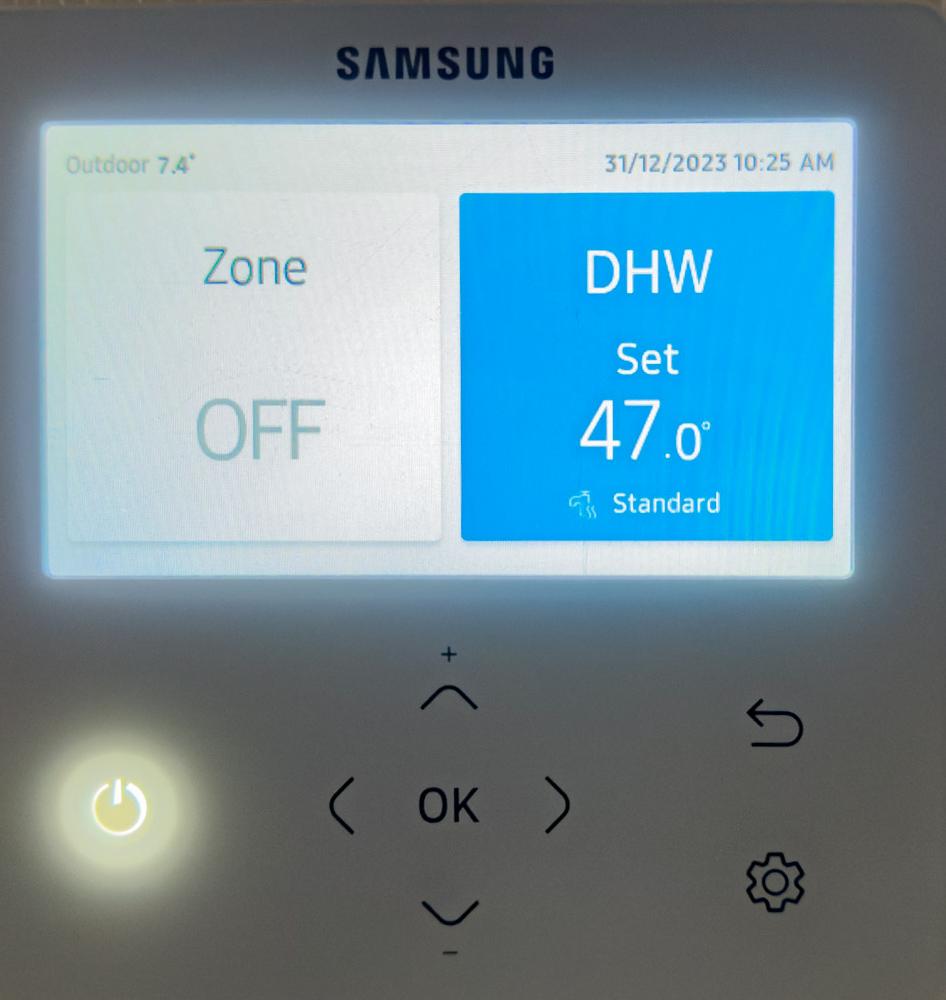
The behaviour becomes a problem when switching happens too frequently every hour or two throughout the day rather than once or twice or when the heating circuit never seems to get enough time to properly warm the house before hot water demand interrupts it again. Excessive switching between modes can increase electricity bills because the system is repeatedly changing state rather than running steadily, it can reduce overall comfort because the heating circuit is regularly being paused, and it can increase wear on the compressor through more frequent starts and stops. If your house frequently feels like it is struggling to reach temperature during the day and you can see on the controller that the system keeps switching to hot water mode, that is worth investigating.
The most common cause of excessive switching is a cylinder target temperature that is set too high. The higher the target temperature, the more energy is needed to reheat the cylinder each time it drops below that level, the longer each hot water cycle takes, and the more frequently the system needs to switch away from space heating. Many systems are left at default factory settings that are higher than necessary for the household’s actual hot water demand. Bringing the target temperature down to a more appropriate level reduces the frequency and duration of hot water cycles and gives the heating circuit more uninterrupted time to do its job. Our guide on why your heat pump is not heating hot water properly explains how cylinder settings affect the whole system’s behaviour in detail.
Incorrect hot water timer settings are another frequent cause. Some systems are programmed to reheat the hot water cylinder multiple times throughout the day on a schedule sometimes because that is how the installer configured it, sometimes because a homeowner adjusted the settings without fully understanding the interaction between the hot water schedule and the space heating schedule. When hot water reheat events are scheduled too close together, or when they overlap with peak heating demand periods in the morning and evening, the result is a system that seems to constantly switch modes without either task ever feeling properly completed. A related issue we see regularly is the immersion heater being left active inadvertently, which can cause the cylinder to reheat unnecessarily and trigger additional mode switches our article on why your heat pump is using the immersion heater so much covers this scenario in detail.
Poor positioning of the cylinder temperature sensor is less common but does occur. If the sensor is fitted in a pocket that does not accurately reflect the true temperature of the stored water either because it is positioned too high on the cylinder or because it has partially come loose the system may interpret the cylinder as being cooler than it actually is and trigger unnecessary reheat cycles. This exact fault caused significant heating and hot water problems in one case we investigated, as detailed in our Poor Heating and Limited Hot Water – Cylinder Temperature Probe Fault case study.
An undersized cylinder is another root cause worth considering if the household has high hot water demand. A cylinder that cannot hold enough hot water for the number of people using it will deplete quickly after showers or baths and trigger frequent reheating cycles that interrupt space heating throughout the day. In this situation, the switching pattern is a symptom of a design mismatch rather than a settings error the system is working as designed, it simply does not have enough storage capacity to keep up with the household’s demand without regularly switching modes. A closely related scenario is described in our Family Home in Nottingham case study, where a hot water run time that was too short meant the cylinder never fully heated before the system switched back to space heating, causing both hot water and heating to permanently underperform. Our Family Home in Cheshire case study shows the impact of a missing hot water schedule combined with incorrect immersion heater positioning, which caused the household to run out of hot water every morning.
Commissioning errors can also produce unusual switching patterns, particularly where the priority configuration between heating and hot water has not been set correctly, or where the hot water and heating schedules were set up in a way that creates conflicts. These are often not obvious without reviewing the full controller settings rather than just the front screen. Our guide on how to set a heat pump for maximum efficiency covers the key settings that govern the balance between hot water and space heating and how to approach them correctly.
If your heat pump is switching between modes more than you would expect and you are not sure whether the behaviour is normal or a sign of a genuine problem, our Fix My Heat Pump service can review your controls, schedules, cylinder settings, and system design to identify what is driving the switching pattern and recommend the most practical way to resolve it. If you are planning an installation and want to make sure the hot water and heating configuration is set up correctly from the start, our Pre-Installation Design and Heat Loss Review covers all of this before installation begins.
Related reading: Why Is My Heat Pump Not Heating Hot Water Properly?
Why Does My Heat Pump Keep Switching Between Heating and Hot Water?
If you have noticed your radiators cooling down while your heat pump switches to heating the hot water cylinder, or if the system seems to be constantly changing between the two modes throughout the day, the first thing to know is that this behaviour is completely normal up to a point. Understanding when it is normal, when it becomes a problem, and what causes excessive switching will help you work out whether your system needs attention or is simply doing exactly what it was designed to do.
Most air source heat pumps can only perform one function at a time they are either heating the home through the radiators or underfloor heating circuit, or they are heating the hot water cylinder. They cannot do both simultaneously. When the hot water cylinder temperature drops below its target level, most systems are configured to temporarily pause space heating and switch across to hot water production until the cylinder reaches temperature. This is known as hot water priority mode, and it is the standard way most heat pump systems are designed to operate. Once the cylinder is satisfied, the system switches back to space heating and continues from where it left off. In a well-configured system with an appropriately sized cylinder, most homeowners would not even notice this happening because the radiators retain enough heat during the short hot water cycle and the house temperature barely changes. Our guide on what temperature a heat pump cylinder should run at explains the relationship between target cylinder temperature and how often the system will need to switch across to reheat it.
The behaviour becomes a problem when switching happens too frequently every hour or two throughout the day rather than once or twice or when the heating circuit never seems to get enough time to properly warm the house before hot water demand interrupts it again. Excessive switching between modes can increase electricity bills because the system is repeatedly changing state rather than running steadily, it can reduce overall comfort because the heating circuit is regularly being paused, and it can increase wear on the compressor through more frequent starts and stops. If your house frequently feels like it is struggling to reach temperature during the day and you can see on the controller that the system keeps switching to hot water mode, that is worth investigating.
The most common cause of excessive switching is a cylinder target temperature that is set too high. The higher the target temperature, the more energy is needed to reheat the cylinder each time it drops below that level, the longer each hot water cycle takes, and the more frequently the system needs to switch away from space heating. Many systems are left at default factory settings that are higher than necessary for the household’s actual hot water demand. Bringing the target temperature down to a more appropriate level reduces the frequency and duration of hot water cycles and gives the heating circuit more uninterrupted time to do its job. Our guide on why your heat pump is not heating hot water properly explains how cylinder settings affect the whole system’s behaviour in detail.
Incorrect hot water timer settings are another frequent cause. Some systems are programmed to reheat the hot water cylinder multiple times throughout the day on a schedule sometimes because that is how the installer configured it, sometimes because a homeowner adjusted the settings without fully understanding the interaction between the hot water schedule and the space heating schedule. When hot water reheat events are scheduled too close together, or when they overlap with peak heating demand periods in the morning and evening, the result is a system that seems to constantly switch modes without either task ever feeling properly completed. A related issue we see regularly is the immersion heater being left active inadvertently, which can cause the cylinder to reheat unnecessarily and trigger additional mode switches our article on why your heat pump is using the immersion heater so much covers this scenario in detail.
Poor positioning of the cylinder temperature sensor is less common but does occur. If the sensor is fitted in a pocket that does not accurately reflect the true temperature of the stored water either because it is positioned too high on the cylinder or because it has partially come loose the system may interpret the cylinder as being cooler than it actually is and trigger unnecessary reheat cycles. This exact fault caused significant heating and hot water problems in one case we investigated, as detailed in our Poor Heating and Limited Hot Water – Cylinder Temperature Probe Fault case study.
An undersized cylinder is another root cause worth considering if the household has high hot water demand. A cylinder that cannot hold enough hot water for the number of people using it will deplete quickly after showers or baths and trigger frequent reheating cycles that interrupt space heating throughout the day. In this situation, the switching pattern is a symptom of a design mismatch rather than a settings error the system is working as designed, it simply does not have enough storage capacity to keep up with the household’s demand without regularly switching modes. A closely related scenario is described in our Family Home in Nottingham case study, where a hot water run time that was too short meant the cylinder never fully heated before the system switched back to space heating, causing both hot water and heating to permanently underperform. Our Family Home in Cheshire case study shows the impact of a missing hot water schedule combined with incorrect immersion heater positioning, which caused the household to run out of hot water every morning.
Commissioning errors can also produce unusual switching patterns, particularly where the priority configuration between heating and hot water has not been set correctly, or where the hot water and heating schedules were set up in a way that creates conflicts. These are often not obvious without reviewing the full controller settings rather than just the front screen. Our guide on how to set a heat pump for maximum efficiency covers the key settings that govern the balance between hot water and space heating and how to approach them correctly.
If your heat pump is switching between modes more than you would expect and you are not sure whether the behaviour is normal or a sign of a genuine problem, our Fix My Heat Pump service can review your controls, schedules, cylinder settings, and system design to identify what is driving the switching pattern and recommend the most practical way to resolve it. If you are planning an installation and want to make sure the hot water and heating configuration is set up correctly from the start, our Pre-Installation Design and Heat Loss Review covers all of this before installation begins.
Related reading: Why Is My Heat Pump Not Heating Hot Water Properly?
Oct 14, 2026
5 min read
How to Compare Heat Pump Quotes: What a Good UK Quote Includes (and Red Flags)
Read More
Oct 14, 2026
5 min read
How to Compare Heat Pump Quotes: What a Good UK Quote Includes (and Red Flags)
Read More
Oct 12, 2026
5 min read
Heat Pump Holiday Settings: What to Do When You Go Away in Winter
Read More
Oct 12, 2026
5 min read
Heat Pump Holiday Settings: What to Do When You Go Away in Winter
Read More


Contact Us
Not Sure Which Service You Need?
Not Sure Which Service You Need?
Not Sure Which Service You Need?
Not Sure Which Service You Need?
Not Sure Which Service You Need?
Whether you need help with an existing heat pump, a pre-installation review, cooling advice, servicing or a room-by-room heat loss survey, send us a few details and we'll point you in the right direction.
Whether you need help with an existing heat pump, a pre-installation review, cooling advice, servicing or a room-by-room heat loss survey, send us a few details and we'll point you in the right direction.
Whether you need help with an existing heat pump, a pre-installation review, cooling advice, servicing or a room-by-room heat loss survey, send us a few details and we'll point you in the right direction.

