Common Heat Pump Fault Codes Explained (UK Guide)
Common Heat Pump Fault Codes Explained (UK Guide)
Common Heat Pump Fault Codes Explained (UK Guide)
Common Heat Pump Fault Codes Explained (UK Guide)
Common Heat Pump Fault Codes Explained (UK Guide)

UK Heat pump Help Technical Team
Independent Heat Pump Engineer
If your heat pump has stopped and there's a code flashing on the controller, the first thing worth knowing is that fault codes aren't unique to your system, and they're not random. Every major brand, whether it's a Vaillant, Daikin, Mitsubishi, Samsung, LG or NIBE, uses its own set of fault codes to tell you which part of the system has detected a problem. The exact codes differ between manufacturers, sometimes even between different models from the same manufacturer, but the underlying categories of fault are largely the same across almost every heat pump on the market. Once you understand those categories, a fault code stops being a mystery and starts being useful information.
This guide walks through what heat pump fault codes actually mean, why they appear in the first place, the main categories you're likely to come across, and what's genuinely worth checking yourself before booking an engineer. It's written to apply across brands rather than focusing on one manufacturer, because the reasoning behind most faults is the same whether your controller shows an "E" code, an "F" code, or a two-digit number on an LED display.
Why Do Heat Pumps Display Fault Codes At All?
A heat pump is a closed, pressurised system with a compressor, sensors, valves and a refrigerant circuit all working together, and it's designed to protect itself the moment something falls outside safe operating parameters. Rather than continuing to run and risking damage to the compressor or other components, the controller stops the system and displays a code identifying roughly where the problem was detected. This is a deliberate safety feature, not a design flaw. A boiler will often just stop working with no explanation at all. A heat pump, by comparison, is usually trying to tell you something specific, which is genuinely useful once you know how to read it.
How to Find Your Fault Code
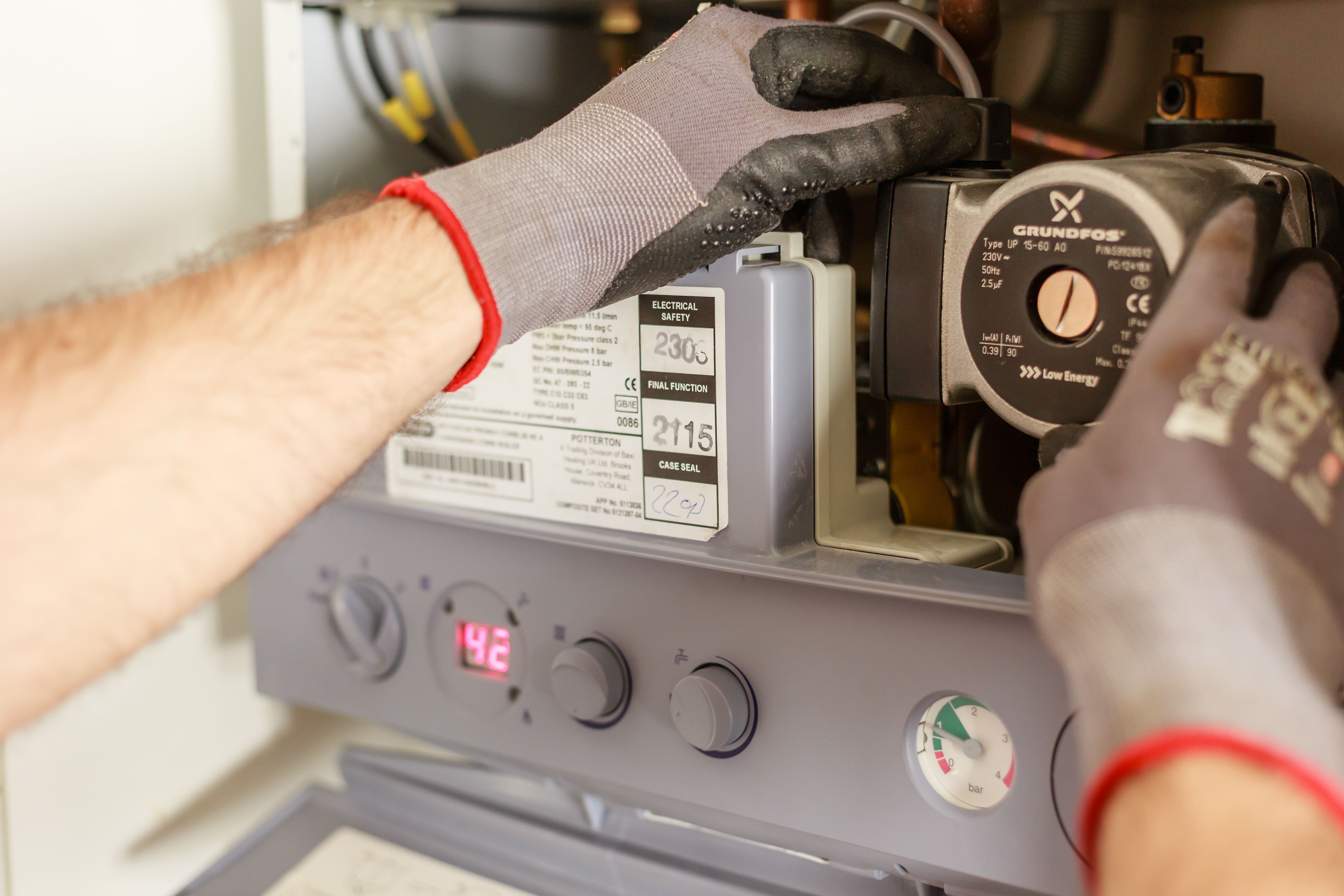
Fault codes typically appear in one of two places: on the indoor wall-mounted controller, or on a small LED display on the outdoor unit itself, sometimes both. The code is usually a combination of a letter and a number, for example something like E911, CH14, F022 or P9, and it's often accompanied by a warning icon or a flashing light. It's worth writing the exact code down, or taking a photo of the display, before doing anything else. Different faults within the same broad category can have very different causes, and having the precise code to hand makes diagnosis, whether you're doing it yourself or an engineer is doing it remotely, considerably faster.
Flow-Related Fault Codes
This is one of the most common categories of heat pump fault code, and it covers things like Samsung's E911, LG's CH14, and equivalent codes from most other manufacturers. Heat pumps rely on a continuous, adequate flow of water moving through the heating circuit in order to transfer heat safely and effectively. When that flow drops below the threshold the system needs, whether because of a blockage, trapped air, or a mechanical issue, the controller shuts the heat pump down and displays a flow fault rather than letting it continue running with insufficient circulation.
The cause is very often something restricting circulation elsewhere in the system rather than a fault with the heat pump unit itself. Common culprits include a blocked or dirty magnetic filter, where debris and magnetite gradually build up until flow is restricted; a blocked inline strainer that's easy to overlook during routine servicing; too many thermostatic radiator valves (TRVs) closed at once, reducing the number of open circuits water can pass through; or air trapped in the system following a drain-down or a top-up, disrupting circulation in ways that can be intermittent and confusing to diagnose. Low system pressure can contribute here too, since insufficient pressure often goes hand in hand with reduced flow.
Our guide on why your heat pump shows a flow error covers this in more depth, including the physical symptoms that often show up before the fault code actually appears, lukewarm radiators, gurgling pipework, or the system taking noticeably longer to reach temperature. If you're seeing a specific brand's code, we've also written dedicated guides for Samsung's E911 fault and LG's CH14 fault, both of which are flow-related faults with largely the same underlying causes despite the different code.
Pressure Fault Codes
Pressure-related fault codes appear when the system's water pressure has dropped below the level the heat pump needs to operate and circulate safely. It's worth being clear that some pressure movement is entirely normal on a sealed heating system. As water heats up it expands slightly, which pushes the pressure reading up a little while the system is running, and as it cools between cycles the pressure drops back down. That kind of small, repeatable fluctuation isn't a problem.
What is worth paying attention to is a pressure reading that keeps drifting downward over days or weeks rather than returning to its normal resting level. That pattern usually points to a slow leak somewhere in the system, whether that's a weeping joint, a faulty valve, or a failing component, and left unaddressed it will eventually drop low enough to trigger a pressure or flow-related fault code, or cause the system to lock out entirely and refuse to restart. Our guide on why your heat pump keeps losing pressure explains what a normal pressure pattern looks like, how to tell it apart from a genuine leak, and where leaks most commonly show up in a heat pump system.
Cycling and Operational Fault Patterns
Not every heat pump problem shows up as a fault code straight away. A system that keeps starting and stopping every few minutes throughout the day, a pattern known as short cycling, is often the first visible sign of an underlying issue rather than a fault in itself, and it can eventually trigger genuine fault codes if the underlying cause is left unaddressed for long enough. Short cycling is commonly linked to an oversized heat pump, incorrect buffer tank configuration, controls that haven't been set up correctly, or the same flow restrictions that cause the fault codes covered above.
It's also worth knowing that some cycling behaviour is completely normal. Inverter heat pumps have a minimum compressor speed, and once heating demand drops below that point, on a mild day or once a room thermostat is satisfied, the system will pause briefly rather than continuing to run at a level it doesn't need. This is called thermostatic cycling, and it's intentional. The difference between that and problematic short cycling comes down to frequency and pattern, and it's covered in detail in our guide on why your heat pump keeps turning on and off, which explains how to tell the two apart and what to check if your system genuinely is cycling more than it should.
Sensor and Communication Faults
This category of fault code relates to one of the many temperature or pressure sensors throughout the system, or to the communication link between the outdoor unit and the indoor controller, rather than to the compressor or refrigerant circuit directly. Modern heat pumps rely on multiple sensors working together to manage flow temperature, defrost cycles, and overall system behaviour, and if one of those sensors fails, reads incorrectly, or loses its connection to the controller, the system will usually flag a fault rather than continuing to operate on incomplete information.
These faults are often triggered by something relatively mundane, a loose or corroded connection, a sensor that's come slightly loose from its pocket, or a wiring fault introduced during a previous repair or a rushed installation. While the fault code itself can look alarming on the display, faults in this category are frequently among the more straightforward to resolve once the specific sensor or connection has been correctly identified, and they don't necessarily indicate anything wrong with the heat pump's core components.
Compressor and Refrigerant Faults
These are the fault codes most worth taking seriously, since they relate to the sealed refrigerant circuit and the compressor itself, the most expensive and safety-critical parts of the entire system. Codes in this category can point to issues such as low refrigerant charge, unusually high discharge temperature, compressor overload, or problems with the frequency converter that controls compressor speed.
Diagnosing and resolving faults in this category properly requires an F-Gas qualified engineer with the correct equipment, since opening a sealed refrigerant circuit without the right certification isn't something to attempt, and doing so incorrectly can cause serious harm as well as further damage to the system. If your fault code falls into this category, the safest approach is to stop trying to reset the system repeatedly and get it properly assessed.
Should You Reset the Fault Code and Try Again?
It's a natural instinct to reset the controller and see whether the fault clears, and sometimes it genuinely does, particularly with sensor glitches or a one-off communication interruption that resolves itself once power is cycled. If a fault clears once and doesn't come back, that's a reasonably normal outcome and not necessarily something to worry about.
The problem comes when the same fault code keeps returning after every reset. Repeatedly resetting a system that keeps re-triggering the same fault isn't fixing anything, it's simply delaying proper diagnosis while potentially adding extra mechanical stress to components, particularly the compressor, that may already be under strain. If a fault code keeps coming back, that's the system telling you clearly that the underlying cause hasn't actually been resolved, and it's worth stopping the reset cycle and working out what's really going on.
What To Do Before Calling an Engineer
A surprising number of heat pump "faults" turn out to be simple issues with power supply, incorrect settings, or basic circulation problems rather than a failed component needing replacement. Before booking a site visit, it's worth checking the obvious things: that the system has power, that no isolation switches have been accidentally turned off, that the pressure gauge is reading within the normal range, and that the exact fault code has been noted down. Our guide on what to check first when your heat pump isn't working runs through this in more detail. Having a clear picture of what's actually happening, and the exact code involved, before an engineer arrives usually saves time on site, and very often saves money too, since a targeted visit is quicker and cheaper than one that starts from scratch.
Not Sure What Your Fault Code Actually Means?
If your heat pump is displaying a fault code and you're not sure whether it's something minor or something that needs urgent attention, our Fix My Heat Pump service gives you a remote diagnosis based on the fault code, your system's history and what's actually happening on site, so you know exactly what you're dealing with before anyone comes out to look at it in person.
If your heat pump has stopped and there's a code flashing on the controller, the first thing worth knowing is that fault codes aren't unique to your system, and they're not random. Every major brand, whether it's a Vaillant, Daikin, Mitsubishi, Samsung, LG or NIBE, uses its own set of fault codes to tell you which part of the system has detected a problem. The exact codes differ between manufacturers, sometimes even between different models from the same manufacturer, but the underlying categories of fault are largely the same across almost every heat pump on the market. Once you understand those categories, a fault code stops being a mystery and starts being useful information.
This guide walks through what heat pump fault codes actually mean, why they appear in the first place, the main categories you're likely to come across, and what's genuinely worth checking yourself before booking an engineer. It's written to apply across brands rather than focusing on one manufacturer, because the reasoning behind most faults is the same whether your controller shows an "E" code, an "F" code, or a two-digit number on an LED display.
Why Do Heat Pumps Display Fault Codes At All?
A heat pump is a closed, pressurised system with a compressor, sensors, valves and a refrigerant circuit all working together, and it's designed to protect itself the moment something falls outside safe operating parameters. Rather than continuing to run and risking damage to the compressor or other components, the controller stops the system and displays a code identifying roughly where the problem was detected. This is a deliberate safety feature, not a design flaw. A boiler will often just stop working with no explanation at all. A heat pump, by comparison, is usually trying to tell you something specific, which is genuinely useful once you know how to read it.
How to Find Your Fault Code
Fault codes typically appear in one of two places: on the indoor wall-mounted controller, or on a small LED display on the outdoor unit itself, sometimes both. The code is usually a combination of a letter and a number, for example something like E911, CH14, F022 or P9, and it's often accompanied by a warning icon or a flashing light. It's worth writing the exact code down, or taking a photo of the display, before doing anything else. Different faults within the same broad category can have very different causes, and having the precise code to hand makes diagnosis, whether you're doing it yourself or an engineer is doing it remotely, considerably faster.
Flow-Related Fault Codes
This is one of the most common categories of heat pump fault code, and it covers things like Samsung's E911, LG's CH14, and equivalent codes from most other manufacturers. Heat pumps rely on a continuous, adequate flow of water moving through the heating circuit in order to transfer heat safely and effectively. When that flow drops below the threshold the system needs, whether because of a blockage, trapped air, or a mechanical issue, the controller shuts the heat pump down and displays a flow fault rather than letting it continue running with insufficient circulation.
The cause is very often something restricting circulation elsewhere in the system rather than a fault with the heat pump unit itself. Common culprits include a blocked or dirty magnetic filter, where debris and magnetite gradually build up until flow is restricted; a blocked inline strainer that's easy to overlook during routine servicing; too many thermostatic radiator valves (TRVs) closed at once, reducing the number of open circuits water can pass through; or air trapped in the system following a drain-down or a top-up, disrupting circulation in ways that can be intermittent and confusing to diagnose. Low system pressure can contribute here too, since insufficient pressure often goes hand in hand with reduced flow.
Our guide on why your heat pump shows a flow error covers this in more depth, including the physical symptoms that often show up before the fault code actually appears, lukewarm radiators, gurgling pipework, or the system taking noticeably longer to reach temperature. If you're seeing a specific brand's code, we've also written dedicated guides for Samsung's E911 fault and LG's CH14 fault, both of which are flow-related faults with largely the same underlying causes despite the different code.
Pressure Fault Codes
Pressure-related fault codes appear when the system's water pressure has dropped below the level the heat pump needs to operate and circulate safely. It's worth being clear that some pressure movement is entirely normal on a sealed heating system. As water heats up it expands slightly, which pushes the pressure reading up a little while the system is running, and as it cools between cycles the pressure drops back down. That kind of small, repeatable fluctuation isn't a problem.
What is worth paying attention to is a pressure reading that keeps drifting downward over days or weeks rather than returning to its normal resting level. That pattern usually points to a slow leak somewhere in the system, whether that's a weeping joint, a faulty valve, or a failing component, and left unaddressed it will eventually drop low enough to trigger a pressure or flow-related fault code, or cause the system to lock out entirely and refuse to restart. Our guide on why your heat pump keeps losing pressure explains what a normal pressure pattern looks like, how to tell it apart from a genuine leak, and where leaks most commonly show up in a heat pump system.
Cycling and Operational Fault Patterns
Not every heat pump problem shows up as a fault code straight away. A system that keeps starting and stopping every few minutes throughout the day, a pattern known as short cycling, is often the first visible sign of an underlying issue rather than a fault in itself, and it can eventually trigger genuine fault codes if the underlying cause is left unaddressed for long enough. Short cycling is commonly linked to an oversized heat pump, incorrect buffer tank configuration, controls that haven't been set up correctly, or the same flow restrictions that cause the fault codes covered above.
It's also worth knowing that some cycling behaviour is completely normal. Inverter heat pumps have a minimum compressor speed, and once heating demand drops below that point, on a mild day or once a room thermostat is satisfied, the system will pause briefly rather than continuing to run at a level it doesn't need. This is called thermostatic cycling, and it's intentional. The difference between that and problematic short cycling comes down to frequency and pattern, and it's covered in detail in our guide on why your heat pump keeps turning on and off, which explains how to tell the two apart and what to check if your system genuinely is cycling more than it should.
Sensor and Communication Faults
This category of fault code relates to one of the many temperature or pressure sensors throughout the system, or to the communication link between the outdoor unit and the indoor controller, rather than to the compressor or refrigerant circuit directly. Modern heat pumps rely on multiple sensors working together to manage flow temperature, defrost cycles, and overall system behaviour, and if one of those sensors fails, reads incorrectly, or loses its connection to the controller, the system will usually flag a fault rather than continuing to operate on incomplete information.
These faults are often triggered by something relatively mundane, a loose or corroded connection, a sensor that's come slightly loose from its pocket, or a wiring fault introduced during a previous repair or a rushed installation. While the fault code itself can look alarming on the display, faults in this category are frequently among the more straightforward to resolve once the specific sensor or connection has been correctly identified, and they don't necessarily indicate anything wrong with the heat pump's core components.
Compressor and Refrigerant Faults
These are the fault codes most worth taking seriously, since they relate to the sealed refrigerant circuit and the compressor itself, the most expensive and safety-critical parts of the entire system. Codes in this category can point to issues such as low refrigerant charge, unusually high discharge temperature, compressor overload, or problems with the frequency converter that controls compressor speed.
Diagnosing and resolving faults in this category properly requires an F-Gas qualified engineer with the correct equipment, since opening a sealed refrigerant circuit without the right certification isn't something to attempt, and doing so incorrectly can cause serious harm as well as further damage to the system. If your fault code falls into this category, the safest approach is to stop trying to reset the system repeatedly and get it properly assessed.
Should You Reset the Fault Code and Try Again?
It's a natural instinct to reset the controller and see whether the fault clears, and sometimes it genuinely does, particularly with sensor glitches or a one-off communication interruption that resolves itself once power is cycled. If a fault clears once and doesn't come back, that's a reasonably normal outcome and not necessarily something to worry about.
The problem comes when the same fault code keeps returning after every reset. Repeatedly resetting a system that keeps re-triggering the same fault isn't fixing anything, it's simply delaying proper diagnosis while potentially adding extra mechanical stress to components, particularly the compressor, that may already be under strain. If a fault code keeps coming back, that's the system telling you clearly that the underlying cause hasn't actually been resolved, and it's worth stopping the reset cycle and working out what's really going on.
What To Do Before Calling an Engineer
A surprising number of heat pump "faults" turn out to be simple issues with power supply, incorrect settings, or basic circulation problems rather than a failed component needing replacement. Before booking a site visit, it's worth checking the obvious things: that the system has power, that no isolation switches have been accidentally turned off, that the pressure gauge is reading within the normal range, and that the exact fault code has been noted down. Our guide on what to check first when your heat pump isn't working runs through this in more detail. Having a clear picture of what's actually happening, and the exact code involved, before an engineer arrives usually saves time on site, and very often saves money too, since a targeted visit is quicker and cheaper than one that starts from scratch.
Not Sure What Your Fault Code Actually Means?
If your heat pump is displaying a fault code and you're not sure whether it's something minor or something that needs urgent attention, our Fix My Heat Pump service gives you a remote diagnosis based on the fault code, your system's history and what's actually happening on site, so you know exactly what you're dealing with before anyone comes out to look at it in person.

Sep 30, 2026
5 min read
Best Electricity Tariffs for Heat Pump Owners in the UK
Read More
Sep 30, 2026
5 min read
Best Electricity Tariffs for Heat Pump Owners in the UK
Read More

Sep 27, 2026
5 min read
Are Heat Pumps Noisy? A UK Guide to Noise Levels and What's Normal
Read More
Sep 27, 2026
5 min read
Are Heat Pumps Noisy? A UK Guide to Noise Levels and What's Normal
Read More

Contact Us
Not Sure Which Service You Need?
Not Sure Which Service You Need?
Not Sure Which Service You Need?
Not Sure Which Service You Need?
Not Sure Which Service You Need?
Whether you need help with an existing heat pump, a pre-installation review, cooling advice, servicing or a room-by-room heat loss survey, send us a few details and we'll point you in the right direction.
Whether you need help with an existing heat pump, a pre-installation review, cooling advice, servicing or a room-by-room heat loss survey, send us a few details and we'll point you in the right direction.
Whether you need help with an existing heat pump, a pre-installation review, cooling advice, servicing or a room-by-room heat loss survey, send us a few details and we'll point you in the right direction.

