New Build In Hampshire – Samsung E910 Fault Caused By Incorrect Pump Wiring
New Build In Hampshire – Samsung E910 Fault Caused By Incorrect Pump Wiring
New Build In Hampshire – Samsung E910 Fault Caused By Incorrect Pump Wiring
New Build In Hampshire – Samsung E910 Fault Caused By Incorrect Pump Wiring
New Build In Hampshire – Samsung E910 Fault Caused By Incorrect Pump Wiring

UK Heat pump Help Technical Team
Independent Heat Pump Engineer
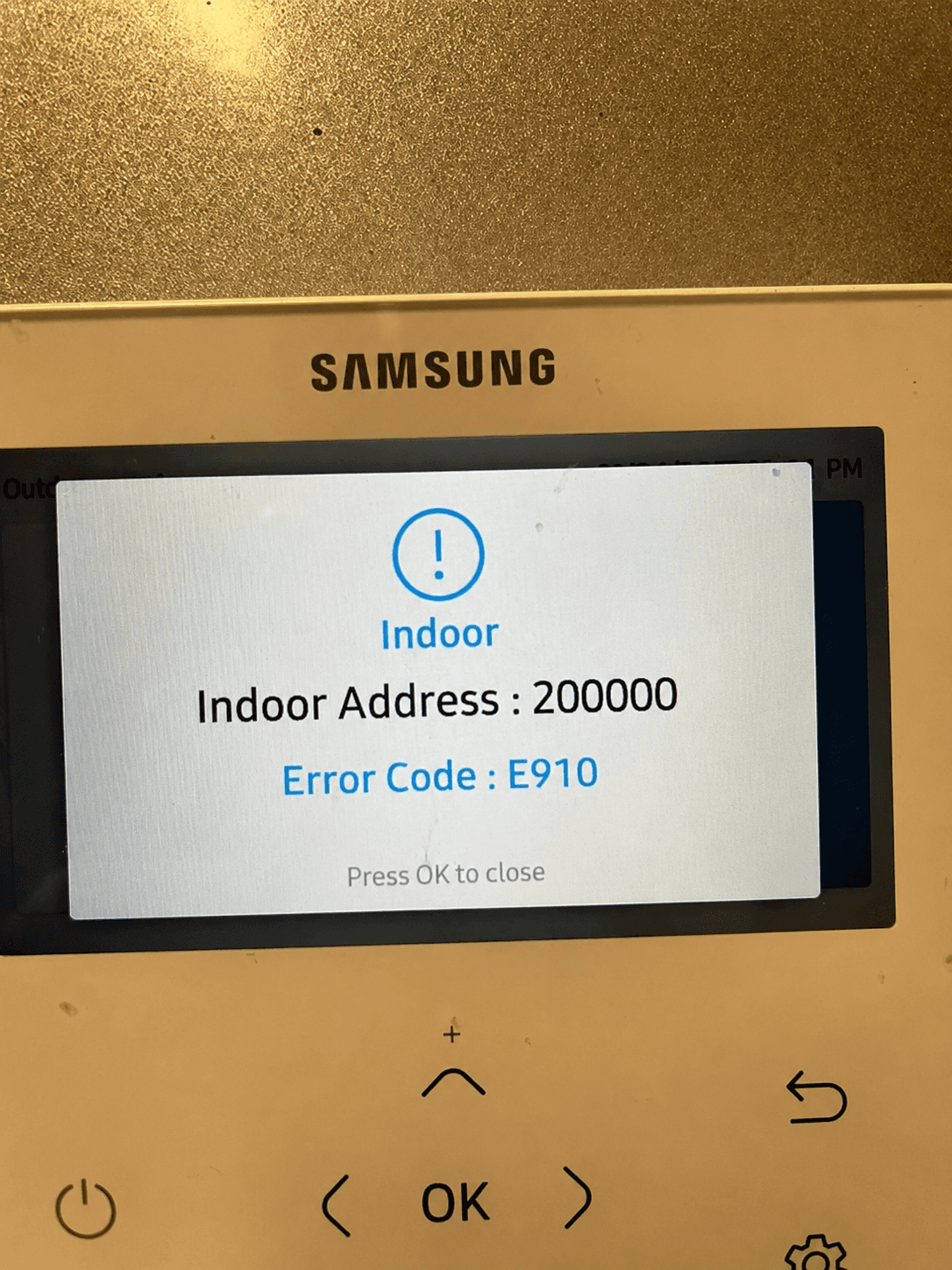
A homeowner in Hampshire contacted us after their Samsung monobloc heat pump repeatedly locked out with an E910 fault code. The system was relatively new and had generally worked well, but the fault kept returning and nobody had been able to identify why. The homeowner had already spoken to their installer on several occasions and was becoming increasingly frustrated with the lack of resolution.
Fortunately, an electrician was already attending the property, which gave us an opportunity to investigate the issue remotely by video call.
What Is the Samsung E910 Fault Code?
The Samsung E910 fault code indicates that the heat pump is detecting water circulation when it should not be. In normal operation, when a call for heating or hot water ends, the circulation pump should stop. If the pump continues running after the heat pump has switched off, or if flow is detected during standby, the Samsung controller interprets this as abnormal and raises the E910 error. This is not a fault we see every week, but we have encountered it enough times across Samsung installations to recognise the most common underlying cause.
What We Found
During the video call, we asked the electrician to trace the circulation pump wiring back through the system. Almost immediately, we identified the problem. The circulation pump had been wired directly into the heat pump PCB rather than being controlled through a contactor.
This is a wiring arrangement we have seen on several Samsung monobloc installations. When the pump is wired directly to the PCB, the system can initially appear to work correctly. Over time, the pump can remain energised beyond the point where the heat pump has finished a cycle. The heat pump then detects residual circulation flow it is not expecting to see and eventually raises the E910 fault. The result is a lockout that keeps returning regardless of how many times the system is reset.
This type of error is easy to miss on a site visit if the wiring is not traced carefully from the pump back to its control source. It looks like a working installation right up until the fault appears again.
Why Samsung Heat Pump Wiring Errors Are Often Misdiagnosed
One of the most common mistakes when dealing with heat pump fault codes is assuming the heat pump itself has developed a fault. In this case, the heat pump was operating exactly as designed. It detected an unexpected flow condition and locked out to protect the system which is precisely what it should do.
Without a clear understanding of how Samsung monobloc heat pumps control their circulation pumps, it would be easy to waste time checking sensors, flow switches, and even control boards none of which were the cause here. This is exactly the kind of pattern we describe in our article on why heat pump repairs are often misunderstood in the UK, where installation-related wiring faults get incorrectly treated as hardware failures.
If you are unsure whether your system was set up correctly from the start, our article covering 7 signs your heat pump may not be installed correctly gives a practical checklist that any homeowner can work through.
The Solution
Once we had confirmed the wiring arrangement, we explained to the electrician that the circulation pump required a contactor. The pump should not be connected directly to the PCB in a way that leaves it running outside of the heat pump's normal operating window. We provided step-by-step guidance during the call and answered several questions while the modification was being completed.
The Outcome
After the wiring was corrected, the Samsung heat pump returned to normal operation immediately. The E910 fault cleared and did not return. A follow-up with the homeowner approximately one week later confirmed the system had continued running without any further lockouts.
The heat pump itself required no replacement parts. No sensors were swapped. No control boards were changed. The fix was entirely in the wiring.
Could This Have Been a Costly Repair?
Potentially, yes. We have spoken to homeowners who were advised to replace circulation pumps, flow sensors, and even PCBs in response to E910 and similar fault codes, when the real cause was a wiring error made at the time of installation. Replacing those components would not have fixed the problem and the fault would have returned as soon as the system was switched back on.
Correct diagnosis saves money. This is why we always review the full wiring and control arrangement as part of any remote diagnostic session not just the fault codes on the display. If you want to understand what correct commissioning should look like, our guide on common commissioning mistakes with air source heat pumps explains the most frequent errors that cause ongoing performance problems after installation.
Related Case Studies
We have resolved similar installation-related faults across a range of heat pump brands and system types. If your heat pump is showing an error that does not respond to standard resets, these cases may be relevant.
In the Detached Home In Sussex – Samsung E911 Fault Fixed Remotely During Video Call, a different Samsung fault code was identified and resolved on a single video call using a similar remote diagnostic process with the same brand-specific installation knowledge playing a key role in identifying the cause quickly.
The Poor Heating and Limited Hot Water – Cylinder Temperature Probe Fault case study shows how a loose cylinder temperature sensor caused incorrect readings that disrupted both heating and hot water performance another installation-related fault that initially appeared more complex than it was.
In the Heat Pump Running in Summer – Constant Call for Heat (Wiring Fault) case, incorrect wiring caused a permanent call for heating, leading to unnecessary summer operation and increased running costs the same category of wiring error as the Hampshire E910 case.
The Heat Pump Freezing Up Repeatedly – Pipework and System Design Issue case is another example where the heat pump unit itself was not at fault the real cause was a system design and installation problem that required proper diagnosis rather than parts replacement.
Related Articles
Our article on why your heat pump shows a flow error explains the different reasons a heat pump can detect abnormal circulation, including both genuine flow problems and control-related causes like the wiring error found in this case.
If your heat pump fault code keeps returning after resets, our article on why your heat pump keeps turning on and off covers the most common reasons for unstable operation, including issues that originate in the control and wiring setup rather than the hardware itself.
If higher-than-expected electricity use has been accompanying the fault, our article on why your heat pump is so expensive to run may also be useful, as incorrect pump operation is one of the factors that increases running costs beyond what is normal.
For anyone considering a new Samsung or other brand heat pump installation, our article on how to know if your heat pump was installed correctly explains what a properly commissioned system should look and behave like, and what to ask your installer at handover.
Need Help With Your Heat Pump?
If your heat pump is displaying a fault code that keeps returning, is not heating properly, or has never performed as expected since installation, we may be able to help. Many issues like this one can be identified quickly during a remote video call and in some cases resolved on the same call with the help of whoever is attending your property.
We are happy to work directly alongside your plumber, heating engineer, or electrician, as we did in this Hampshire case. To arrange a technical review, visit our Fix My Heat Pump page or get in touch through our contact page.
A homeowner in Hampshire contacted us after their Samsung monobloc heat pump repeatedly locked out with an E910 fault code. The system was relatively new and had generally worked well, but the fault kept returning and nobody had been able to identify why. The homeowner had already spoken to their installer on several occasions and was becoming increasingly frustrated with the lack of resolution.
Fortunately, an electrician was already attending the property, which gave us an opportunity to investigate the issue remotely by video call.
What Is the Samsung E910 Fault Code?
The Samsung E910 fault code indicates that the heat pump is detecting water circulation when it should not be. In normal operation, when a call for heating or hot water ends, the circulation pump should stop. If the pump continues running after the heat pump has switched off, or if flow is detected during standby, the Samsung controller interprets this as abnormal and raises the E910 error. This is not a fault we see every week, but we have encountered it enough times across Samsung installations to recognise the most common underlying cause.
What We Found
During the video call, we asked the electrician to trace the circulation pump wiring back through the system. Almost immediately, we identified the problem. The circulation pump had been wired directly into the heat pump PCB rather than being controlled through a contactor.
This is a wiring arrangement we have seen on several Samsung monobloc installations. When the pump is wired directly to the PCB, the system can initially appear to work correctly. Over time, the pump can remain energised beyond the point where the heat pump has finished a cycle. The heat pump then detects residual circulation flow it is not expecting to see and eventually raises the E910 fault. The result is a lockout that keeps returning regardless of how many times the system is reset.
This type of error is easy to miss on a site visit if the wiring is not traced carefully from the pump back to its control source. It looks like a working installation right up until the fault appears again.
Why Samsung Heat Pump Wiring Errors Are Often Misdiagnosed
One of the most common mistakes when dealing with heat pump fault codes is assuming the heat pump itself has developed a fault. In this case, the heat pump was operating exactly as designed. It detected an unexpected flow condition and locked out to protect the system which is precisely what it should do.
Without a clear understanding of how Samsung monobloc heat pumps control their circulation pumps, it would be easy to waste time checking sensors, flow switches, and even control boards none of which were the cause here. This is exactly the kind of pattern we describe in our article on why heat pump repairs are often misunderstood in the UK, where installation-related wiring faults get incorrectly treated as hardware failures.
If you are unsure whether your system was set up correctly from the start, our article covering 7 signs your heat pump may not be installed correctly gives a practical checklist that any homeowner can work through.
The Solution
Once we had confirmed the wiring arrangement, we explained to the electrician that the circulation pump required a contactor. The pump should not be connected directly to the PCB in a way that leaves it running outside of the heat pump's normal operating window. We provided step-by-step guidance during the call and answered several questions while the modification was being completed.
The Outcome
After the wiring was corrected, the Samsung heat pump returned to normal operation immediately. The E910 fault cleared and did not return. A follow-up with the homeowner approximately one week later confirmed the system had continued running without any further lockouts.
The heat pump itself required no replacement parts. No sensors were swapped. No control boards were changed. The fix was entirely in the wiring.
Could This Have Been a Costly Repair?
Potentially, yes. We have spoken to homeowners who were advised to replace circulation pumps, flow sensors, and even PCBs in response to E910 and similar fault codes, when the real cause was a wiring error made at the time of installation. Replacing those components would not have fixed the problem and the fault would have returned as soon as the system was switched back on.
Correct diagnosis saves money. This is why we always review the full wiring and control arrangement as part of any remote diagnostic session not just the fault codes on the display. If you want to understand what correct commissioning should look like, our guide on common commissioning mistakes with air source heat pumps explains the most frequent errors that cause ongoing performance problems after installation.
Related Case Studies
We have resolved similar installation-related faults across a range of heat pump brands and system types. If your heat pump is showing an error that does not respond to standard resets, these cases may be relevant.
In the Detached Home In Sussex – Samsung E911 Fault Fixed Remotely During Video Call, a different Samsung fault code was identified and resolved on a single video call using a similar remote diagnostic process with the same brand-specific installation knowledge playing a key role in identifying the cause quickly.
The Poor Heating and Limited Hot Water – Cylinder Temperature Probe Fault case study shows how a loose cylinder temperature sensor caused incorrect readings that disrupted both heating and hot water performance another installation-related fault that initially appeared more complex than it was.
In the Heat Pump Running in Summer – Constant Call for Heat (Wiring Fault) case, incorrect wiring caused a permanent call for heating, leading to unnecessary summer operation and increased running costs the same category of wiring error as the Hampshire E910 case.
The Heat Pump Freezing Up Repeatedly – Pipework and System Design Issue case is another example where the heat pump unit itself was not at fault the real cause was a system design and installation problem that required proper diagnosis rather than parts replacement.
Related Articles
Our article on why your heat pump shows a flow error explains the different reasons a heat pump can detect abnormal circulation, including both genuine flow problems and control-related causes like the wiring error found in this case.
If your heat pump fault code keeps returning after resets, our article on why your heat pump keeps turning on and off covers the most common reasons for unstable operation, including issues that originate in the control and wiring setup rather than the hardware itself.
If higher-than-expected electricity use has been accompanying the fault, our article on why your heat pump is so expensive to run may also be useful, as incorrect pump operation is one of the factors that increases running costs beyond what is normal.
For anyone considering a new Samsung or other brand heat pump installation, our article on how to know if your heat pump was installed correctly explains what a properly commissioned system should look and behave like, and what to ask your installer at handover.
Need Help With Your Heat Pump?
If your heat pump is displaying a fault code that keeps returning, is not heating properly, or has never performed as expected since installation, we may be able to help. Many issues like this one can be identified quickly during a remote video call and in some cases resolved on the same call with the help of whoever is attending your property.
We are happy to work directly alongside your plumber, heating engineer, or electrician, as we did in this Hampshire case. To arrange a technical review, visit our Fix My Heat Pump page or get in touch through our contact page.

Contact Us
Not Sure Which Service You Need?
Not Sure Which Service You Need?
Not Sure Which Service You Need?
Not Sure Which Service You Need?
Not Sure Which Service You Need?
Whether you need help with an existing heat pump, a pre-installation review, cooling advice, servicing or a room-by-room heat loss survey, send us a few details and we'll point you in the right direction.
Whether you need help with an existing heat pump, a pre-installation review, cooling advice, servicing or a room-by-room heat loss survey, send us a few details and we'll point you in the right direction.
Whether you need help with an existing heat pump, a pre-installation review, cooling advice, servicing or a room-by-room heat loss survey, send us a few details and we'll point you in the right direction.

