Why Your Heat Pump Isn’t Reaching Target Temperature
Why Your Heat Pump Isn’t Reaching Target Temperature
Why Your Heat Pump Isn’t Reaching Target Temperature
Why Your Heat Pump Isn’t Reaching Target Temperature
Why Your Heat Pump Isn’t Reaching Target Temperature

UK Heat pump Help Technical Team
Independent Heat Pump Engineer
Why Your Heat Pump Isn’t Reaching Target Temperature
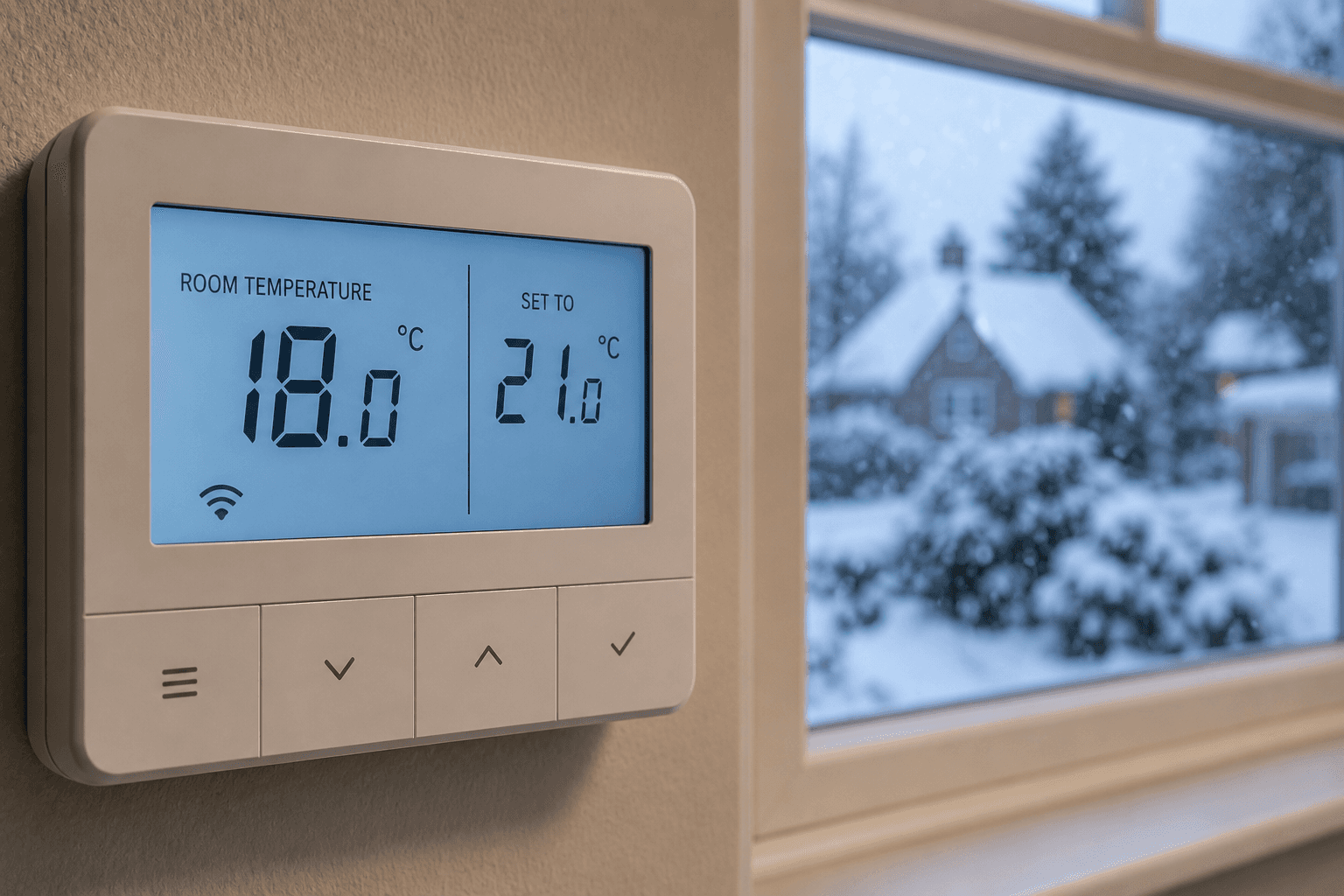
One of the most frustrating things homeowners experience is walking over to the thermostat and seeing “Set to 21°C… actual temperature 18°C.” The heat pump appears to be running, the radiators feel warm, but the house simply never gets where it needs to be. The first reaction from most homeowners is that the heat pump must be undersized. Sometimes that is true. But in most cases the problem is somewhere else entirely, and understanding the real causes can save significant time and money before jumping to expensive conclusions.
Incorrect Heat Loss Calculations
Heat pumps are sized around the amount of heat a house loses. If the original heat loss calculation was wrong, the heat pump may be too small for the property, the radiators may not be putting out enough heat at lower temperatures, or some rooms may simply never quite catch up especially during cold spells. This becomes far more noticeable during winter when the gap between inside and outside temperature is at its widest. Understanding heat loss in a house and why it matters for heat pumps is one of the most important starting points when any heating performance issue arises.
Radiators May Be Too Small
Heat pumps operate at much lower flow temperatures than traditional boilers. A radiator that worked perfectly well at 70–80°C with a gas boiler may not emit enough heat at 40–45°C with a heat pump, simply because the surface area is not large enough to compensate for the lower temperature. Common signs include the house warming very slowly, certain rooms staying consistently cold no matter how long the system runs, bedrooms struggling more than downstairs rooms, and the heat pump running almost continuously without the thermostat ever being satisfied. Our article on whether heat pumps need bigger radiators covers how to assess whether yours are suitable and what upgrading them actually involves.
Weather Compensation Not Set Correctly
We regularly see systems where weather compensation has never been configured properly, or in some cases has been switched off entirely at handover without the homeowner being aware. The heat pump itself may be perfectly fine, but if the controls are not increasing flow temperatures as outdoor temperatures drop, performance will suffer during the coldest days of winter when it matters most. Our guide on how to set weather compensation on a heat pump explains exactly what the curve should look like and how to check it. If your heat pump is running but just not keeping up, checking this is often one of the first things worth doing.
Flow Temperature Set Too Low
People frequently hear that lower flow temperatures are always better for efficiency. The reality is more nuanced than that. Lower flow temperatures are more efficient, but only if the property’s insulation levels and radiator sizes can actually support them. If temperatures are reduced too far for the specific property, rooms will never reach the target, heating response becomes very slow, and comfort suffers throughout the day without it being immediately obvious why. Our article on what flow temperature your heat pump should run at explains how to find the right balance for your property rather than chasing the lowest possible number.
Restricted Flow Around the System
Sometimes the issue has nothing at all to do with heat pump sizing or settings. Problems we regularly come across include dirty or blocked inline filters, closed or partially closed TRVs on radiators, airlocks in the pipework, incorrect circulation pump settings, and in some cases pipework that was never correctly sized for the system from the start. If water cannot move properly around the system, heating performance drops regardless of how well the heat pump itself is configured. Our article on how dirty filters can cause heat pump problems is worth reading if your system has never had its filters checked.
Is the Heat Pump Undersized?
It is worth considering whether the heat pump itself was correctly sized for the property. An undersized heat pump will run continuously in cold weather and still not satisfy the thermostat. Our guide on whether your heat pump is undersized covers the five most common signs to look for, which can help you work out whether the issue is the unit itself or something further down the system.
Real Examples We Have Seen
We investigated a property that could not reach temperature due to incorrect heat loss calculations and undersized radiators where the original design assumptions simply did not match what was actually installed. We also reviewed a Birmingham family home where the heat pump had been running at a fixed 55°C all winter, resulting in electricity bills that were far higher than they needed to be. In a separate case, we looked at a new build in Essex where efficiency had dropped to a COP of just 1.2 despite the installation being brand new the cause turned out to be a system design issue rather than any fault with the heat pump unit itself.
When Should You Be Concerned?
Heat pumps heat differently to boilers. They are designed to run steadily and consistently rather than blasting heat into a property in short intervals. However, if the house never reaches temperature, rooms remain cold throughout the day, the heat pump runs continuously from morning to night, or electricity bills continue rising without explanation, there is usually something worth investigating. If your system is running but not keeping up, our Fix My Heat Pump service can help identify what is actually causing the problem. For those not yet installed, our Pre-Installation Design and Heat Loss Review can help ensure the system is designed correctly before installation begins.
Related reading: Should You Get a Heat Pump in the UK? (Guide)
Why Your Heat Pump Isn’t Reaching Target Temperature
One of the most frustrating things homeowners experience is walking over to the thermostat and seeing “Set to 21°C… actual temperature 18°C.” The heat pump appears to be running, the radiators feel warm, but the house simply never gets where it needs to be. The first reaction from most homeowners is that the heat pump must be undersized. Sometimes that is true. But in most cases the problem is somewhere else entirely, and understanding the real causes can save significant time and money before jumping to expensive conclusions.
Incorrect Heat Loss Calculations
Heat pumps are sized around the amount of heat a house loses. If the original heat loss calculation was wrong, the heat pump may be too small for the property, the radiators may not be putting out enough heat at lower temperatures, or some rooms may simply never quite catch up especially during cold spells. This becomes far more noticeable during winter when the gap between inside and outside temperature is at its widest. Understanding heat loss in a house and why it matters for heat pumps is one of the most important starting points when any heating performance issue arises.
Radiators May Be Too Small
Heat pumps operate at much lower flow temperatures than traditional boilers. A radiator that worked perfectly well at 70–80°C with a gas boiler may not emit enough heat at 40–45°C with a heat pump, simply because the surface area is not large enough to compensate for the lower temperature. Common signs include the house warming very slowly, certain rooms staying consistently cold no matter how long the system runs, bedrooms struggling more than downstairs rooms, and the heat pump running almost continuously without the thermostat ever being satisfied. Our article on whether heat pumps need bigger radiators covers how to assess whether yours are suitable and what upgrading them actually involves.
Weather Compensation Not Set Correctly
We regularly see systems where weather compensation has never been configured properly, or in some cases has been switched off entirely at handover without the homeowner being aware. The heat pump itself may be perfectly fine, but if the controls are not increasing flow temperatures as outdoor temperatures drop, performance will suffer during the coldest days of winter when it matters most. Our guide on how to set weather compensation on a heat pump explains exactly what the curve should look like and how to check it. If your heat pump is running but just not keeping up, checking this is often one of the first things worth doing.
Flow Temperature Set Too Low
People frequently hear that lower flow temperatures are always better for efficiency. The reality is more nuanced than that. Lower flow temperatures are more efficient, but only if the property’s insulation levels and radiator sizes can actually support them. If temperatures are reduced too far for the specific property, rooms will never reach the target, heating response becomes very slow, and comfort suffers throughout the day without it being immediately obvious why. Our article on what flow temperature your heat pump should run at explains how to find the right balance for your property rather than chasing the lowest possible number.
Restricted Flow Around the System
Sometimes the issue has nothing at all to do with heat pump sizing or settings. Problems we regularly come across include dirty or blocked inline filters, closed or partially closed TRVs on radiators, airlocks in the pipework, incorrect circulation pump settings, and in some cases pipework that was never correctly sized for the system from the start. If water cannot move properly around the system, heating performance drops regardless of how well the heat pump itself is configured. Our article on how dirty filters can cause heat pump problems is worth reading if your system has never had its filters checked.
Is the Heat Pump Undersized?
It is worth considering whether the heat pump itself was correctly sized for the property. An undersized heat pump will run continuously in cold weather and still not satisfy the thermostat. Our guide on whether your heat pump is undersized covers the five most common signs to look for, which can help you work out whether the issue is the unit itself or something further down the system.
Real Examples We Have Seen
We investigated a property that could not reach temperature due to incorrect heat loss calculations and undersized radiators where the original design assumptions simply did not match what was actually installed. We also reviewed a Birmingham family home where the heat pump had been running at a fixed 55°C all winter, resulting in electricity bills that were far higher than they needed to be. In a separate case, we looked at a new build in Essex where efficiency had dropped to a COP of just 1.2 despite the installation being brand new the cause turned out to be a system design issue rather than any fault with the heat pump unit itself.
When Should You Be Concerned?
Heat pumps heat differently to boilers. They are designed to run steadily and consistently rather than blasting heat into a property in short intervals. However, if the house never reaches temperature, rooms remain cold throughout the day, the heat pump runs continuously from morning to night, or electricity bills continue rising without explanation, there is usually something worth investigating. If your system is running but not keeping up, our Fix My Heat Pump service can help identify what is actually causing the problem. For those not yet installed, our Pre-Installation Design and Heat Loss Review can help ensure the system is designed correctly before installation begins.
Related reading: Should You Get a Heat Pump in the UK? (Guide)

Oct 10, 2026
5 min read
Why Does My Heat Pump Keep Tripping the Breaker? (UK Causes and What to Do)
Read More
Oct 10, 2026
5 min read
Why Does My Heat Pump Keep Tripping the Breaker? (UK Causes and What to Do)
Read More
Oct 9, 2026
5 min read
Heat Loss Survey Cost UK: What You Should Actually Pay
Read More
Oct 9, 2026
5 min read
Heat Loss Survey Cost UK: What You Should Actually Pay
Read More

Contact Us
Not Sure Which Service You Need?
Not Sure Which Service You Need?
Not Sure Which Service You Need?
Not Sure Which Service You Need?
Not Sure Which Service You Need?
Whether you need help with an existing heat pump, a pre-installation review, cooling advice, servicing or a room-by-room heat loss survey, send us a few details and we'll point you in the right direction.
Whether you need help with an existing heat pump, a pre-installation review, cooling advice, servicing or a room-by-room heat loss survey, send us a few details and we'll point you in the right direction.
Whether you need help with an existing heat pump, a pre-installation review, cooling advice, servicing or a room-by-room heat loss survey, send us a few details and we'll point you in the right direction.

