Anti-Freeze Valves vs Glycol: Which Is Better For Heat Pumps?
Anti-Freeze Valves vs Glycol: Which Is Better For Heat Pumps?
Anti-Freeze Valves vs Glycol: Which Is Better For Heat Pumps?
Anti-Freeze Valves vs Glycol: Which Is Better For Heat Pumps?
Anti-Freeze Valves vs Glycol: Which Is Better For Heat Pumps?

UK Heat pump Help Technical Team
Independent Heat Pump Engineer
Anti-Freeze Valves vs Glycol: Which Is Better For Heat Pumps?
Protecting a heat pump system from freezing is one of those installation decisions that rarely gets discussed with homeowners, yet it directly affects system efficiency, maintenance costs, and long-term reliability. In the UK, there are two standard approaches, and the one your installer chooses can make a genuine and measurable difference to how your system performs across years of operation.
Filling the entire heating circuit with a glycol and water mixture to lower the freezing point of the fluid
Installing anti-freeze valves on the external pipework and relying on the heat pump’s built-in freeze protection mechanisms, with the valves providing a final mechanical safety net
Both approaches can work in the right circumstances. But they are not equal when it comes to heat transfer efficiency, maintenance complexity, running costs, or long-term practicality for a typical domestic installation.
This guide explains how each approach works, where each one has genuine advantages, and why the majority of well-designed modern domestic heat pump installations now favour anti-freeze valves rather than filling the whole system with glycol.
Why Does A Heat Pump Need Freeze Protection?
Unlike a gas boiler that sits entirely within a heated building, an air source heat pump has components and water pipework located outside. The refrigerant circuit handles the cold side of heat exchange outdoors, but the water pipework connecting the outdoor unit to the inside of the property is also exposed to ambient temperatures throughout the year.
During very cold weather, if the heat pump is not running and circulation stops, standing water in the exposed sections of external pipework can freeze. When water freezes it expands, and this expansion can cause serious damage: split pipes, cracked fittings, or damage to the plate heat exchanger inside the unit. Our guide on whether heat pumps work in freezing temperatures in the UK explains how heat pumps cope with cold UK winters and what temperatures they can reliably operate in.
For these reasons, all UK domestic heat pump installations require a reliable and tested freeze protection strategy. In practice, this means choosing between two main approaches: glycol or anti-freeze valves.
What Is Glycol?
Glycol is an antifreeze liquid, either propylene glycol or ethylene glycol, that is mixed with water to lower the freezing point of the system fluid. The concentration required depends on the minimum expected temperatures for the location: a 25% propylene glycol solution typically provides protection down to around minus 10°C, while a 33% solution extends protection to approximately minus 16°C.
Glycol has been used in closed heating systems, solar thermal installations, and commercial HVAC applications for decades, so its behaviour in heating circuits is well understood by experienced engineers.
The core advantage is straightforward:
If temperatures fall low enough to risk freezing, the glycol mixture prevents ice formation regardless of whether the system is running or whether power is available. This passive protection is the main advantage glycol has over any active protection strategy, including the heat pump’s built-in freeze protection functions; it works during a complete power outage.
For this reason, some installers default to filling the entire heating circuit with a glycol mixture as a blanket solution, treating it as the simplest possible freeze protection with the fewest variables to manage on site.
What Are Anti-Freeze Valves?
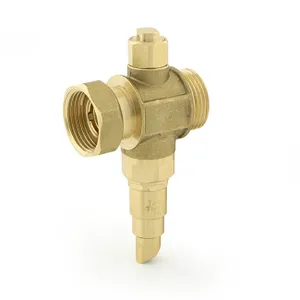
Anti-freeze valves are compact mechanical valves installed on the external pipework of the heat pump, typically on the return pipe close to the outdoor unit. They contain a temperature-sensitive element that responds when the water temperature drops towards freezing point.
When the water temperature at the valve falls to its set point, typically between 3°C and 5°C, the valve opens automatically and discharges a small quantity of water from the circuit. This draws in warmer water from the internal pipework, raising the temperature in the vulnerable external section and preventing ice formation. Because the valve releases water during activation, each event causes a small reduction in system pressure that will need replenishing via the filling loop. If pressure drops recur during cold snaps without an obvious explanation, our article on why heat pump pressure keeps dropping explains the full range of causes, including what happens when an anti-freeze valve activates repeatedly.
Anti-freeze valves are the last line of defence in a layered protection strategy. Most modern heat pump models include several additional freeze protection mechanisms that operate before the valves are ever needed:
Automatic pump circulation: the controller activates the circulation pump when outdoor temperatures approach dangerous levels, keeping water moving through the exposed pipework and preventing static water from reaching its freezing point
Compressor-based heating: the heat pump can run brief heating cycles triggered by temperature monitoring to raise system water temperature when freeze risk is detected
Dedicated temperature monitoring via outdoor sensors and in-pipe thermistors that give the controller accurate, real-time data about conditions
Manufacturer-programmed freeze protection algorithms that trigger responses at specific thresholds based on the heat pump model’s tested performance envelope
Together, these active protection layers mean that anti-freeze valves should rarely need to activate on a correctly designed and commissioned system. In most UK winters, the heat pump’s built-in protections prevent conditions from reaching the valve activation threshold. The valves exist as mechanical backup for the worst-case scenario: a prolonged power outage combined with exceptionally low temperatures. Understanding what happens when an anti-freeze valve itself develops a fault is equally important; our case study on a property in Suffolk where a faulty anti-freeze valve caused recurring pressure loss and heat pump lockouts shows how this component can create persistent problems without producing an obvious fault code.
Why Some Installers Choose Glycol
Glycol is not always the wrong choice. There are specific circumstances where it may be the more appropriate or even required solution, and it is important to understand these before dismissing it entirely.
Situations where glycol may be appropriate or required include:
Manufacturer requirements: some heat pump models specify glycol as part of their installation conditions, and not following this instruction could affect warranty terms
Unusual pipework layouts: very long external pipe runs, particularly where pipework is buried in ground that regularly reaches very low temperatures or is farther from the building than standard
Commercial and industrial applications where systems may be left unoccupied for extended periods and the risk of a prolonged undetected power failure is a genuine concern
Properties in unusually exposed or elevated locations where temperatures regularly fall below minus 10 to 15°C and the layered active protection strategy may be insufficient alone
In these specific circumstances, the passive protection glycol provides has real value that may outweigh the efficiency and maintenance drawbacks described below.
The problem is not glycol itself. It is when glycol is used as a default choice for ordinary domestic installations where it is neither necessary nor recommended, simply because it is what an engineer is used to specifying, without considering the long-term implications for the homeowner.
The Disadvantages Of Glycol
Reduced Heat Transfer
Water is one of the most effective heat transfer fluids used in heating systems. Its high specific heat capacity is a core part of why it is used: it can absorb and release large amounts of thermal energy without large temperature changes, which is precisely what a heat pump system needs to operate efficiently.
Adding glycol reduces the specific heat capacity of the fluid. A 25% propylene glycol solution reduces the heat transfer capacity by approximately 7 to 10% compared to pure water. At the higher concentrations sometimes used in colder climates, this reduction increases further.
In practical terms, the heat pump must cycle for longer and work harder to transfer the same amount of heat through the system. Heat pump performance is built on optimising every available factor: lower flow temperatures, correct radiator sizing, weather compensation settings, and good insulation. Deliberately introducing a fluid with inferior heat transfer properties works directly against those gains.
Over a full heating season, the cumulative effect of reduced heat transfer efficiency contributes to higher electricity consumption to deliver the same heat output. For homeowners already finding running costs higher than anticipated, glycol in the system is one of the factors worth investigating. Our guide on why heat pumps use too much electricity covers the main contributors to unexpectedly high heat pump running costs.
Increased Pumping Resistance
Glycol solutions are more viscous than water, and that viscosity increases as concentration rises and temperature falls. A colder, more concentrated glycol mix is noticeably thicker than plain water, and this creates measurably greater resistance inside pipework, heat exchangers, and valves.
This increased resistance has direct consequences:
Circulation pumps must work harder to maintain the same flow rate, increasing their own electricity consumption and potentially shortening their operational life through additional wear
Flow rates reduce even with the pump running at maximum speed, which in more severe cases causes the heat pump controller to detect an inadequate circulation rate
The combination of reduced flow and lower heat transfer capacity can cause the system to fall short of its designed performance on cold days when it matters most
Reduced flow rate is a particular concern because heat pump controllers are calibrated to detect when circulation falls below the minimum required for safe and efficient operation, and when that threshold is crossed, the system logs a fault and shuts down. Glycol is not always investigated as a contributing factor in these situations, yet it can make the difference between a system that meets minimum flow requirements and one that consistently falls short. Our guide on why heat pumps show a low flow fault covers the full range of causes, including circulation restrictions that the viscosity of glycol mixtures can worsen.
More Complicated Maintenance
Of all the glycol disadvantages, this is the one that catches homeowners and service engineers by surprise most often because glycol-related maintenance complications rarely appear in initial cost comparisons.
Any time an engineer needs to open the system for routine maintenance or repairs, they may need to:
Replace a zone valve, circulation pump, or heat exchanger component
Carry out a system powerflush to remove sludge, magnetite, or installation debris
Modify the pipework layout or add components to an existing circuit
Investigate a fault that requires partially draining a section of the heating circuit
In each of these situations, the glycol must be carefully recovered before work begins and correctly tested and replenished once the work is complete. Simply draining and refilling with fresh water is not acceptable because this dilutes the glycol concentration and reduces freeze protection below the specified level.
This additional step adds time, cost, and specialist equipment to every maintenance visit that involves opening the primary circuit. For homeowners on a standard annual service contract, it may result in additional charges. For engineers quoting remedial works, it makes the job more involved than the same task would be on a clean water-filled system.
With a water-filled system and anti-freeze valves, an engineer can drain and refill only the section that needs attention, test the inhibitor concentration, and close up without any glycol recovery procedure. Routine maintenance stays routine.
Additional Cost
Propylene glycol is not cheap, and a full domestic heat pump system requires a meaningful quantity of it.
A typical installation might contain 100 to 200 litres of system fluid. At a 25% concentration, that means 25 to 50 litres of glycol concentrate to purchase from day one. Glycol also degrades over time, particularly when exposed to elevated temperatures, and the concentration should be tested periodically and topped up or replaced as needed. This adds an ongoing cost that a water-filled system does not have.
Environmental Considerations
Propylene glycol is preferred for domestic heating systems because it carries a significantly lower environmental risk than ethylene glycol, which is toxic to animals. Even so, propylene glycol cannot simply be discharged into drains or onto the ground during maintenance; it must be collected and disposed of as waste chemical or sent for recycling.
During any maintenance visit that requires the circuit to be drained, the glycol must be handled carefully, stored, and either reused after strength testing or disposed of. For the engineer carrying out the work, this adds a practical burden that is absent on water-filled systems and contributes to the higher cost of servicing glycol-filled installations.
Why We Generally Prefer Anti-Freeze Valves
For the majority of domestic UK air source heat pump installations, we recommend anti-freeze valves combined with the heat pump manufacturer’s built-in freeze protection as the primary approach to freeze management.
Modern heat pumps from major UK-installed brands including Vaillant, Mitsubishi Ecodan, Daikin, Samsung, LG, and NIBE include comprehensive freeze protection built into their control systems. These protections operate in layers:
Pump circulation activation: initiated automatically by the controller when outdoor temperatures approach the freeze risk threshold, keeping water flowing and unable to freeze
Temperature monitoring via outdoor air sensors and pipe-mounted thermistors providing real-time data to the control system
Automatic heating cycles triggered if temperatures continue to fall and circulation alone is insufficient to maintain safe temperatures
Manufacturer freeze protection algorithms that sequence these responses according to the specific model’s tested performance in cold conditions
Provided the system contains sufficient water volume, the external pipework is correctly insulated where required, and the installation has been properly commissioned, these built-in protections handle UK winter conditions in the vast majority of domestic settings. The anti-freeze valves then provide a final mechanical safety net for the rare scenarios where the active systems cannot respond. Our case study on a heat pump that was freezing up repeatedly due to poorly designed external pipework and system layout demonstrates that the freeze protection strategy only works as intended when the underlying system design is correct.
The result is a system that retains the full heat transfer properties of clean inhibited water, requires no special procedures during routine maintenance, avoids the ongoing cost and environmental considerations of glycol, and costs less to install from day one.
There Is No One-Size-Fits-All Answer
It would be a mistake to conclude from this that glycol is always wrong. It is not.
Where a manufacturer specifically requires glycol, or where the installation circumstances genuinely justify it such as unusually long external pipe runs, an exposed location, or commercial site-specific requirements, glycol is the correct choice and should be used at the appropriate concentration for the minimum expected temperature. The issue is treating it as a universal domestic default when the specific installation does not call for it, and in doing so introducing efficiency and maintenance penalties for no real protection benefit that anti-freeze valves cannot provide.
The right question is not which method the installer is most familiar with, but which approach is genuinely appropriate for this specific system, property design, and risk profile. Choosing glycol as a default when it is not warranted is one of a number of commissioning decisions that can affect efficiency and servicing costs throughout the life of the installation. Our guide on common commissioning mistakes with air source heat pumps covers the design and setup decisions that most commonly affect long-term heat pump performance.
Thinking About A Heat Pump Installation?
Freeze protection is one of many installation decisions that affect the long-term performance, efficiency, and maintenance cost of a heat pump system. Others include system volume, pipework layout, external insulation, flow temperature settings, and commissioning quality.
Our Pre-Installation Design Review helps homeowners understand whether a proposed system has been designed correctly before work begins, including freeze protection strategy, pipework design, heat pump sizing, flow temperatures, and overall system layout.
Need Help With An Existing Heat Pump?
If you are experiencing low flow faults, recurring pressure drops during cold weather, concerns about freeze protection, or other heat pump performance issues, our Fix My Heat Pump service provides independent technical support to identify the underlying cause and explain what the practical options are.
Related reading: Common Commissioning Mistakes With Air Source Heat Pumps (UK Guide) · Do Heat Pumps Work in Freezing Temperatures? UK Reality Explained
Anti-Freeze Valves vs Glycol: Which Is Better For Heat Pumps?
Protecting a heat pump system from freezing is one of those installation decisions that rarely gets discussed with homeowners, yet it directly affects system efficiency, maintenance costs, and long-term reliability. In the UK, there are two standard approaches, and the one your installer chooses can make a genuine and measurable difference to how your system performs across years of operation.
Filling the entire heating circuit with a glycol and water mixture to lower the freezing point of the fluid
Installing anti-freeze valves on the external pipework and relying on the heat pump’s built-in freeze protection mechanisms, with the valves providing a final mechanical safety net
Both approaches can work in the right circumstances. But they are not equal when it comes to heat transfer efficiency, maintenance complexity, running costs, or long-term practicality for a typical domestic installation.
This guide explains how each approach works, where each one has genuine advantages, and why the majority of well-designed modern domestic heat pump installations now favour anti-freeze valves rather than filling the whole system with glycol.
Why Does A Heat Pump Need Freeze Protection?
Unlike a gas boiler that sits entirely within a heated building, an air source heat pump has components and water pipework located outside. The refrigerant circuit handles the cold side of heat exchange outdoors, but the water pipework connecting the outdoor unit to the inside of the property is also exposed to ambient temperatures throughout the year.
During very cold weather, if the heat pump is not running and circulation stops, standing water in the exposed sections of external pipework can freeze. When water freezes it expands, and this expansion can cause serious damage: split pipes, cracked fittings, or damage to the plate heat exchanger inside the unit. Our guide on whether heat pumps work in freezing temperatures in the UK explains how heat pumps cope with cold UK winters and what temperatures they can reliably operate in.
For these reasons, all UK domestic heat pump installations require a reliable and tested freeze protection strategy. In practice, this means choosing between two main approaches: glycol or anti-freeze valves.
What Is Glycol?
Glycol is an antifreeze liquid, either propylene glycol or ethylene glycol, that is mixed with water to lower the freezing point of the system fluid. The concentration required depends on the minimum expected temperatures for the location: a 25% propylene glycol solution typically provides protection down to around minus 10°C, while a 33% solution extends protection to approximately minus 16°C.
Glycol has been used in closed heating systems, solar thermal installations, and commercial HVAC applications for decades, so its behaviour in heating circuits is well understood by experienced engineers.
The core advantage is straightforward:
If temperatures fall low enough to risk freezing, the glycol mixture prevents ice formation regardless of whether the system is running or whether power is available. This passive protection is the main advantage glycol has over any active protection strategy, including the heat pump’s built-in freeze protection functions; it works during a complete power outage.
For this reason, some installers default to filling the entire heating circuit with a glycol mixture as a blanket solution, treating it as the simplest possible freeze protection with the fewest variables to manage on site.
What Are Anti-Freeze Valves?
Anti-freeze valves are compact mechanical valves installed on the external pipework of the heat pump, typically on the return pipe close to the outdoor unit. They contain a temperature-sensitive element that responds when the water temperature drops towards freezing point.
When the water temperature at the valve falls to its set point, typically between 3°C and 5°C, the valve opens automatically and discharges a small quantity of water from the circuit. This draws in warmer water from the internal pipework, raising the temperature in the vulnerable external section and preventing ice formation. Because the valve releases water during activation, each event causes a small reduction in system pressure that will need replenishing via the filling loop. If pressure drops recur during cold snaps without an obvious explanation, our article on why heat pump pressure keeps dropping explains the full range of causes, including what happens when an anti-freeze valve activates repeatedly.
Anti-freeze valves are the last line of defence in a layered protection strategy. Most modern heat pump models include several additional freeze protection mechanisms that operate before the valves are ever needed:
Automatic pump circulation: the controller activates the circulation pump when outdoor temperatures approach dangerous levels, keeping water moving through the exposed pipework and preventing static water from reaching its freezing point
Compressor-based heating: the heat pump can run brief heating cycles triggered by temperature monitoring to raise system water temperature when freeze risk is detected
Dedicated temperature monitoring via outdoor sensors and in-pipe thermistors that give the controller accurate, real-time data about conditions
Manufacturer-programmed freeze protection algorithms that trigger responses at specific thresholds based on the heat pump model’s tested performance envelope
Together, these active protection layers mean that anti-freeze valves should rarely need to activate on a correctly designed and commissioned system. In most UK winters, the heat pump’s built-in protections prevent conditions from reaching the valve activation threshold. The valves exist as mechanical backup for the worst-case scenario: a prolonged power outage combined with exceptionally low temperatures. Understanding what happens when an anti-freeze valve itself develops a fault is equally important; our case study on a property in Suffolk where a faulty anti-freeze valve caused recurring pressure loss and heat pump lockouts shows how this component can create persistent problems without producing an obvious fault code.
Why Some Installers Choose Glycol
Glycol is not always the wrong choice. There are specific circumstances where it may be the more appropriate or even required solution, and it is important to understand these before dismissing it entirely.
Situations where glycol may be appropriate or required include:
Manufacturer requirements: some heat pump models specify glycol as part of their installation conditions, and not following this instruction could affect warranty terms
Unusual pipework layouts: very long external pipe runs, particularly where pipework is buried in ground that regularly reaches very low temperatures or is farther from the building than standard
Commercial and industrial applications where systems may be left unoccupied for extended periods and the risk of a prolonged undetected power failure is a genuine concern
Properties in unusually exposed or elevated locations where temperatures regularly fall below minus 10 to 15°C and the layered active protection strategy may be insufficient alone
In these specific circumstances, the passive protection glycol provides has real value that may outweigh the efficiency and maintenance drawbacks described below.
The problem is not glycol itself. It is when glycol is used as a default choice for ordinary domestic installations where it is neither necessary nor recommended, simply because it is what an engineer is used to specifying, without considering the long-term implications for the homeowner.
The Disadvantages Of Glycol
Reduced Heat Transfer
Water is one of the most effective heat transfer fluids used in heating systems. Its high specific heat capacity is a core part of why it is used: it can absorb and release large amounts of thermal energy without large temperature changes, which is precisely what a heat pump system needs to operate efficiently.
Adding glycol reduces the specific heat capacity of the fluid. A 25% propylene glycol solution reduces the heat transfer capacity by approximately 7 to 10% compared to pure water. At the higher concentrations sometimes used in colder climates, this reduction increases further.
In practical terms, the heat pump must cycle for longer and work harder to transfer the same amount of heat through the system. Heat pump performance is built on optimising every available factor: lower flow temperatures, correct radiator sizing, weather compensation settings, and good insulation. Deliberately introducing a fluid with inferior heat transfer properties works directly against those gains.
Over a full heating season, the cumulative effect of reduced heat transfer efficiency contributes to higher electricity consumption to deliver the same heat output. For homeowners already finding running costs higher than anticipated, glycol in the system is one of the factors worth investigating. Our guide on why heat pumps use too much electricity covers the main contributors to unexpectedly high heat pump running costs.
Increased Pumping Resistance
Glycol solutions are more viscous than water, and that viscosity increases as concentration rises and temperature falls. A colder, more concentrated glycol mix is noticeably thicker than plain water, and this creates measurably greater resistance inside pipework, heat exchangers, and valves.
This increased resistance has direct consequences:
Circulation pumps must work harder to maintain the same flow rate, increasing their own electricity consumption and potentially shortening their operational life through additional wear
Flow rates reduce even with the pump running at maximum speed, which in more severe cases causes the heat pump controller to detect an inadequate circulation rate
The combination of reduced flow and lower heat transfer capacity can cause the system to fall short of its designed performance on cold days when it matters most
Reduced flow rate is a particular concern because heat pump controllers are calibrated to detect when circulation falls below the minimum required for safe and efficient operation, and when that threshold is crossed, the system logs a fault and shuts down. Glycol is not always investigated as a contributing factor in these situations, yet it can make the difference between a system that meets minimum flow requirements and one that consistently falls short. Our guide on why heat pumps show a low flow fault covers the full range of causes, including circulation restrictions that the viscosity of glycol mixtures can worsen.
More Complicated Maintenance
Of all the glycol disadvantages, this is the one that catches homeowners and service engineers by surprise most often because glycol-related maintenance complications rarely appear in initial cost comparisons.
Any time an engineer needs to open the system for routine maintenance or repairs, they may need to:
Replace a zone valve, circulation pump, or heat exchanger component
Carry out a system powerflush to remove sludge, magnetite, or installation debris
Modify the pipework layout or add components to an existing circuit
Investigate a fault that requires partially draining a section of the heating circuit
In each of these situations, the glycol must be carefully recovered before work begins and correctly tested and replenished once the work is complete. Simply draining and refilling with fresh water is not acceptable because this dilutes the glycol concentration and reduces freeze protection below the specified level.
This additional step adds time, cost, and specialist equipment to every maintenance visit that involves opening the primary circuit. For homeowners on a standard annual service contract, it may result in additional charges. For engineers quoting remedial works, it makes the job more involved than the same task would be on a clean water-filled system.
With a water-filled system and anti-freeze valves, an engineer can drain and refill only the section that needs attention, test the inhibitor concentration, and close up without any glycol recovery procedure. Routine maintenance stays routine.
Additional Cost
Propylene glycol is not cheap, and a full domestic heat pump system requires a meaningful quantity of it.
A typical installation might contain 100 to 200 litres of system fluid. At a 25% concentration, that means 25 to 50 litres of glycol concentrate to purchase from day one. Glycol also degrades over time, particularly when exposed to elevated temperatures, and the concentration should be tested periodically and topped up or replaced as needed. This adds an ongoing cost that a water-filled system does not have.
Environmental Considerations
Propylene glycol is preferred for domestic heating systems because it carries a significantly lower environmental risk than ethylene glycol, which is toxic to animals. Even so, propylene glycol cannot simply be discharged into drains or onto the ground during maintenance; it must be collected and disposed of as waste chemical or sent for recycling.
During any maintenance visit that requires the circuit to be drained, the glycol must be handled carefully, stored, and either reused after strength testing or disposed of. For the engineer carrying out the work, this adds a practical burden that is absent on water-filled systems and contributes to the higher cost of servicing glycol-filled installations.
Why We Generally Prefer Anti-Freeze Valves
For the majority of domestic UK air source heat pump installations, we recommend anti-freeze valves combined with the heat pump manufacturer’s built-in freeze protection as the primary approach to freeze management.
Modern heat pumps from major UK-installed brands including Vaillant, Mitsubishi Ecodan, Daikin, Samsung, LG, and NIBE include comprehensive freeze protection built into their control systems. These protections operate in layers:
Pump circulation activation: initiated automatically by the controller when outdoor temperatures approach the freeze risk threshold, keeping water flowing and unable to freeze
Temperature monitoring via outdoor air sensors and pipe-mounted thermistors providing real-time data to the control system
Automatic heating cycles triggered if temperatures continue to fall and circulation alone is insufficient to maintain safe temperatures
Manufacturer freeze protection algorithms that sequence these responses according to the specific model’s tested performance in cold conditions
Provided the system contains sufficient water volume, the external pipework is correctly insulated where required, and the installation has been properly commissioned, these built-in protections handle UK winter conditions in the vast majority of domestic settings. The anti-freeze valves then provide a final mechanical safety net for the rare scenarios where the active systems cannot respond. Our case study on a heat pump that was freezing up repeatedly due to poorly designed external pipework and system layout demonstrates that the freeze protection strategy only works as intended when the underlying system design is correct.
The result is a system that retains the full heat transfer properties of clean inhibited water, requires no special procedures during routine maintenance, avoids the ongoing cost and environmental considerations of glycol, and costs less to install from day one.
There Is No One-Size-Fits-All Answer
It would be a mistake to conclude from this that glycol is always wrong. It is not.
Where a manufacturer specifically requires glycol, or where the installation circumstances genuinely justify it such as unusually long external pipe runs, an exposed location, or commercial site-specific requirements, glycol is the correct choice and should be used at the appropriate concentration for the minimum expected temperature. The issue is treating it as a universal domestic default when the specific installation does not call for it, and in doing so introducing efficiency and maintenance penalties for no real protection benefit that anti-freeze valves cannot provide.
The right question is not which method the installer is most familiar with, but which approach is genuinely appropriate for this specific system, property design, and risk profile. Choosing glycol as a default when it is not warranted is one of a number of commissioning decisions that can affect efficiency and servicing costs throughout the life of the installation. Our guide on common commissioning mistakes with air source heat pumps covers the design and setup decisions that most commonly affect long-term heat pump performance.
Thinking About A Heat Pump Installation?
Freeze protection is one of many installation decisions that affect the long-term performance, efficiency, and maintenance cost of a heat pump system. Others include system volume, pipework layout, external insulation, flow temperature settings, and commissioning quality.
Our Pre-Installation Design Review helps homeowners understand whether a proposed system has been designed correctly before work begins, including freeze protection strategy, pipework design, heat pump sizing, flow temperatures, and overall system layout.
Need Help With An Existing Heat Pump?
If you are experiencing low flow faults, recurring pressure drops during cold weather, concerns about freeze protection, or other heat pump performance issues, our Fix My Heat Pump service provides independent technical support to identify the underlying cause and explain what the practical options are.
Related reading: Common Commissioning Mistakes With Air Source Heat Pumps (UK Guide) · Do Heat Pumps Work in Freezing Temperatures? UK Reality Explained

Sep 30, 2026
5 min read
Best Electricity Tariffs for Heat Pump Owners in the UK
Read More
Sep 30, 2026
5 min read
Best Electricity Tariffs for Heat Pump Owners in the UK
Read More

Sep 27, 2026
5 min read
Are Heat Pumps Noisy? A UK Guide to Noise Levels and What's Normal
Read More
Sep 27, 2026
5 min read
Are Heat Pumps Noisy? A UK Guide to Noise Levels and What's Normal
Read More

Contact Us
Not Sure Which Service You Need?
Not Sure Which Service You Need?
Not Sure Which Service You Need?
Not Sure Which Service You Need?
Not Sure Which Service You Need?
Whether you need help with an existing heat pump, a pre-installation review, cooling advice, servicing or a room-by-room heat loss survey, send us a few details and we'll point you in the right direction.
Whether you need help with an existing heat pump, a pre-installation review, cooling advice, servicing or a room-by-room heat loss survey, send us a few details and we'll point you in the right direction.
Whether you need help with an existing heat pump, a pre-installation review, cooling advice, servicing or a room-by-room heat loss survey, send us a few details and we'll point you in the right direction.

