Homeowner Fighting Rising Bills Accidentally Made The Problem Worse
Homeowner Fighting Rising Bills Accidentally Made The Problem Worse
Homeowner Fighting Rising Bills Accidentally Made The Problem Worse
Homeowner Fighting Rising Bills Accidentally Made The Problem Worse
Homeowner Fighting Rising Bills Accidentally Made The Problem Worse

UK Heat pump Help Technical Team
Independent Heat Pump Engineer
Homeowner Fighting Rising Bills Accidentally Made The Problem Worse
A homeowner contacted us after becoming increasingly frustrated with rising electricity bills and a home that never felt warm enough despite the costs. The situation had developed gradually over several months. Like many homeowners who find their heat pump is costing more than expected, she had begun adjusting settings herself turning radiators down, modifying the heating controls, trying different approaches to reduce the electricity usage. The intention behind every change was completely logical. Unfortunately, each adjustment had unintentionally made the situation worse rather than better.
By the time she contacted us, the system was spending more electricity than ever, the house was less comfortable than when she had started making changes, and she had lost confidence in the heat pump entirely. She was not alone in this — it is one of the most common situations we encounter, and it is almost always fixable without replacing a single component.
The Problem
The heat pump was not faulty. The radiators were not faulty. The controls were not faulty. The issue was a combination of incorrect flow temperature settings, restricted radiators reducing system flow to a level the heat pump could not work with effectively, and a thermostat positioned in a room where the radiator had been turned down which meant the system never received a proper signal to stop calling for heat. Together these three issues were creating a system that was uncomfortable, inefficient, and expensive to run, even though individually each problem might have seemed minor.
This is a pattern that runs through many of the cases we investigate. Our article on why is my heat pump so expensive to run covers the full range of reasons running costs can exceed expectations, and the combination of factors found in this case high fixed flow temperatures, poor flow rates from restricted radiators, and a thermostat never reaching its target accounts for some of the most dramatic overspending we see.
The First Issue Flow Temperature Set Too High
During our first call, we reviewed the system settings together. The original heat loss calculations for the property had been completed using a design flow temperature of 45°C. However, the heat pump was operating with a fixed flow temperature of 55°C ten degrees higher than the design assumption and significantly higher than what the system actually needed under most conditions.
Higher flow temperatures reduce the heat pump's efficiency directly. The coefficient of performance the ratio of heat output to electricity consumed falls as flow temperature rises. A heat pump running at 55°C uses considerably more electricity to deliver the same amount of heat as one running at 37°C or 40°C. We worked through the weather compensation settings together and established that at an outdoor temperature of approximately 15°C, the property only required a flow temperature of around 37°C. The system had been running nearly 20 degrees hotter than necessary for much of its operation.
This is exactly the situation our article on what does weather compensation actually do is written to help homeowners understand and avoid. Weather compensation adjusts the flow temperature automatically based on outdoor conditions raising it when it is cold outside and reducing it when milder so the heat pump always operates at the lowest flow temperature that will still achieve the required room temperatures. Running on a fixed high flow temperature removes this efficiency benefit entirely. Our article on what flow temperature should my heat pump run at explains how to identify the right operating range for a given property and why getting this right is one of the most impactful changes a homeowner or engineer can make to reduce running costs.
The Second Issue Too Many Radiators Closed
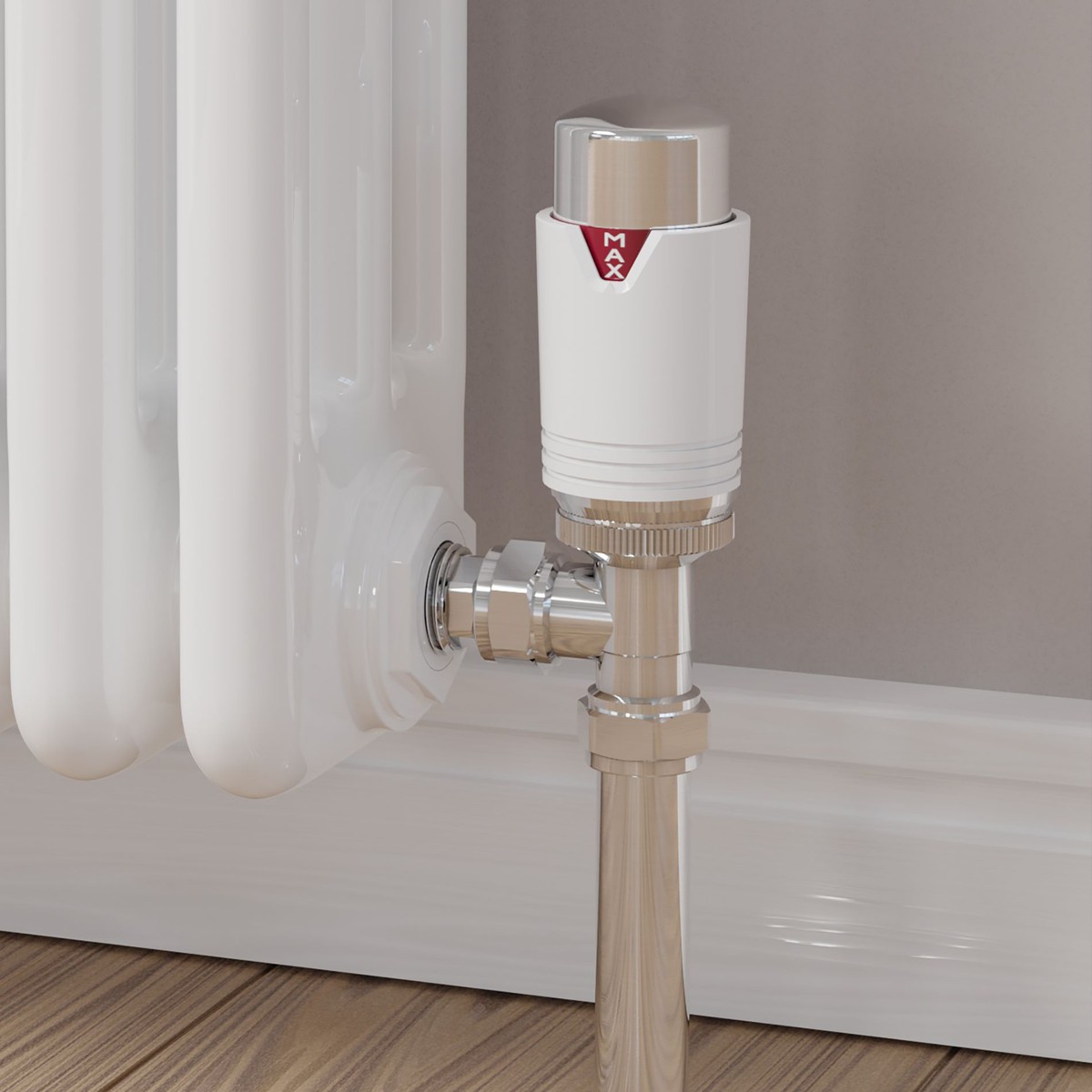
Whilst discussing the heating system, we reviewed the radiator settings throughout the property. The picture was clear. Most upstairs TRVs were set to position 1 barely open. Many downstairs radiators were set between 2 and 3. The homeowner had been trying to focus heat on the rooms she was using and avoid heating spaces she considered unnecessary. On a gas boiler, this approach causes relatively few problems. On a heat pump, it is one of the most common causes of poor performance and high running costs.
There simply were not enough radiators open to provide the heat pump with the water flow it required. The heat pump was cycling repeatedly starting and stopping far more often than it should because the small open circuit was reaching the target flow temperature very quickly and triggering a shutdown, only for the system to call for heat again shortly afterwards. Each start-up cycle is less efficient than continuous running, and the combination of a high fixed flow temperature with a restricted radiator circuit was producing some of the worst possible conditions for efficiency. Our article on what happens if too many TRVs are turned off covers this exact pattern in detail how closed TRVs reduce available flow, how the bypass valve handles some of the problem whilst creating a short-circuit that drives cycling, and why the instinct to heat less of the house often produces exactly the opposite of the intended result on a heat pump system.
We advised opening all downstairs radiators fully to restore a healthy open circuit. The upstairs radiators were left partially restricted enough to allow those rooms to tick over rather than overheat, but not so restricted that they removed significant flow from the circuit. Immediately the heat pump had a much larger emitter surface to work with, which allowed it to run more steadily and transfer heat more efficiently. Our article on should you use TRVs with a heat pump explains the correct approach to TRV management on heat pump systems, including which rooms are safe to restrict partially and what happens when too many are closed simultaneously.
The Third Issue Room Thermostat In The Wrong Room
Whilst reviewing the controls, we identified a third problem that was compounding both of the previous issues. The room thermostat the device responsible for signalling when the property had reached its target temperature and the heating could stop was located in a room where the radiator had been turned down. The thermostat was set to a target of 21°C. But because the radiator in that room was restricted, the room consistently failed to reach 21°C. The thermostat therefore continued calling for heat almost continuously, even when other rooms in the house were already warm.
In effect, the heating system never received a proper signal to stop. The heat pump kept running in response to a thermostat that could never be satisfied, whilst simultaneously cycling rapidly through the restricted radiator circuit. Combined with the high fixed flow temperature, this created the perfect conditions for excessive energy use and poor comfort throughout the rest of the property.
This is a subtler version of the type of control conflict we describe in our case study on why this heat pump seemed to have a mind of its own, where a conflict between control devices caused the system to behave unpredictably. In this case the conflict was between a thermostat demanding heat and a radiator that had been turned down in the same room an arrangement that guaranteed the demand signal would never be satisfied.
The Homeowner's Understandable Concern
At this point in the conversation, the homeowner became sceptical. We had effectively advised her to open more radiators and allow the heat pump to heat more of the house. Her immediate reaction was completely understandable: surely heating more of the house would increase her bills, not reduce them?
This is one of the most important things to explain about heat pumps, and it is something that catches many homeowners off guard. Heat pumps are not like gas boilers. A gas boiler delivers heat quickly at high temperatures, so restricting where that heat goes can reduce how long it needs to run. A heat pump operates at low temperatures continuously, and it depends on having a large enough open circuit to run steadily rather than in short bursts. Improving flow rates by opening radiators allows the heat pump to transfer heat efficiently across a larger surface area at a lower temperature which reduces electricity consumption even though more of the house is receiving warmth. Our article on how to set a heat pump for maximum efficiency explains this principle in practical terms and gives homeowners a clear framework for understanding what actually drives efficiency on a heat pump system.
The Outcome
We followed up with the homeowner approximately one week after the call. The difference was significant. The property felt far more comfortable throughout. Room temperatures were more consistent from floor to floor and room to room. And most importantly, electricity consumption had reduced despite the fact that more radiators were now open than at any point during the previous months of trying to cut costs. The homeowner was delighted, and understandably so. The system had not been upgraded. No parts had been replaced. The improvement came entirely from correcting settings and restoring healthy system operation.
Rather than fighting against the heat pump, the system was finally operating the way it had been designed to work.
What This Case Study Shows
This case is one of the clearest examples of how heat pump problems are often created or worsened by well-intentioned homeowner interventions that would have worked perfectly well on a traditional boiler. The heat pump was not faulty. The radiators were not faulty. The controls were not faulty. The problem was a combination of incorrect flow temperature settings, insufficient open radiator circuit, and a thermostat that could never reach its target because the radiator in the same room had been turned down.
Each individual change the homeowner had made seemed sensible in isolation. Together they created a system that was uncomfortable, inefficient, and expensive and that grew progressively worse with each attempt to fix it. Understanding how heat pumps behave differently to boilers is the foundation of getting them to work well, and it is something that many homeowners are never properly explained at the point of installation.
If you are experiencing higher than expected running costs and have been adjusting settings yourself, our article on heat pump using too much electricity is a useful starting point for working through the most likely causes in a structured way. Our article on how to set weather compensation on a heat pump covers the specific settings changes that tend to have the biggest impact on efficiency, and our article on why one homeowner's electricity bills doubled after a heat pump install is another real-world example of how incorrect settings and flow temperature choices drive running costs far beyond what the system should be costing.
Related Case Studies
The heat pump short cycling and high running costs — zoning design issue case is directly comparable a system cycling repeatedly due to insufficient open flow path, costing far more than it should and delivering poor comfort as a result. The cause in that case was a design decision rather than homeowner adjustments, but the consequence for the heat pump was almost identical.
The family home in Birmingham — heat pump running at 55°C all winter with higher than expected bills is another case where an unnecessarily high fixed flow temperature was responsible for significantly elevated running costs throughout an entire heating season the same flow temperature problem found in this case.
The detached bungalow in Kent — living room warm, rest of house cold is a useful comparison for anyone dealing with uneven room temperatures alongside high running costs both are often rooted in the same combination of flow and settings issues.
The why this heat pump seemed to have a mind of its own case shows how a conflict between control devices can cause a heat pump to behave in ways that appear random or inexplicable but have a clear and fixable cause once the full control arrangement is reviewed.
Related Articles
Our article on should you use TRVs with a heat pump explains the correct approach to TRV use on heat pump systems and why the habits that work on a gas boiler tend to cause problems when applied to a heat pump.
Our article on how to set weather compensation on a heat pump covers the most impactful settings adjustment most homeowners can make to reduce running costs without affecting comfort.
Our article on heat pump using too much electricity works through the most common causes of excessive electricity consumption on heat pump systems, including flow temperature, cycling, and control issues of exactly the type found in this case.
Need Help With Your Heat Pump?
If your heat pump is costing more than expected, cycling excessively, or simply does not feel comfortable despite running constantly, we may be able to help identify the cause. Many problems like this one can be diagnosed and resolved during a single remote video call without any engineer visit. Visit our Fix My Heat Pump page to find out how our remote diagnostic service works, or contact us directly to describe your situation first.
Homeowner Fighting Rising Bills Accidentally Made The Problem Worse
A homeowner contacted us after becoming increasingly frustrated with rising electricity bills and a home that never felt warm enough despite the costs. The situation had developed gradually over several months. Like many homeowners who find their heat pump is costing more than expected, she had begun adjusting settings herself turning radiators down, modifying the heating controls, trying different approaches to reduce the electricity usage. The intention behind every change was completely logical. Unfortunately, each adjustment had unintentionally made the situation worse rather than better.
By the time she contacted us, the system was spending more electricity than ever, the house was less comfortable than when she had started making changes, and she had lost confidence in the heat pump entirely. She was not alone in this — it is one of the most common situations we encounter, and it is almost always fixable without replacing a single component.
The Problem
The heat pump was not faulty. The radiators were not faulty. The controls were not faulty. The issue was a combination of incorrect flow temperature settings, restricted radiators reducing system flow to a level the heat pump could not work with effectively, and a thermostat positioned in a room where the radiator had been turned down which meant the system never received a proper signal to stop calling for heat. Together these three issues were creating a system that was uncomfortable, inefficient, and expensive to run, even though individually each problem might have seemed minor.
This is a pattern that runs through many of the cases we investigate. Our article on why is my heat pump so expensive to run covers the full range of reasons running costs can exceed expectations, and the combination of factors found in this case high fixed flow temperatures, poor flow rates from restricted radiators, and a thermostat never reaching its target accounts for some of the most dramatic overspending we see.
The First Issue Flow Temperature Set Too High
During our first call, we reviewed the system settings together. The original heat loss calculations for the property had been completed using a design flow temperature of 45°C. However, the heat pump was operating with a fixed flow temperature of 55°C ten degrees higher than the design assumption and significantly higher than what the system actually needed under most conditions.
Higher flow temperatures reduce the heat pump's efficiency directly. The coefficient of performance the ratio of heat output to electricity consumed falls as flow temperature rises. A heat pump running at 55°C uses considerably more electricity to deliver the same amount of heat as one running at 37°C or 40°C. We worked through the weather compensation settings together and established that at an outdoor temperature of approximately 15°C, the property only required a flow temperature of around 37°C. The system had been running nearly 20 degrees hotter than necessary for much of its operation.
This is exactly the situation our article on what does weather compensation actually do is written to help homeowners understand and avoid. Weather compensation adjusts the flow temperature automatically based on outdoor conditions raising it when it is cold outside and reducing it when milder so the heat pump always operates at the lowest flow temperature that will still achieve the required room temperatures. Running on a fixed high flow temperature removes this efficiency benefit entirely. Our article on what flow temperature should my heat pump run at explains how to identify the right operating range for a given property and why getting this right is one of the most impactful changes a homeowner or engineer can make to reduce running costs.
The Second Issue Too Many Radiators Closed
Whilst discussing the heating system, we reviewed the radiator settings throughout the property. The picture was clear. Most upstairs TRVs were set to position 1 barely open. Many downstairs radiators were set between 2 and 3. The homeowner had been trying to focus heat on the rooms she was using and avoid heating spaces she considered unnecessary. On a gas boiler, this approach causes relatively few problems. On a heat pump, it is one of the most common causes of poor performance and high running costs.
There simply were not enough radiators open to provide the heat pump with the water flow it required. The heat pump was cycling repeatedly starting and stopping far more often than it should because the small open circuit was reaching the target flow temperature very quickly and triggering a shutdown, only for the system to call for heat again shortly afterwards. Each start-up cycle is less efficient than continuous running, and the combination of a high fixed flow temperature with a restricted radiator circuit was producing some of the worst possible conditions for efficiency. Our article on what happens if too many TRVs are turned off covers this exact pattern in detail how closed TRVs reduce available flow, how the bypass valve handles some of the problem whilst creating a short-circuit that drives cycling, and why the instinct to heat less of the house often produces exactly the opposite of the intended result on a heat pump system.
We advised opening all downstairs radiators fully to restore a healthy open circuit. The upstairs radiators were left partially restricted enough to allow those rooms to tick over rather than overheat, but not so restricted that they removed significant flow from the circuit. Immediately the heat pump had a much larger emitter surface to work with, which allowed it to run more steadily and transfer heat more efficiently. Our article on should you use TRVs with a heat pump explains the correct approach to TRV management on heat pump systems, including which rooms are safe to restrict partially and what happens when too many are closed simultaneously.
The Third Issue Room Thermostat In The Wrong Room
Whilst reviewing the controls, we identified a third problem that was compounding both of the previous issues. The room thermostat the device responsible for signalling when the property had reached its target temperature and the heating could stop was located in a room where the radiator had been turned down. The thermostat was set to a target of 21°C. But because the radiator in that room was restricted, the room consistently failed to reach 21°C. The thermostat therefore continued calling for heat almost continuously, even when other rooms in the house were already warm.
In effect, the heating system never received a proper signal to stop. The heat pump kept running in response to a thermostat that could never be satisfied, whilst simultaneously cycling rapidly through the restricted radiator circuit. Combined with the high fixed flow temperature, this created the perfect conditions for excessive energy use and poor comfort throughout the rest of the property.
This is a subtler version of the type of control conflict we describe in our case study on why this heat pump seemed to have a mind of its own, where a conflict between control devices caused the system to behave unpredictably. In this case the conflict was between a thermostat demanding heat and a radiator that had been turned down in the same room an arrangement that guaranteed the demand signal would never be satisfied.
The Homeowner's Understandable Concern
At this point in the conversation, the homeowner became sceptical. We had effectively advised her to open more radiators and allow the heat pump to heat more of the house. Her immediate reaction was completely understandable: surely heating more of the house would increase her bills, not reduce them?
This is one of the most important things to explain about heat pumps, and it is something that catches many homeowners off guard. Heat pumps are not like gas boilers. A gas boiler delivers heat quickly at high temperatures, so restricting where that heat goes can reduce how long it needs to run. A heat pump operates at low temperatures continuously, and it depends on having a large enough open circuit to run steadily rather than in short bursts. Improving flow rates by opening radiators allows the heat pump to transfer heat efficiently across a larger surface area at a lower temperature which reduces electricity consumption even though more of the house is receiving warmth. Our article on how to set a heat pump for maximum efficiency explains this principle in practical terms and gives homeowners a clear framework for understanding what actually drives efficiency on a heat pump system.
The Outcome
We followed up with the homeowner approximately one week after the call. The difference was significant. The property felt far more comfortable throughout. Room temperatures were more consistent from floor to floor and room to room. And most importantly, electricity consumption had reduced despite the fact that more radiators were now open than at any point during the previous months of trying to cut costs. The homeowner was delighted, and understandably so. The system had not been upgraded. No parts had been replaced. The improvement came entirely from correcting settings and restoring healthy system operation.
Rather than fighting against the heat pump, the system was finally operating the way it had been designed to work.
What This Case Study Shows
This case is one of the clearest examples of how heat pump problems are often created or worsened by well-intentioned homeowner interventions that would have worked perfectly well on a traditional boiler. The heat pump was not faulty. The radiators were not faulty. The controls were not faulty. The problem was a combination of incorrect flow temperature settings, insufficient open radiator circuit, and a thermostat that could never reach its target because the radiator in the same room had been turned down.
Each individual change the homeowner had made seemed sensible in isolation. Together they created a system that was uncomfortable, inefficient, and expensive and that grew progressively worse with each attempt to fix it. Understanding how heat pumps behave differently to boilers is the foundation of getting them to work well, and it is something that many homeowners are never properly explained at the point of installation.
If you are experiencing higher than expected running costs and have been adjusting settings yourself, our article on heat pump using too much electricity is a useful starting point for working through the most likely causes in a structured way. Our article on how to set weather compensation on a heat pump covers the specific settings changes that tend to have the biggest impact on efficiency, and our article on why one homeowner's electricity bills doubled after a heat pump install is another real-world example of how incorrect settings and flow temperature choices drive running costs far beyond what the system should be costing.
Related Case Studies
The heat pump short cycling and high running costs — zoning design issue case is directly comparable a system cycling repeatedly due to insufficient open flow path, costing far more than it should and delivering poor comfort as a result. The cause in that case was a design decision rather than homeowner adjustments, but the consequence for the heat pump was almost identical.
The family home in Birmingham — heat pump running at 55°C all winter with higher than expected bills is another case where an unnecessarily high fixed flow temperature was responsible for significantly elevated running costs throughout an entire heating season the same flow temperature problem found in this case.
The detached bungalow in Kent — living room warm, rest of house cold is a useful comparison for anyone dealing with uneven room temperatures alongside high running costs both are often rooted in the same combination of flow and settings issues.
The why this heat pump seemed to have a mind of its own case shows how a conflict between control devices can cause a heat pump to behave in ways that appear random or inexplicable but have a clear and fixable cause once the full control arrangement is reviewed.
Related Articles
Our article on should you use TRVs with a heat pump explains the correct approach to TRV use on heat pump systems and why the habits that work on a gas boiler tend to cause problems when applied to a heat pump.
Our article on how to set weather compensation on a heat pump covers the most impactful settings adjustment most homeowners can make to reduce running costs without affecting comfort.
Our article on heat pump using too much electricity works through the most common causes of excessive electricity consumption on heat pump systems, including flow temperature, cycling, and control issues of exactly the type found in this case.
Need Help With Your Heat Pump?
If your heat pump is costing more than expected, cycling excessively, or simply does not feel comfortable despite running constantly, we may be able to help identify the cause. Many problems like this one can be diagnosed and resolved during a single remote video call without any engineer visit. Visit our Fix My Heat Pump page to find out how our remote diagnostic service works, or contact us directly to describe your situation first.

Contact Us
Not Sure Which Service You Need?
Not Sure Which Service You Need?
Not Sure Which Service You Need?
Not Sure Which Service You Need?
Not Sure Which Service You Need?
Whether you need help with an existing heat pump, a pre-installation review, cooling advice, servicing or a room-by-room heat loss survey, send us a few details and we'll point you in the right direction.
Whether you need help with an existing heat pump, a pre-installation review, cooling advice, servicing or a room-by-room heat loss survey, send us a few details and we'll point you in the right direction.
Whether you need help with an existing heat pump, a pre-installation review, cooling advice, servicing or a room-by-room heat loss survey, send us a few details and we'll point you in the right direction.

