What Happens If Too Many TRVs Are Turned Off?
What Happens If Too Many TRVs Are Turned Off?
What Happens If Too Many TRVs Are Turned Off?
What Happens If Too Many TRVs Are Turned Off?
What Happens If Too Many TRVs Are Turned Off?

UK Heat pump Help Technical Team
Independent Heat Pump Engineer
What Happens If Too Many TRVs Are Turned Off?
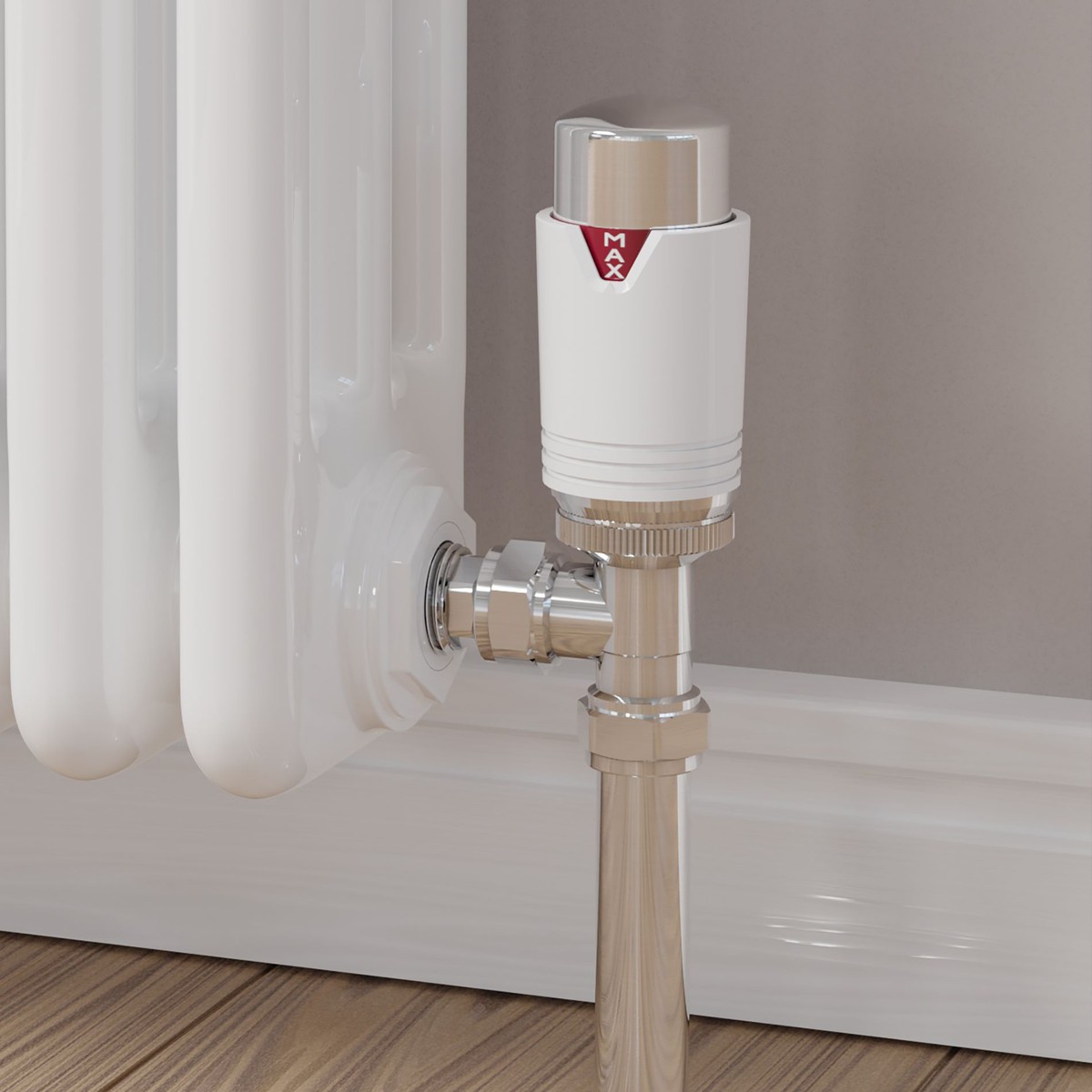
Many homeowners are used to turning radiators off in rooms they do not use. On traditional gas boiler systems, this tends to cause very few problems. The boiler simply produces more heat than needed, the excess is managed by pressure relief, and the occupied rooms stay warm. It is not particularly efficient, but it rarely causes the system to fault or fail.
Heat pumps work in a fundamentally different way. Turning off too many radiators by closing TRVs can create problems that affect performance, efficiency, and comfort across the whole property not just in the rooms where the radiators have been closed. Understanding why this happens is important for any homeowner who wants to get the best from their heat pump system.
Why Do Homeowners Turn Radiators Off?
The logic is straightforward and entirely reasonable on the surface. If a room is not being used, why heat it? Closing the TRV appears to be a simple way to save money and direct heat only to the rooms that are occupied. This works reasonably well on a boiler system, and many homeowners carry the habit across when they switch to a heat pump without realising that the two technologies respond to zoning in very different ways.
Our article on should you use TRVs with a heat pump explains in detail how TRVs interact with heat pump systems, what role they can legitimately play, and why the approach that works on a boiler is often counterproductive on a heat pump. It is essential reading before making any decisions about closing down parts of your heating system.
Why Do Heat Pumps Need Good Flow Rates?
A heat pump can only move heat into your home if water is circulating freely around the heating system. The water acts as the carrier it collects heat from the heat pump and delivers it to the radiators and underfloor heating circuits throughout the property. The heat pump is designed to circulate a specific volume of water continuously, and that circulation depends on the system remaining sufficiently open.
When TRVs are closed, the flow path through the system becomes smaller and more restricted. The circulation pump has to work harder to push the same volume of water through a reduced network of open radiators. At a certain point, the flow rate drops below what the heat pump requires to operate correctly. This is where problems begin to appear.
The consequences of insufficient flow can include reduced efficiency as the heat pump struggles to transfer heat at its designed rate, poor heating performance in the rooms that are still open because the system is no longer working as it should, flow-related fault codes appearing on the controller, and short cycling where the heat pump switches on and off repeatedly in short bursts rather than running in long stable cycles. Our article on why your heat pump shows a flow error explains how flow faults arise and what they mean in practice.
What Happens If Flow Rates Become Too Low?
Every heat pump has a minimum flow rate specified by the manufacturer. This is the lowest volume of water circulation the heat pump can tolerate whilst continuing to operate correctly. If the flow rate drops below this minimum which can happen when a significant number of TRVs are closed simultaneously the heat pump may begin generating flow errors, may reduce its output to protect itself, or may start cycling on and off as it repeatedly reaches its target temperature through the small volume of water remaining in circulation.
The relationship between flow rate, system volume, and heat pump performance is something we cover in detail in our article on heat pump system balancing explained. Understanding this relationship is one of the most practical things a heat pump owner can do, because it helps explain why the system behaves the way it does and what the consequences of different choices are.
What Does The Automatic Bypass Valve Do?
Many heat pump systems include an automatic bypass valve as part of the installation. Its purpose is to provide an alternative circulation path for water if too many radiators become restricted. When the pressure difference across the system rises above a set point which happens when TRVs close and the flow path narrows the bypass opens and allows water to circulate through it instead.
This protects the heat pump from the most serious flow-related faults and is a sensible feature to have. However, it is not a complete solution to the problem of excessive zoning, and homeowners should not rely on it as a reason to close large portions of the system.
Can An Automatic Bypass Cause Short Cycling?
Yes, and this is one of the most important things to understand about bypass valves in practice. When a large number of TRVs are closed and water is circulating primarily through the bypass rather than through the radiators, the heat pump is effectively heating a very small volume of water that is going nowhere useful. It heats that small volume quickly, reaches its target flow temperature, and switches off. A short time later the temperature drops slightly and the heat pump starts again. This repeated switching on and off is known as short cycling.
Short cycling is damaging in several ways. It reduces efficiency because the heat pump never settles into the long stable run that produces the best coefficient of performance. It increases wear on components particularly the compressor because each start-up cycle places more mechanical stress on the system than steady running does. It creates unstable room temperatures because the system is intermittently delivering heat in short bursts rather than maintaining a consistent low-level output. And it can increase running costs significantly because the heat pump is spending a large proportion of its operating time in the inefficient start-up phase rather than running steadily.
Our case study on the new build in Essex with a COP of just 1.2 despite a brand-new installation is one of the most striking examples of what excessive zoning can do to a system. Nine separate underfloor heating zones were constantly opening and closing, leaving the heat pump with no stable load to work against. Efficiency collapsed entirely. Our article on why does my heat pump keep turning on and off also covers the causes and consequences of short cycling in full detail.
Does A Buffer Tank Change Things?
In systems where a buffer tank is fitted, the heat pump circuit and the heating circuit are hydraulically separated from one another. This means the heat pump can continue to circulate water through the buffer even if parts of the heating circuit become restricted by closed TRVs. Buffer tanks do therefore offer greater tolerance to zoning than direct systems, and they can help absorb some of the impact of restricted radiators without immediately causing flow errors.
However, this does not mean that unlimited zoning is acceptable on a buffer system. Heat pumps regardless of whether a buffer is fitted generally perform best when they are allowed to heat large areas of the property for extended periods rather than constantly cycling to serve small zones individually. Excessive micro-zoning on a buffer system can still cause short cycling, reduced efficiency, poor comfort levels, and higher running costs. The buffer buys some tolerance; it does not eliminate the need for sensible system management.
Our article on should heat pumps have buffer tanks explains when buffer tanks are beneficial, what protection they actually provide, and when they are and are not required by the system design.
What About Volumisers?
Some heat pump systems use a volumiser instead of or in addition to a buffer tank. A volumiser increases the total water content in the system, which helps satisfy manufacturer minimum volume requirements and supports the defrost process. Like a buffer tank, a volumiser can provide some protection against the consequences of closing TRVs, but it is not a cure for excessive zoning. Our article on do I need a volumiser with my heat pump explains the difference between a volumiser and a buffer tank and when each one is the right choice for a system.
Should I Leave Every Radiator Fully Open?
Not necessarily, and this is an important nuance. TRVs still have a legitimate role to play on heat pump systems when used correctly. The aim is not to leave every radiator at maximum output regardless of room temperature, but to avoid restricting so much of the system that flow rates fall below the heat pump's requirements and cycling begins. Most heat pumps perform best when a large proportion of the heating system remains available for water circulation at all times.
Exactly how many radiators can be restricted without causing problems depends on several factors including the heat pump's minimum flow rate requirements, the total system water volume, the pipework design, whether underfloor heating circuits are also present, and whether a buffer tank or bypass valve is fitted. There is no universal number that applies to every installation.
What If Certain Rooms Always Feel Too Warm?
If specific rooms are consistently overheating, the instinct to close the TRV is understandable. But before closing radiators, it is worth investigating whether there are other adjustments that could achieve better comfort without restricting the system. System balancing adjusting the lockshield valves on individual radiators to control how much water flows through each one is often a more appropriate solution than closing TRVs entirely. Our article on heat pump system balancing explained explains how this works and why it produces better results than relying on TRVs to manage room-by-room temperature differences.
Weather compensation settings and flow temperatures can also have a significant effect on whether individual rooms feel too warm. If the flow temperature is set higher than necessary, rooms may overheat even with correctly sized radiators. Our article on what flow temperature should my heat pump run at covers how to find the right flow temperature for your property and why getting this right is often the most effective way to improve comfort throughout the home.
The Important Thing To Remember
Heat pumps are fundamentally different to traditional gas boilers in the way they need to operate. Closing too many radiators may not immediately stop the heat pump from running, but it can reduce flow rates, trigger flow errors, cause short cycling, and increase running costs all whilst potentially making the occupied rooms less comfortable rather than more.
If you are currently experiencing flow errors, short cycling, uneven room temperatures, or higher than expected running costs, and you have a number of TRVs closed across the property, it is worth considering whether the restricted radiators are contributing to or causing the problem. In our experience, this is one of the most common sources of heat pump performance issues that homeowners create unintentionally.
Related Case Studies
The heat pump short cycling and high running costs — zoning design issue case study shows exactly what happens when a system is over-zoned. The heat pump was short cycling repeatedly, running costs were higher than expected, and room temperatures were unstable all caused by insufficient open flow path rather than any hardware fault.
The detached bungalow in Kent — living room warm, rest of house cold case is a clear example of how flow and temperature distribution problems across a property lead to wildly different room temperatures, with one area overheating whilst others remain cold the kind of imbalance that closing TRVs tends to make worse rather than better.
The heat pump freezing up repeatedly — pipework and system design issue case shows how flow restriction combined with poor system design can push a heat pump into operating conditions that cause repeated faults, even though the heat pump unit itself is working correctly.
The new build in Essex with COP 1.2 despite a new installation is the most extreme example we have published of what excessive zoning does to heat pump efficiency. Nine underfloor zones were reduced to two, the flow temperature was lowered, and efficiency improved dramatically all without replacing a single component.
Related Articles
Our article on should you use TRVs with a heat pump explains the full picture of TRV use on heat pump systems what they can do, what they cannot do, and how to use them in a way that does not compromise system performance.
Our article on do I need a volumiser with my heat pump covers how volumisers and bypass valves interact with zoning and flow rate management, including their limitations when TRVs are used to shut down large portions of the system.
Our article on why your heat pump is so expensive to run covers the full range of reasons running costs can exceed expectations, including short cycling and flow restriction caused by closed TRVs one of the most commonly overlooked contributors to high electricity bills on heat pump systems.
Need Help With Your Heat Pump?
If your heat pump is short cycling, showing flow errors, failing to heat the property evenly, or costing more to run than you expected, we may be able to identify the cause. Many issues like this can be diagnosed during a remote technical review without an engineer visit. Visit our Fix My Heat Pump page to find out more, or contact us directly to describe your situation first.
What Happens If Too Many TRVs Are Turned Off?
Many homeowners are used to turning radiators off in rooms they do not use. On traditional gas boiler systems, this tends to cause very few problems. The boiler simply produces more heat than needed, the excess is managed by pressure relief, and the occupied rooms stay warm. It is not particularly efficient, but it rarely causes the system to fault or fail.
Heat pumps work in a fundamentally different way. Turning off too many radiators by closing TRVs can create problems that affect performance, efficiency, and comfort across the whole property not just in the rooms where the radiators have been closed. Understanding why this happens is important for any homeowner who wants to get the best from their heat pump system.
Why Do Homeowners Turn Radiators Off?
The logic is straightforward and entirely reasonable on the surface. If a room is not being used, why heat it? Closing the TRV appears to be a simple way to save money and direct heat only to the rooms that are occupied. This works reasonably well on a boiler system, and many homeowners carry the habit across when they switch to a heat pump without realising that the two technologies respond to zoning in very different ways.
Our article on should you use TRVs with a heat pump explains in detail how TRVs interact with heat pump systems, what role they can legitimately play, and why the approach that works on a boiler is often counterproductive on a heat pump. It is essential reading before making any decisions about closing down parts of your heating system.
Why Do Heat Pumps Need Good Flow Rates?
A heat pump can only move heat into your home if water is circulating freely around the heating system. The water acts as the carrier it collects heat from the heat pump and delivers it to the radiators and underfloor heating circuits throughout the property. The heat pump is designed to circulate a specific volume of water continuously, and that circulation depends on the system remaining sufficiently open.
When TRVs are closed, the flow path through the system becomes smaller and more restricted. The circulation pump has to work harder to push the same volume of water through a reduced network of open radiators. At a certain point, the flow rate drops below what the heat pump requires to operate correctly. This is where problems begin to appear.
The consequences of insufficient flow can include reduced efficiency as the heat pump struggles to transfer heat at its designed rate, poor heating performance in the rooms that are still open because the system is no longer working as it should, flow-related fault codes appearing on the controller, and short cycling where the heat pump switches on and off repeatedly in short bursts rather than running in long stable cycles. Our article on why your heat pump shows a flow error explains how flow faults arise and what they mean in practice.
What Happens If Flow Rates Become Too Low?
Every heat pump has a minimum flow rate specified by the manufacturer. This is the lowest volume of water circulation the heat pump can tolerate whilst continuing to operate correctly. If the flow rate drops below this minimum which can happen when a significant number of TRVs are closed simultaneously the heat pump may begin generating flow errors, may reduce its output to protect itself, or may start cycling on and off as it repeatedly reaches its target temperature through the small volume of water remaining in circulation.
The relationship between flow rate, system volume, and heat pump performance is something we cover in detail in our article on heat pump system balancing explained. Understanding this relationship is one of the most practical things a heat pump owner can do, because it helps explain why the system behaves the way it does and what the consequences of different choices are.
What Does The Automatic Bypass Valve Do?
Many heat pump systems include an automatic bypass valve as part of the installation. Its purpose is to provide an alternative circulation path for water if too many radiators become restricted. When the pressure difference across the system rises above a set point which happens when TRVs close and the flow path narrows the bypass opens and allows water to circulate through it instead.
This protects the heat pump from the most serious flow-related faults and is a sensible feature to have. However, it is not a complete solution to the problem of excessive zoning, and homeowners should not rely on it as a reason to close large portions of the system.
Can An Automatic Bypass Cause Short Cycling?
Yes, and this is one of the most important things to understand about bypass valves in practice. When a large number of TRVs are closed and water is circulating primarily through the bypass rather than through the radiators, the heat pump is effectively heating a very small volume of water that is going nowhere useful. It heats that small volume quickly, reaches its target flow temperature, and switches off. A short time later the temperature drops slightly and the heat pump starts again. This repeated switching on and off is known as short cycling.
Short cycling is damaging in several ways. It reduces efficiency because the heat pump never settles into the long stable run that produces the best coefficient of performance. It increases wear on components particularly the compressor because each start-up cycle places more mechanical stress on the system than steady running does. It creates unstable room temperatures because the system is intermittently delivering heat in short bursts rather than maintaining a consistent low-level output. And it can increase running costs significantly because the heat pump is spending a large proportion of its operating time in the inefficient start-up phase rather than running steadily.
Our case study on the new build in Essex with a COP of just 1.2 despite a brand-new installation is one of the most striking examples of what excessive zoning can do to a system. Nine separate underfloor heating zones were constantly opening and closing, leaving the heat pump with no stable load to work against. Efficiency collapsed entirely. Our article on why does my heat pump keep turning on and off also covers the causes and consequences of short cycling in full detail.
Does A Buffer Tank Change Things?
In systems where a buffer tank is fitted, the heat pump circuit and the heating circuit are hydraulically separated from one another. This means the heat pump can continue to circulate water through the buffer even if parts of the heating circuit become restricted by closed TRVs. Buffer tanks do therefore offer greater tolerance to zoning than direct systems, and they can help absorb some of the impact of restricted radiators without immediately causing flow errors.
However, this does not mean that unlimited zoning is acceptable on a buffer system. Heat pumps regardless of whether a buffer is fitted generally perform best when they are allowed to heat large areas of the property for extended periods rather than constantly cycling to serve small zones individually. Excessive micro-zoning on a buffer system can still cause short cycling, reduced efficiency, poor comfort levels, and higher running costs. The buffer buys some tolerance; it does not eliminate the need for sensible system management.
Our article on should heat pumps have buffer tanks explains when buffer tanks are beneficial, what protection they actually provide, and when they are and are not required by the system design.
What About Volumisers?
Some heat pump systems use a volumiser instead of or in addition to a buffer tank. A volumiser increases the total water content in the system, which helps satisfy manufacturer minimum volume requirements and supports the defrost process. Like a buffer tank, a volumiser can provide some protection against the consequences of closing TRVs, but it is not a cure for excessive zoning. Our article on do I need a volumiser with my heat pump explains the difference between a volumiser and a buffer tank and when each one is the right choice for a system.
Should I Leave Every Radiator Fully Open?
Not necessarily, and this is an important nuance. TRVs still have a legitimate role to play on heat pump systems when used correctly. The aim is not to leave every radiator at maximum output regardless of room temperature, but to avoid restricting so much of the system that flow rates fall below the heat pump's requirements and cycling begins. Most heat pumps perform best when a large proportion of the heating system remains available for water circulation at all times.
Exactly how many radiators can be restricted without causing problems depends on several factors including the heat pump's minimum flow rate requirements, the total system water volume, the pipework design, whether underfloor heating circuits are also present, and whether a buffer tank or bypass valve is fitted. There is no universal number that applies to every installation.
What If Certain Rooms Always Feel Too Warm?
If specific rooms are consistently overheating, the instinct to close the TRV is understandable. But before closing radiators, it is worth investigating whether there are other adjustments that could achieve better comfort without restricting the system. System balancing adjusting the lockshield valves on individual radiators to control how much water flows through each one is often a more appropriate solution than closing TRVs entirely. Our article on heat pump system balancing explained explains how this works and why it produces better results than relying on TRVs to manage room-by-room temperature differences.
Weather compensation settings and flow temperatures can also have a significant effect on whether individual rooms feel too warm. If the flow temperature is set higher than necessary, rooms may overheat even with correctly sized radiators. Our article on what flow temperature should my heat pump run at covers how to find the right flow temperature for your property and why getting this right is often the most effective way to improve comfort throughout the home.
The Important Thing To Remember
Heat pumps are fundamentally different to traditional gas boilers in the way they need to operate. Closing too many radiators may not immediately stop the heat pump from running, but it can reduce flow rates, trigger flow errors, cause short cycling, and increase running costs all whilst potentially making the occupied rooms less comfortable rather than more.
If you are currently experiencing flow errors, short cycling, uneven room temperatures, or higher than expected running costs, and you have a number of TRVs closed across the property, it is worth considering whether the restricted radiators are contributing to or causing the problem. In our experience, this is one of the most common sources of heat pump performance issues that homeowners create unintentionally.
Related Case Studies
The heat pump short cycling and high running costs — zoning design issue case study shows exactly what happens when a system is over-zoned. The heat pump was short cycling repeatedly, running costs were higher than expected, and room temperatures were unstable all caused by insufficient open flow path rather than any hardware fault.
The detached bungalow in Kent — living room warm, rest of house cold case is a clear example of how flow and temperature distribution problems across a property lead to wildly different room temperatures, with one area overheating whilst others remain cold the kind of imbalance that closing TRVs tends to make worse rather than better.
The heat pump freezing up repeatedly — pipework and system design issue case shows how flow restriction combined with poor system design can push a heat pump into operating conditions that cause repeated faults, even though the heat pump unit itself is working correctly.
The new build in Essex with COP 1.2 despite a new installation is the most extreme example we have published of what excessive zoning does to heat pump efficiency. Nine underfloor zones were reduced to two, the flow temperature was lowered, and efficiency improved dramatically all without replacing a single component.
Related Articles
Our article on should you use TRVs with a heat pump explains the full picture of TRV use on heat pump systems what they can do, what they cannot do, and how to use them in a way that does not compromise system performance.
Our article on do I need a volumiser with my heat pump covers how volumisers and bypass valves interact with zoning and flow rate management, including their limitations when TRVs are used to shut down large portions of the system.
Our article on why your heat pump is so expensive to run covers the full range of reasons running costs can exceed expectations, including short cycling and flow restriction caused by closed TRVs one of the most commonly overlooked contributors to high electricity bills on heat pump systems.
Need Help With Your Heat Pump?
If your heat pump is short cycling, showing flow errors, failing to heat the property evenly, or costing more to run than you expected, we may be able to identify the cause. Many issues like this can be diagnosed during a remote technical review without an engineer visit. Visit our Fix My Heat Pump page to find out more, or contact us directly to describe your situation first.
Oct 19, 2026
5 min read
Heat Pump System Water Treatment: Inhibitor, Filters and Annual Water Tests
Read More
Oct 19, 2026
5 min read
Heat Pump System Water Treatment: Inhibitor, Filters and Annual Water Tests
Read More
Oct 19, 2026
5 min read
Air-to-Air Heat Pump UK: Grant Status, Cost and Limits
Read More
Oct 19, 2026
5 min read
Air-to-Air Heat Pump UK: Grant Status, Cost and Limits
Read More

Contact Us
Not Sure Which Service You Need?
Not Sure Which Service You Need?
Not Sure Which Service You Need?
Not Sure Which Service You Need?
Not Sure Which Service You Need?
Whether you need help with an existing heat pump, a pre-installation review, cooling advice, servicing or a room-by-room heat loss survey, send us a few details and we'll point you in the right direction.
Whether you need help with an existing heat pump, a pre-installation review, cooling advice, servicing or a room-by-room heat loss survey, send us a few details and we'll point you in the right direction.
Whether you need help with an existing heat pump, a pre-installation review, cooling advice, servicing or a room-by-room heat loss survey, send us a few details and we'll point you in the right direction.

