Why Is My Heat Pump Not Producing Hot Water?
Why Is My Heat Pump Not Producing Hot Water?
Why Is My Heat Pump Not Producing Hot Water?
Why Is My Heat Pump Not Producing Hot Water?
Why Is My Heat Pump Not Producing Hot Water?

UK Heat pump Help Technical Team
Independent Heat Pump Engineer
Why Is My Heat Pump Not Producing Hot Water?
If your heat pump is keeping the house warm but providing no hot water, you are dealing with one of the most frequently reported heat pump problems in UK homes. The heat pump is clearly running at some level, and that is actually useful diagnostic information: it strongly suggests the problem is in the hot water side of the system rather than in the heat pump unit itself.
This guide works through every common reason a heat pump stops producing hot water, in rough order of how often we encounter each cause. It explains what to check first, what each cause looks and feels like in practice, and when you need to bring in an engineer rather than investigating further yourself.
First Check: Is The Heat Pump Actually Running?
The first step is understanding the scope of the problem. Many homeowners assume the heat pump has stopped working entirely when only the domestic hot water has been affected. Heating and hot water are two separate functions on most systems, and a fault affecting one does not automatically indicate a fault in the other. Confirming which functions are and are not working will help you identify the cause much faster.
Before working through the possible causes, check these points on your controller:
Whether the central heating is still coming on and warming the radiators as expected during scheduled hours
Whether any fault codes or warning symbols are currently displayed on the main screen
Whether the heat pump is running at all when a hot water demand is active (you may need to trigger a manual boost to test this)
What temperature the cylinder is showing on the controller, and whether that reading looks plausible given how the water feels at the tap
Whether the hot water schedule is currently enabled and configured to run at times that cover your actual usage
If the central heating is running normally but hot water is not, the heat pump unit is very likely fine. Our detailed guide on why your heat pump is not heating hot water properly covers the most common causes in detail and may help you identify the issue before working through this guide.
Common Causes Of No Hot Water
1. Incorrect Hot Water Settings
Modern heat pump controllers manage hot water independently from the heating circuit, and there are several settings that can prevent hot water production without displaying any fault code. This is one of the most common causes we encounter, and in many cases the fix is simply re-enabling a setting or correcting a temperature target.
Settings-related problems that regularly prevent hot water production include:
Hot water schedules that have been accidentally disabled, often following a power cut that reset controller defaults, or after a timer adjustment that unintentionally turned off the hot water programme
Holiday or away mode left active after a period away from the property, which suppresses hot water production entirely until manually cancelled
Eco mode restrictions or demand management settings limiting when and how long the heat pump can run a hot water cycle, without a compensating boost schedule to cover actual demand
Hot water demand switched off entirely in the controller, which can happen if menu options are navigated without a full understanding of what each setting controls
A careful review of every hot water-related setting in the controller, including any sub-menus for tank setpoint temperature and scheduled boost, usually takes under ten minutes and resolves a significant proportion of hot water complaints without any hardware changes.
2. Cylinder Temperature Sensor Problems
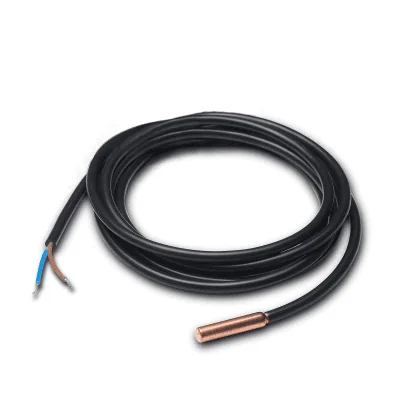
The cylinder immersion sensor reads the temperature of the water stored in the hot water cylinder and reports it to the heat pump controller. This reading is what the controller uses to determine when to start a hot water cycle and when the cylinder has reached its target temperature. If that reading is inaccurate, the controller cannot manage hot water correctly.
The most common failure mode is a displaced sensor, where the probe has slipped out of its pocket in the cylinder wall and is now measuring air or tube insulation temperature instead of stored water temperature. A displaced sensor almost always reads low, causing the controller to believe the cylinder is colder than it actually is and sometimes triggering extended or continuous hot water cycles. A faulty sensor can also read high, causing the controller to assume the cylinder is already at temperature and preventing any hot water production even when the cylinder is cold.
The signs of a cylinder sensor problem include:
Water from the hot tap that is only lukewarm despite the controller showing the cylinder at or above its target temperature
Hot water that runs out much faster than expected, suggesting the cylinder is being heated to a lower effective temperature than the display shows
No hot water production at all despite there being no fault code displayed and the heating circuit appearing to function normally throughout
3. Three-Port Valve Or Diverter Valve Faults
Most heat pump systems that provide both central heating and domestic hot water use a motorised diverter valve, sometimes called a three-port valve or mid-position valve, to direct heated water to either the heating circuit or the hot water cylinder depending on which has priority at any given moment.
When this valve sticks or the actuator fails, it can become fixed in the heating position. In that situation, water continues circulating through the radiators even when the controller has called for hot water. The heat pump runs normally, the central heating continues to work well, and the homeowner has no obvious indication anything is wrong except that there is never any hot water.
Diverter valve failures are more common than most homeowners expect. The valve contains a motorised actuator that physically moves a spindle between positions. Over time, the spindle can seize due to scale, debris, or actuator wear, and some failures develop gradually over weeks, producing intermittent hot water that becomes progressively less reliable before stopping entirely. Our article on why your heat pump keeps switching between heating and hot water explains how this valve manages the two demands and what the symptoms are when it is not switching correctly.
4. Low System Pressure
System pressure below the normal operating range can affect hot water production in two ways. On some heat pump models, low pressure will directly disable hot water as a protective measure. On others, reduced pressure impairs circulation to the cylinder heat exchanger sufficiently that the water never reaches its target temperature within the allocated heating window, even though the heat pump appears to run normally.
Most UK domestic heat pump systems should operate between 1.0 and 2.0 bar when cold. If your pressure gauge shows below 1.0 bar, this needs investigating even if the controller has not displayed a pressure fault code.
Pressure in a closed heating system drops for a limited number of reasons:
A small water leak somewhere in the pipework, which does not need to be a visible drip to gradually remove water from the closed circuit over days or weeks
A failed or under-pressurised expansion vessel that can no longer absorb thermal expansion, causing pressure to build and then fall significantly as the system heats and cools
Automatic air vents that discharge small amounts of water alongside air during normal operation
Pressure relief valve discharge caused by the expansion vessel failing to manage thermal expansion and pressure building beyond safe limits
A recent maintenance visit where radiators were bled, reducing the volume of water in the circuit and therefore dropping the gauge pressure
If you are needing to top up the system regularly, there is an underlying cause that needs identifying. Our articles on what pressure your heat pump system should be running at and why heat pump pressure keeps dropping explain both what normal looks like and where pressure loss typically comes from.
5. Poor Water Circulation
If the heat pump is producing heat but it is not reaching the cylinder effectively, water temperature rises slowly and may never hit the setpoint within the allocated time window. In mild cases this produces lukewarm water; in more severe cases the shortfall is large enough to feel like there is no hot water at all, particularly if the issue worsens throughout the day as hot water demand continues.
The most common causes of restricted circulation to the hot water cylinder are:
Air pockets within the circuit, which can form in the cylinder coil pipework and block circulation to that branch effectively, often producing intermittent faults rather than a consistent failure
A circulation pump running at an incorrect speed setting, producing flow rates that are insufficient to heat the cylinder within the time the controller allows for a hot water cycle
Isolation valves on the cylinder connections left partially closed, often from maintenance work where they were not fully reopened afterwards
Sludge or scale build-up inside the cylinder coil, particularly in systems that have been running for several years without adequate chemical inhibitor protection
Circulation problems often generate flow-related fault codes. Our guide on how dirty filters affect heat pump performance covers how system debris reduces circulation, and our article on what heat pump flow error codes mean explains what different fault codes are telling you when water flow is the underlying issue.
What If The Immersion Heater Still Works?
If the immersion heater produces hot water normally but the heat pump does not, this is useful diagnostic information. It confirms that the physical cylinder is healthy, the pipework from the cylinder to the taps is functioning correctly, and there is no blockage or fault in the hot water circuit downstream of the tank. The problem lies in the connection between the heat pump and the cylinder.
In that scenario, the most likely causes are the diverter valve failing to route heated water to the cylinder, the cylinder temperature sensor providing a reading that prevents the heat pump from starting a hot water cycle, or a controller configuration issue where the heat pump does not recognise when the cylinder needs heating. All three of these are resolvable without replacing the cylinder or the heat pump itself.
It is worth being aware that regularly using the immersion heater as a workaround is expensive. Electricity consumed directly by an immersion element has no heat pump efficiency multiplier, so each unit of heat costs considerably more than the same heat supplied by the heat pump itself. Our article on why the immersion heater is running instead of the heat pump explains the running cost implications and what causes the immersion to take over.
Could It Be A Design Issue?
Not every hot water problem is caused by a fault that can be reset or repaired. Some installations were not designed correctly from the outset, and the homeowner has never experienced the level of hot water performance they expected because it was never achievable with the system as installed.
Design and installation problems we regularly identify when reviewing systems with persistent hot water issues include:
A hot water cylinder that is too small for the household’s actual daily demand, meaning it empties faster than the heat pump can reheat it, leaving the second and third users of hot water in the day with little or nothing
A cylinder with an undersized or incorrectly positioned coil, which cannot transfer heat from the primary circuit to the stored water quickly enough for the system to meet its target within the available window
Controller settings that were misconfigured at handover and have never been correctly set up, leaving the system unable to manage hot water as the manufacturer intended
A hot water schedule that was set up without reference to the household’s actual usage pattern, resulting in the cylinder being heated at the wrong time or not often enough to meet demand
These problems cannot be resolved by replacing components. The system needs to be correctly configured or redesigned. Our guide on common commissioning mistakes with heat pump installations explains how these design and setup problems arise and why they are more common than most homeowners realise.
If you are planning a heat pump installation and want confidence that the proposed hot water design is adequate for your household before you commit, our Pre-Installation Design Review provides an independent assessment of the heat loss calculation, heat pump sizing, flow temperatures, hot water design and overall system specification.
Design problems in the hot water specification are significantly harder and more expensive to put right after the heat pump has been installed than they are to identify and prevent through a proper review beforehand.
Need Help Diagnosing A Hot Water Problem?
If your heat pump is not producing hot water and you are not getting clear answers about why, our Fix My Heat Pump service can identify the actual cause before you spend money on unnecessary parts or call-outs.
We review your system details, photographs, controller settings, cylinder temperatures, and any fault history available to identify the most likely cause and explain what the next step should be.
Whether the issue is a setting, a sensor problem, a valve fault, a circulation restriction, or a design concern, we will give you a specific and honest answer about what is actually happening with your system.
Why Is My Heat Pump Not Producing Hot Water?
If your heat pump is keeping the house warm but providing no hot water, you are dealing with one of the most frequently reported heat pump problems in UK homes. The heat pump is clearly running at some level, and that is actually useful diagnostic information: it strongly suggests the problem is in the hot water side of the system rather than in the heat pump unit itself.
This guide works through every common reason a heat pump stops producing hot water, in rough order of how often we encounter each cause. It explains what to check first, what each cause looks and feels like in practice, and when you need to bring in an engineer rather than investigating further yourself.
First Check: Is The Heat Pump Actually Running?
The first step is understanding the scope of the problem. Many homeowners assume the heat pump has stopped working entirely when only the domestic hot water has been affected. Heating and hot water are two separate functions on most systems, and a fault affecting one does not automatically indicate a fault in the other. Confirming which functions are and are not working will help you identify the cause much faster.
Before working through the possible causes, check these points on your controller:
Whether the central heating is still coming on and warming the radiators as expected during scheduled hours
Whether any fault codes or warning symbols are currently displayed on the main screen
Whether the heat pump is running at all when a hot water demand is active (you may need to trigger a manual boost to test this)
What temperature the cylinder is showing on the controller, and whether that reading looks plausible given how the water feels at the tap
Whether the hot water schedule is currently enabled and configured to run at times that cover your actual usage
If the central heating is running normally but hot water is not, the heat pump unit is very likely fine. Our detailed guide on why your heat pump is not heating hot water properly covers the most common causes in detail and may help you identify the issue before working through this guide.
Common Causes Of No Hot Water
1. Incorrect Hot Water Settings
Modern heat pump controllers manage hot water independently from the heating circuit, and there are several settings that can prevent hot water production without displaying any fault code. This is one of the most common causes we encounter, and in many cases the fix is simply re-enabling a setting or correcting a temperature target.
Settings-related problems that regularly prevent hot water production include:
Hot water schedules that have been accidentally disabled, often following a power cut that reset controller defaults, or after a timer adjustment that unintentionally turned off the hot water programme
Holiday or away mode left active after a period away from the property, which suppresses hot water production entirely until manually cancelled
Eco mode restrictions or demand management settings limiting when and how long the heat pump can run a hot water cycle, without a compensating boost schedule to cover actual demand
Hot water demand switched off entirely in the controller, which can happen if menu options are navigated without a full understanding of what each setting controls
A careful review of every hot water-related setting in the controller, including any sub-menus for tank setpoint temperature and scheduled boost, usually takes under ten minutes and resolves a significant proportion of hot water complaints without any hardware changes.
2. Cylinder Temperature Sensor Problems
The cylinder immersion sensor reads the temperature of the water stored in the hot water cylinder and reports it to the heat pump controller. This reading is what the controller uses to determine when to start a hot water cycle and when the cylinder has reached its target temperature. If that reading is inaccurate, the controller cannot manage hot water correctly.
The most common failure mode is a displaced sensor, where the probe has slipped out of its pocket in the cylinder wall and is now measuring air or tube insulation temperature instead of stored water temperature. A displaced sensor almost always reads low, causing the controller to believe the cylinder is colder than it actually is and sometimes triggering extended or continuous hot water cycles. A faulty sensor can also read high, causing the controller to assume the cylinder is already at temperature and preventing any hot water production even when the cylinder is cold.
The signs of a cylinder sensor problem include:
Water from the hot tap that is only lukewarm despite the controller showing the cylinder at or above its target temperature
Hot water that runs out much faster than expected, suggesting the cylinder is being heated to a lower effective temperature than the display shows
No hot water production at all despite there being no fault code displayed and the heating circuit appearing to function normally throughout
3. Three-Port Valve Or Diverter Valve Faults
Most heat pump systems that provide both central heating and domestic hot water use a motorised diverter valve, sometimes called a three-port valve or mid-position valve, to direct heated water to either the heating circuit or the hot water cylinder depending on which has priority at any given moment.
When this valve sticks or the actuator fails, it can become fixed in the heating position. In that situation, water continues circulating through the radiators even when the controller has called for hot water. The heat pump runs normally, the central heating continues to work well, and the homeowner has no obvious indication anything is wrong except that there is never any hot water.
Diverter valve failures are more common than most homeowners expect. The valve contains a motorised actuator that physically moves a spindle between positions. Over time, the spindle can seize due to scale, debris, or actuator wear, and some failures develop gradually over weeks, producing intermittent hot water that becomes progressively less reliable before stopping entirely. Our article on why your heat pump keeps switching between heating and hot water explains how this valve manages the two demands and what the symptoms are when it is not switching correctly.
4. Low System Pressure
System pressure below the normal operating range can affect hot water production in two ways. On some heat pump models, low pressure will directly disable hot water as a protective measure. On others, reduced pressure impairs circulation to the cylinder heat exchanger sufficiently that the water never reaches its target temperature within the allocated heating window, even though the heat pump appears to run normally.
Most UK domestic heat pump systems should operate between 1.0 and 2.0 bar when cold. If your pressure gauge shows below 1.0 bar, this needs investigating even if the controller has not displayed a pressure fault code.
Pressure in a closed heating system drops for a limited number of reasons:
A small water leak somewhere in the pipework, which does not need to be a visible drip to gradually remove water from the closed circuit over days or weeks
A failed or under-pressurised expansion vessel that can no longer absorb thermal expansion, causing pressure to build and then fall significantly as the system heats and cools
Automatic air vents that discharge small amounts of water alongside air during normal operation
Pressure relief valve discharge caused by the expansion vessel failing to manage thermal expansion and pressure building beyond safe limits
A recent maintenance visit where radiators were bled, reducing the volume of water in the circuit and therefore dropping the gauge pressure
If you are needing to top up the system regularly, there is an underlying cause that needs identifying. Our articles on what pressure your heat pump system should be running at and why heat pump pressure keeps dropping explain both what normal looks like and where pressure loss typically comes from.
5. Poor Water Circulation
If the heat pump is producing heat but it is not reaching the cylinder effectively, water temperature rises slowly and may never hit the setpoint within the allocated time window. In mild cases this produces lukewarm water; in more severe cases the shortfall is large enough to feel like there is no hot water at all, particularly if the issue worsens throughout the day as hot water demand continues.
The most common causes of restricted circulation to the hot water cylinder are:
Air pockets within the circuit, which can form in the cylinder coil pipework and block circulation to that branch effectively, often producing intermittent faults rather than a consistent failure
A circulation pump running at an incorrect speed setting, producing flow rates that are insufficient to heat the cylinder within the time the controller allows for a hot water cycle
Isolation valves on the cylinder connections left partially closed, often from maintenance work where they were not fully reopened afterwards
Sludge or scale build-up inside the cylinder coil, particularly in systems that have been running for several years without adequate chemical inhibitor protection
Circulation problems often generate flow-related fault codes. Our guide on how dirty filters affect heat pump performance covers how system debris reduces circulation, and our article on what heat pump flow error codes mean explains what different fault codes are telling you when water flow is the underlying issue.
What If The Immersion Heater Still Works?
If the immersion heater produces hot water normally but the heat pump does not, this is useful diagnostic information. It confirms that the physical cylinder is healthy, the pipework from the cylinder to the taps is functioning correctly, and there is no blockage or fault in the hot water circuit downstream of the tank. The problem lies in the connection between the heat pump and the cylinder.
In that scenario, the most likely causes are the diverter valve failing to route heated water to the cylinder, the cylinder temperature sensor providing a reading that prevents the heat pump from starting a hot water cycle, or a controller configuration issue where the heat pump does not recognise when the cylinder needs heating. All three of these are resolvable without replacing the cylinder or the heat pump itself.
It is worth being aware that regularly using the immersion heater as a workaround is expensive. Electricity consumed directly by an immersion element has no heat pump efficiency multiplier, so each unit of heat costs considerably more than the same heat supplied by the heat pump itself. Our article on why the immersion heater is running instead of the heat pump explains the running cost implications and what causes the immersion to take over.
Could It Be A Design Issue?
Not every hot water problem is caused by a fault that can be reset or repaired. Some installations were not designed correctly from the outset, and the homeowner has never experienced the level of hot water performance they expected because it was never achievable with the system as installed.
Design and installation problems we regularly identify when reviewing systems with persistent hot water issues include:
A hot water cylinder that is too small for the household’s actual daily demand, meaning it empties faster than the heat pump can reheat it, leaving the second and third users of hot water in the day with little or nothing
A cylinder with an undersized or incorrectly positioned coil, which cannot transfer heat from the primary circuit to the stored water quickly enough for the system to meet its target within the available window
Controller settings that were misconfigured at handover and have never been correctly set up, leaving the system unable to manage hot water as the manufacturer intended
A hot water schedule that was set up without reference to the household’s actual usage pattern, resulting in the cylinder being heated at the wrong time or not often enough to meet demand
These problems cannot be resolved by replacing components. The system needs to be correctly configured or redesigned. Our guide on common commissioning mistakes with heat pump installations explains how these design and setup problems arise and why they are more common than most homeowners realise.
If you are planning a heat pump installation and want confidence that the proposed hot water design is adequate for your household before you commit, our Pre-Installation Design Review provides an independent assessment of the heat loss calculation, heat pump sizing, flow temperatures, hot water design and overall system specification.
Design problems in the hot water specification are significantly harder and more expensive to put right after the heat pump has been installed than they are to identify and prevent through a proper review beforehand.
Need Help Diagnosing A Hot Water Problem?
If your heat pump is not producing hot water and you are not getting clear answers about why, our Fix My Heat Pump service can identify the actual cause before you spend money on unnecessary parts or call-outs.
We review your system details, photographs, controller settings, cylinder temperatures, and any fault history available to identify the most likely cause and explain what the next step should be.
Whether the issue is a setting, a sensor problem, a valve fault, a circulation restriction, or a design concern, we will give you a specific and honest answer about what is actually happening with your system.

Sep 30, 2026
5 min read
Best Electricity Tariffs for Heat Pump Owners in the UK
Read More
Sep 30, 2026
5 min read
Best Electricity Tariffs for Heat Pump Owners in the UK
Read More

Sep 27, 2026
5 min read
Are Heat Pumps Noisy? A UK Guide to Noise Levels and What's Normal
Read More
Sep 27, 2026
5 min read
Are Heat Pumps Noisy? A UK Guide to Noise Levels and What's Normal
Read More

Contact Us
Not Sure Which Service You Need?
Not Sure Which Service You Need?
Not Sure Which Service You Need?
Not Sure Which Service You Need?
Not Sure Which Service You Need?
Whether you need help with an existing heat pump, a pre-installation review, cooling advice, servicing or a room-by-room heat loss survey, send us a few details and we'll point you in the right direction.
Whether you need help with an existing heat pump, a pre-installation review, cooling advice, servicing or a room-by-room heat loss survey, send us a few details and we'll point you in the right direction.
Whether you need help with an existing heat pump, a pre-installation review, cooling advice, servicing or a room-by-room heat loss survey, send us a few details and we'll point you in the right direction.

